Best Online DevOps Courses in 2026: Complete Buyer’s Guide

The best among the Online DevOps Courses in 2026 is StarAgile, and it leads a shortlist built for IT professionals, developers, and system administrators who want to learn CI/CD pipelines, containerization, and cloud automation through live instructor-led training. Alongside StarAgile, this guide covers four other strong providers: KnowledgeHut, Simplilearn, Edureka, and Intellipaat. It compares them on curriculum depth, fees, batch formats, and placement support so you can choose the right fit for your budget and career goals.
Quick comparison table
| Provider | Best for | Typical fee | Placement support |
|---|---|---|---|
| StarAgile | Job-focused learners who want structured placement training | ₹49,999–₹95,998 | 2-month placement training, ISA-based fee model |
| KnowledgeHut | Learners who want EMI options and scholarships | Course-dependent, EMI available | 100% satisfaction guarantee, refund policy |
| Simplilearn | Learners who want a large course catalog under one platform | ₹53,999 and up, varies by program | Job assistance on select “job guarantee” programs |
| Edureka | Learners who want weekend live classes with lifetime support | ₹19,995–₹90,000 depending on program | Career guidance, 24×7 support |
| Intellipaat | Learners who want 0% interest financing and NSDC-backed certification | Program-dependent | Guaranteed interviews on select bootcamps |
What makes a DevOps course worth paying for?
DevOps combines development and operations into one continuous workflow, and a good course needs to teach both the tools and the mindset behind that shift. Look for hands-on labs with Docker, Kubernetes, Jenkins, Terraform, and Ansible, not just slides describing what these tools do.
The DevOps market itself is growing fast. Valued at USD 51.8 billion in 2026, it’s projected to reach USD 93.13 billion by 2035, and by 2027, roughly 80% of organizations are expected to run DevOps platforms in production. Recruiters increasingly expect candidates to show project work, not just a certificate.
The five providers below cover different budgets, batch styles, and placement models. Here’s how they stack up.
1. StarAgile
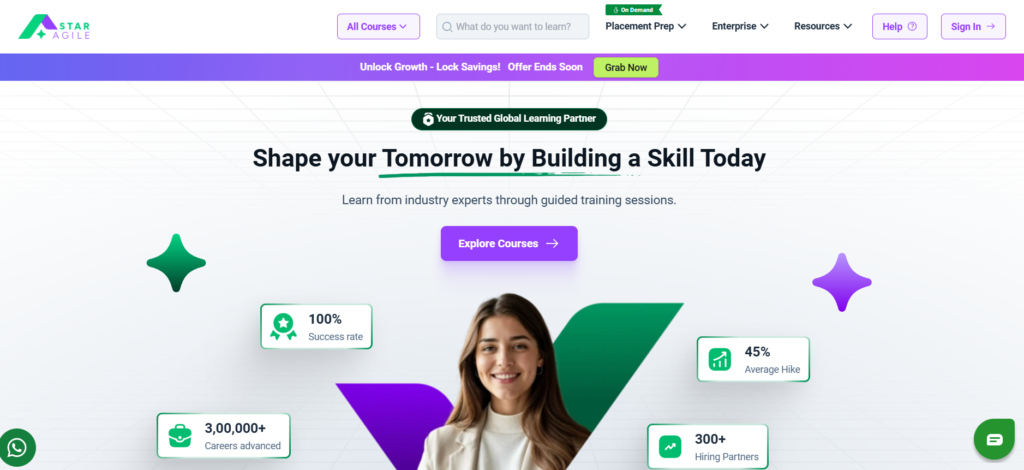
StarAgile runs its DevOps course as a four-month, intensive online program built around a placement-first model, meaning the training structure itself is designed to lead directly into a job offer rather than just a certificate.
Curriculum and format: The course covers Docker, Kubernetes, Jenkins, Ansible, and AWS cloud deployment, including a hands-on project building a secure, highly available 3-tier architecture across multiple availability zones. Classes run on weekdays with weekly mentoring sessions, daily doubt-clearing calls, and a bonus module on Generative AI applications in DevOps.
Fees and structure: The course costs between ₹49,999 and ₹95,998 depending on active discounts, and that fee covers both training and certification. Learners with over 75% attendance who complete all projects and pass a competency test qualify for two months of placement training.
Placement model: Eligible learners sign an Income Share Agreement (ISA) and pay an additional ₹20,000 only after StarAgile helps them secure a job. This includes resume building, mock interviews, and soft skill training as part of the placement package.
Who it fits: Professionals who want a structured path from training straight through to job placement, with the certification and placement support bundled into one program rather than purchased separately.
2. KnowledgeHut
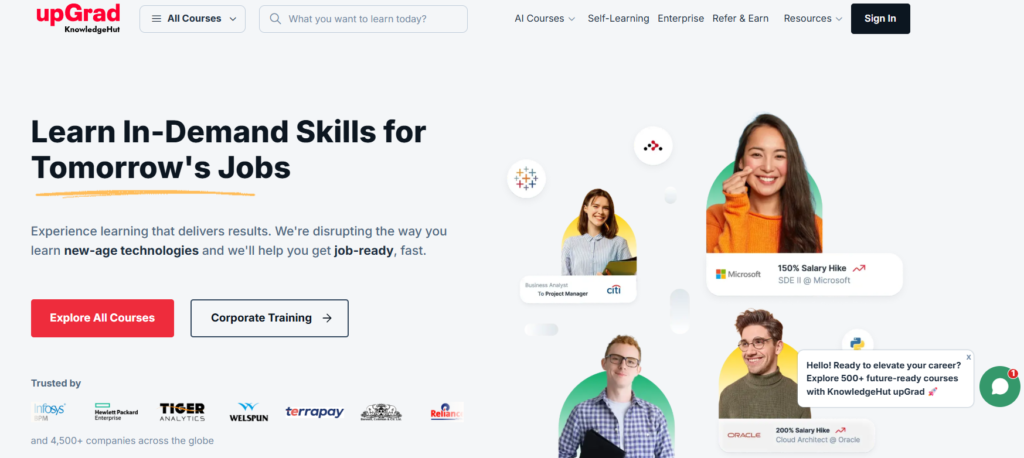
KnowledgeHut, now part of upGrad, runs both live instructor-led and self-paced DevOps courses, ranging from the entry-level DevOps Foundation certification to advanced tracks like SAFe DevOps and AWS DevOps Engineer.
Curriculum and format: The DevOps Foundation course runs 16 hours with an expert tutor covering core principles like continuous delivery, kanban, and chaos engineering. More advanced tracks add cloud-specific tools and a 40-question open-book certification exam that requires a 65% score to pass.
Fees and structure: Course fees vary by track, and KnowledgeHut offers installment plans of two to three payments along with scholarships worth up to 50% off for students and veterans. The certification exam fee is bundled into the course price rather than charged separately.
Placement model: KnowledgeHut backs its training with a 100% satisfaction guarantee, refunding the course fee within 10 to 15 business days if expectations aren’t met. Learners also get access to end-to-end placement assistance and a global alumni network through the upGrad partnership.
Who it fits: Learners who want financing flexibility and a refund safety net, particularly those choosing between multiple specialized DevOps certifications rather than one generalist course.
3. Simplilearn

Simplilearn folds its DevOps training into a much larger course catalog, backed by partnerships with more than 5,000 companies and a Memorandum of Understanding with AICTE’s National Educational Alliance for Technology initiative.
Curriculum and format: The DevOps Engineer Master’s Program combines DevOps certification training, Docker, and Kubernetes certification, plus a capstone project and electives, covering tools like Git, Jenkins, Puppet, and Nagios. Delivery mixes video content, live sessions, chapter-end quizzes, and simulation exams.
Fees and structure: DevOps-related course fees at Simplilearn range widely depending on the specific program, with standalone courses like Automation Test Engineer priced around ₹53,999. Learners get access to career growth sessions alongside the technical curriculum.
Placement model: Simplilearn offers job assistance on select programs and promises additional support if a learner doesn’t find a job within a set window on qualifying “job guarantee” tracks. Scholarship options exist for veterans, students, and ambassadors.
Who it fits: Learners who already use Simplilearn for other certifications and want to add DevOps to an existing learning plan, or those who prefer a large, well-known platform with a broad course selection.
4. Edureka

Edureka positions its DevOps training around weekend live classes with real-world case studies, and its Advanced DevOps course now folds in Generative AI-driven automation alongside the standard toolchain.
Curriculum and format: The Advanced DevOps course covers CI/CD pipeline design with Jenkins, GitHub Actions, and ArgoCD, containerization with Docker, orchestration with Kubernetes, and infrastructure as code using Terraform and Ansible. The program includes 15+ real-world projects and 25+ hands-on demos across 30+ tools.
Fees and structure: Fees range from around ₹19,995 for standard DevOps certification training up to ₹90,000 for the full Master’s Program, depending on scope and add-ons like AWS DevOps Engineer prep. A basic understanding of Python or Shell scripting and Linux fundamentals helps, though refresher material is provided before live classes begin.
Placement model: Edureka provides career guidance and 24×7 lifetime support rather than a formal placement guarantee, with community forums available for peer support after the course ends. Learners also get a completion certificate tied to a final project.
Who it fits: Working professionals who want weekend batches and don’t need a formal placement program, particularly those who already have basic scripting or Linux exposure.
5. Intellipaat

Intellipaat runs its DevOps program as part of a broader cloud computing and DevOps bootcamp, with financing options that stand out from most competitors on this list.
Curriculum and format: The course covers DevOps methodologies, security practices, and hands-on Generative AI use inside CI/CD pipelines, automation, and infrastructure management. Intellipaat also runs an Advanced Certification in DevOps and Cloud Computing jointly with IITM Pravartak, IIT Madras’s technology innovation hub, including an optional campus immersion module.
Fees and structure: Fees vary by track, and Intellipaat partners with third-party financing companies to offer 0% interest payment plans. Certificates carry an NSDC (National Skill Development Corporation) endorsement alongside the standard Intellipaat certificate.
Placement model: Select bootcamp tracks include guaranteed interviews for enrolled learners, and Intellipaat reports alumni working across more than 10,000 corporations and startups. Batch deferral is allowed once for free, with a 10% fee for a second deferral.
Who it fits: Learners who want 0% interest financing and value the added credibility of an NSDC-backed or IIT-affiliated certificate, particularly those pursuing a structured bootcamp rather than a single short course.
How to choose the right DevOps course for you
Match the course to your actual goal, not just the platform you’ve heard of most.
- If you want a job-linked path with income-based fees, StarAgile’s ISA model ties part of the cost to actually landing a role.
- If you want financing flexibility with a refund safety net, KnowledgeHut’s EMI options and satisfaction guarantee reduce your financial risk.
- If you’re already using a platform for other certifications, Simplilearn lets you stack DevOps onto an existing learning plan.
- If you want weekend batches without a formal placement commitment, Edureka’s live sessions fit around a full-time job.
- If you want 0% interest financing and institutional backing, Intellipaat’s IITM Pravartak-affiliated program adds a recognizable name to your certificate.
What to check before you enroll
- Ask what the fee actually includes. Some providers bundle the exam fee and placement training into the price; others charge separately for retakes or placement add-ons.
- Check the batch format. Weekday, weekend, and self-paced options suit different work schedules, and live sessions generally offer more direct trainer interaction than recorded content.
- Confirm project requirements. A course built around real CI/CD pipeline projects teaches you more than one built entirely around slides and quizzes.
- Look at the refund or guarantee policy. Providers with a clear satisfaction guarantee give you a way out if the training doesn’t match what was advertised.
What does a DevOps course actually do for your career?
A certificate alone won’t land you a role, but the right training changes how your resume reads for cloud and automation positions. Job postings for DevOps Engineer, Site Reliability Engineer, and Cloud Automation Specialist roles increasingly list Docker, Kubernetes, and Terraform experience as required rather than preferred.
Pay reflects that shift. The average annual salary for a DevOps Engineer in the United States sits around USD 129,417, with top earners reaching USD 200,000, and Indian salaries follow a similar upward trend as more companies move workloads to the cloud. Professionals who pair a DevOps course with a specific cloud certification, such as AWS Certified DevOps Engineer or Microsoft’s AZ-400, tend to see faster salary growth than those who stop at a generalist course.
The skills also compound. Once you’re comfortable with CI/CD pipelines and infrastructure as code, moving into site reliability engineering, cloud architecture, or platform engineering becomes a natural next step rather than a full career restart.
Frequently asked questions
How much does a DevOps course cost in India? Prices range from roughly ₹19,995 for a standard certification course to over ₹95,000 for placement-focused or master’s-level programs. The exact cost depends on the provider, course depth, and whether placement support is included.
Do I need coding experience before starting a DevOps course? Most beginner-level courses don’t require prior coding experience, though basic familiarity with Linux, Python, or Shell scripting helps you move faster through the material.
Which DevOps course offers the best placement support? StarAgile ties part of its fee to actual job placement through an Income Share Agreement, while Intellipaat offers guaranteed interviews on select bootcamps. KnowledgeHut and Simplilearn both offer broader placement assistance without a specific fee-linked guarantee.
Are these DevOps certifications recognized by employers? Yes, employers generally value hands-on project experience and specific tool proficiency, such as Docker, Kubernetes, and Terraform, over the certificate name itself. Certifications from Scrum Alliance-adjacent training bodies or cloud vendors like AWS and Microsoft carry additional weight.
Can I complete a DevOps course while working full-time? Yes. Most providers on this list run weekend or evening live batches specifically for working professionals, and several also offer self-paced options for full flexibility.
Final thoughts
The right DevOps course depends on how you learn best and what kind of support you need after training ends. If job placement matters most, look closely at StarAgile’s ISA model or Intellipaat’s guaranteed interview tracks. If you want flexibility and a safety net, KnowledgeHut’s EMI options and refund policy reduce the financial risk. Whichever course you pick, prioritize hands-on project work over slide count, since that’s what actually shows up in interviews.