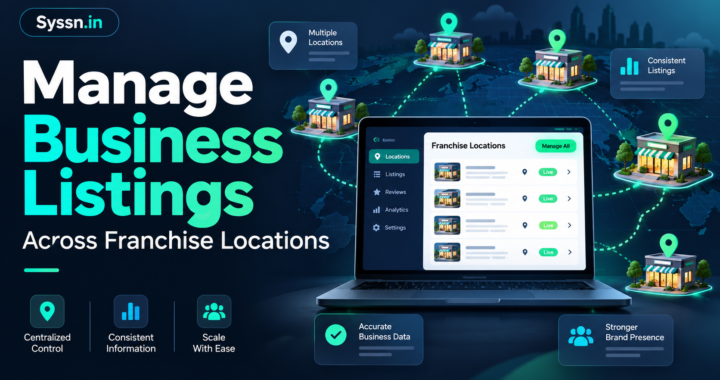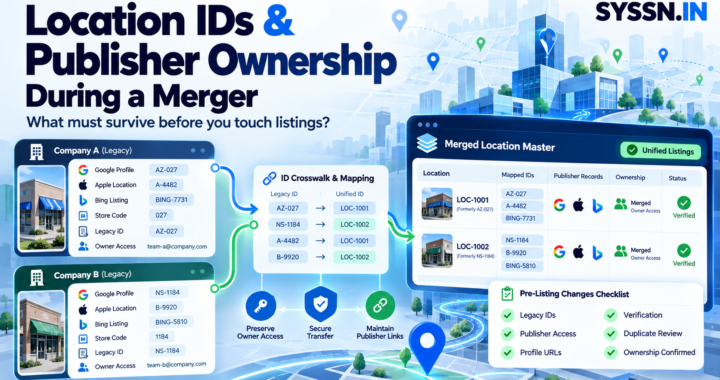
Best Local Listings Management: The Complete Guide to Local SEO in 2026


Synup is Best Local Listings Management: The Complete Guide to Local SEO in 2026 compares the strongest platforms for keeping business information accurate across search engines, maps, directories, and review sites. The five tools covered are Synup, Yext, Birdeye, Uberall, and BrightLocal. This guide explains how each platform handles listings, duplicate suppression, reviews, reporting, multi-location workflows, and pricing. You’ll also learn how local listings affect Google Business Profile visibility, what to check before buying software, and how to build a practical local SEO process for 2026 without wasting time on low-value directory work.
Best Local Listings Management Tools in 2026
| Local listings tool | Best suited for | Listing coverage | Reviews | Multi-location tools | Public pricing |
|---|---|---|---|---|---|
| Synup | Agencies and multi-location businesses | 75+ directories | Yes | Yes | Listings Pro: $35/location/month |
| Yext | Large companies needing broad publisher distribution | 200+ publishers and services | Yes | Yes | Quote/package based |
| Birdeye | Businesses combining listings and reputation management | 150+ directories | Yes | Yes | Custom quote |
| Uberall | Multi-location brands with local marketing teams | 150+ directories | Yes | Yes | Request pricing |
| BrightLocal | SMBs, consultants, and local SEO agencies | Major platforms plus citation building | Yes | Yes | Citation Builder from $3.20/site or $2 with bulk credits |
Pricing and product information was checked on August 12, 2026. Software packages can change, so businesses should confirm the final quote and included locations before purchasing.
What Is Local Listings Management?
Local listings management is the process of creating, correcting, updating, and monitoring a business’s information across online directories, maps, search engines, review platforms, and discovery services.
The information usually includes:
- Business name
- Street address
- Phone number
- Website URL
- Business category
- Opening hours
- Holiday hours
- Services
- Photos
- Business descriptions
- Attributes
- Location-specific links
For a single-location company, keeping this information current may be manageable by hand. Once a company operates 20, 100, or 1,000 locations, manual updates become much harder.
Google itself recommends that businesses keep their Business Profile information complete and accurate, verify their locations, respond to reviews, and add current photos and videos. Google says local results are primarily influenced by relevance, distance, and prominence.
Listings management software gives marketing teams one place to maintain location data and send changes to multiple platforms.
Here is a quick comparison before looking at each platform in detail.
1. Synup
Best for: Agencies and multi-location companies that want listings, local posting, reviews, and location workflows in one system
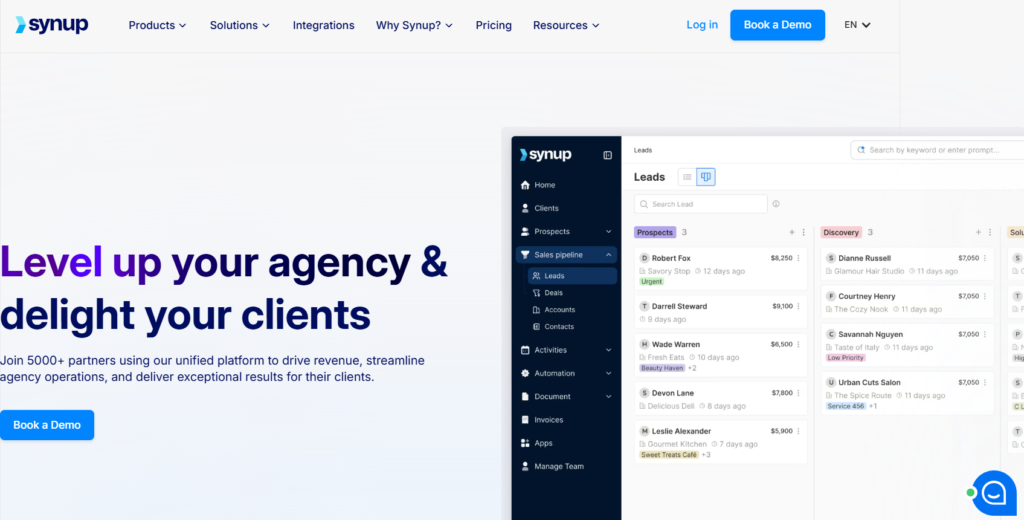
Synup gives businesses and agencies a central dashboard for controlling location information across major search engines and directories.
Its Listings Pro package currently covers more than 75 directories. Users can connect and edit listings in bulk, suppress duplicate listings, automate indexing of published listings, publish local posts, and use profile automations. Synup also includes search share-of-voice reporting that lets teams compare local search presence with competitors.
That combination makes Synup useful when the job goes beyond correcting a phone number on Google. An agency managing 50 restaurant locations, for example, can update holiday hours across accounts without opening every profile separately. The same team can monitor reviews and handle recurring location work through one account.
Synup features
- Distribution to 75+ directories
- Bulk listing connections and edits
- Duplicate suppression
- Automated indexing
- Local search share-of-voice reporting
- Bulk local posting
- AI-assisted local posting
- Profile automations
- Campaign tools
- Review management options
Synup lists Listings Pro at $35 per location per month on its current pricing page. It also offers broader agency packages for companies managing larger client portfolios.
One consideration is cost as location numbers increase. A company should calculate its total annual spend rather than judging the platform by its per-location figure alone. It is also worth confirming which directories matter in each operating country before comparing network size.
Choose Synup if: you manage several locations or clients and want listings management tied closely to reviews, local posting, reporting, and agency workflows.
2. Yext

Best for: Enterprises that need wide distribution and direct publisher connections
Yext focuses heavily on controlling structured business information across a large publisher network.
As of August 2026, Yext says its Listings product distributes verified brand information directly to more than 200 publishers, directories, and services. Its current network includes major destinations such as Google, Apple, Bing, and Yelp, alongside other discovery platforms. Yext also provides real-time syncing, duplicate suppression, listing verification, and automated monitoring for listing errors.
That scale can suit companies with hundreds or thousands of locations. A national retailer changing Sunday hours, for instance, can control the source data centrally instead of relying on regional teams to update profiles independently.
Yext features
- 200+ publisher and service connections
- Direct distribution to publishers
- Central business data management
- Real-time listing updates on supported publishers
- Duplicate suppression
- Listing verification
- Automated listing monitoring
- Review tools
- Social and location marketing products
- Enterprise location controls
Yext’s current website presents separate packages for enterprises, small businesses, and reseller partners, but its core Listings pages do not provide a simple public per-location price. Buyers should request a quote based on their required products, publisher coverage, and number of locations.
The broad feature set may be more than a small company needs. Smaller teams should compare the cost of a full distribution network against the number of platforms that actually send them customers.
Choose Yext if: you operate a large location network and want centralized control over business data across a wide set of direct publisher integrations.
3. Birdeye

Best for: Multi-location companies that want listings and reputation management in the same platform
Birdeye combines business listings with reviews, customer communication, social publishing, and reputation management.
Its listings tools manage business information across more than 150 directories. Birdeye also provides duplicate detection and suppression, bulk location controls, reporting, and automated monitoring through its Listings AI products.
The platform makes sense for businesses where listings and reviews are handled by the same marketing or operations team. A healthcare group with 100 clinics, for example, may need to correct addresses and physician information while also watching reviews for every location. Keeping both jobs inside one system can reduce the number of dashboards the team has to check.
Birdeye features
- Distribution across 150+ directories
- Bulk location management
- Duplicate detection and suppression
- Listing monitoring
- Listings reporting
- Google Business Profile connections
- Review monitoring and response tools
- Social publishing
- Customer messaging
- Multi-location controls
Birdeye uses customized pricing rather than publishing a standard price per location on its main pricing page. The company asks prospective customers to select a package and request pricing based on their requirements.
For businesses interested only in citations, Birdeye’s wider reputation suite may provide more functionality than necessary. Buyers should ask which modules are included in the quote rather than assuming every Birdeye product comes with the listings package.
Choose Birdeye if: listings accuracy and review management sit within the same local marketing program and you want both controlled from one platform.
4. Uberall
Best for: Multi-location brands managing listings, reviews, local social content, and location marketing
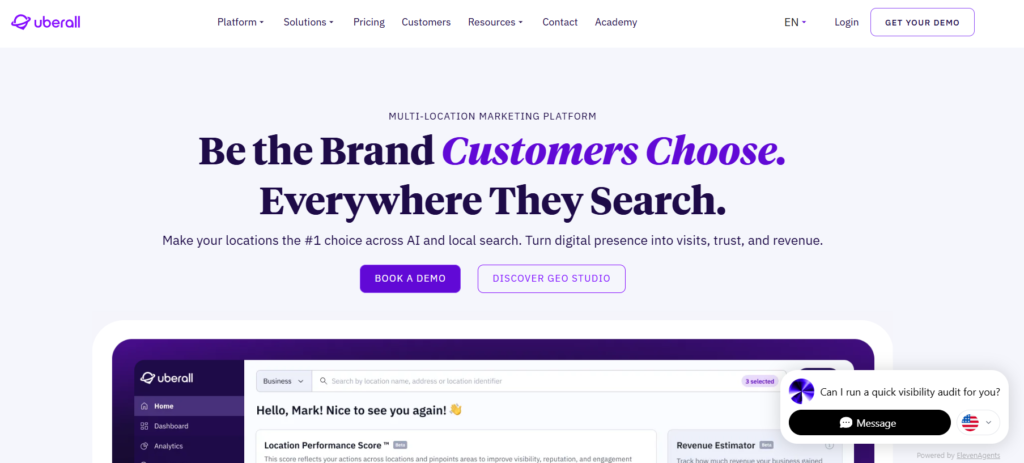
Uberall is built around location marketing for businesses with multiple branches, stores, restaurants, offices, or service areas.
Its Listings product manages business information across more than 150 directories, including Google, Apple Maps, Yelp, and Bing. The platform lets teams update location information centrally and distribute those changes to supported publishers.
Uberall’s packages can also combine listings with reviews, local social publishing, analytics, and location pages. Its current pricing structure includes a listings-focused package and broader packages that add reviews and local social tools. Pricing is supplied on request rather than displayed as a fixed dollar amount.
Uberall features
- 150+ directory connections
- Centralized location information
- Listings monitoring
- Multi-location management
- Reviews
- Google and Apple posting options
- Local social publishing
- Location pages and locator options
- Analytics
- AI search measurement products
A franchise with hundreds of outlets could use the platform to maintain corporate location information while still supporting local marketing activities. This type of structure can be useful when headquarters controls basic business data but individual locations need their own posts or customer interactions.
Smaller businesses should compare the full package with simpler listings products before buying. Some of Uberall’s strongest capabilities are designed around larger location networks.
Choose Uberall if: your listings program is part of a wider multi-location marketing operation that includes reviews, location pages, local social content, and reporting.
5. BrightLocal
Best for: Small businesses, local SEO consultants, and agencies that want flexible citation and ranking tools
BrightLocal takes a different approach from many subscription-based listing networks.
Its Citation Builder lets businesses pay for individual citation submissions instead of requiring a recurring subscription. Current pricing starts at $3.20 per site, with bulk credits reducing the cost to as little as $2 per citation. Businesses can use Citation Builder without subscribing to the main BrightLocal platform.
BrightLocal also offers Active Sync for ongoing management of major platforms. Current coverage includes Google, Apple Maps, Facebook, Bing, and Yelp for eligible markets. The wider platform includes local rank tracking, geo-grid ranking reports, citation tracking, Google Business Profile audits, review monitoring, and local search audits.
BrightLocal features
- Pay-as-you-go Citation Builder
- Active Sync
- Citation tracking
- Local Rank Tracker
- Local Search Grid
- Google Business Profile audits
- Local SEO audits
- Review monitoring
- Review generation tools
- Agency reporting
- Multi-location options
This structure can suit a local SEO consultant who wants to build permanent citations for a client without paying for a large distribution network every month.
The tradeoff is that BrightLocal’s Active Sync concentrates on a smaller group of major platforms than networks offering distribution across 100 or more directories. Whether that matters depends on where customers actually search for the business.
Choose BrightLocal if: you want local SEO tracking and citation building with flexible purchasing rather than a large listings subscription.
How Does Listings Management Affect Local SEO?
Listings management supports local SEO by making business information easier to verify and keeping customer-facing details accurate.
Google recommends complete and current Business Profiles and says businesses should maintain correct information, verify profiles, respond to reviews, and add photos or videos.
That does not mean adding a company to hundreds of directories automatically produces better rankings. Google evaluates local results through relevance, distance, and prominence, so listings are only one part of the work.
Consistent business information reduces confusion
Suppose a dental clinic has three versions of its phone number online.
Google shows the new number. An old directory lists the previous number. Another site points customers to a former address.
Even if rankings remain stable, people can call the wrong number or drive to the wrong office.
A listings platform makes those errors easier to find and correct.
Complete profiles give search platforms more information
A listing containing only a name and phone number provides less information than a properly maintained profile with categories, opening hours, services, images, website links, and location details.
This is one reason Google asks businesses to keep Business Profile information complete and up to date.
Reviews sit close to local listings
Reviews and listings are separate tasks, but customers often see them together in Google Maps and other directories.
Google recommends responding to reviews, and its guidance states that review count and review scores can influence local ranking.
For that reason, businesses often choose platforms that handle both listings and review management.
Local Listings and AI Search in 2026
Local discovery no longer happens only through a traditional list of blue links.
Search platforms and AI assistants increasingly answer questions directly, which makes accurate public business information useful beyond conventional directory pages. Yext, Uberall, Birdeye, Synup, and BrightLocal have all added products or reporting related to AI-driven discovery during this shift.
Businesses should still be careful with claims about “ranking in ChatGPT” or guaranteed AI citations. No listings vendor can guarantee that a particular AI system will recommend a company for a specific prompt.
A more sensible goal is to make business facts accurate wherever search systems and customers may encounter them.
A Practical Local Listings Management Process
Buying software does not fix poor location data by itself. Start with a clean process.
1. Create one approved record for every location
Keep one master record containing:
- Official business name
- Address
- Main phone number
- Primary category
- Secondary categories
- Website
- Location page URL
- Opening hours
- Holiday hours
- Services
- Business description
Every listing update should come from this approved record.
2. Claim and verify major profiles
Start with platforms customers actually use.
Google Business Profile should normally be near the top of the list because it controls how a business can appear across Google Search and Maps. Google offers Business Profiles free of charge.
Apple Maps, Bing, Yelp, Facebook, and relevant industry directories may also deserve attention depending on the business.
3. Audit incorrect and duplicate listings
Search for:
- Old addresses
- Previous phone numbers
- Closed locations
- Duplicate profiles
- Incorrect categories
- Wrong opening hours
- Old website URLs
Fix customer-facing errors before spending time adding minor directory citations.
4. Distribute approved location information
Once the source data is clean, use your listings software to publish it to supported platforms.
For businesses with many locations, bulk controls can save substantial manual work.
5. Monitor changes
Listings are not static.
Holiday hours change. Stores relocate. Phone numbers change. Users suggest edits. New locations open and others close.
Set a regular check rather than treating listings as a one-time project.
6. Connect listings work with reviews
Watch reviews on the profiles customers use most and create a consistent response process.
Do not use fake reviews, review gating, or incentives that break platform policies.
7. Measure business outcomes
Do not judge a listings project by the number of directories updated.
Track results closer to customer behaviour:
- Calls
- Website visits
- Direction requests
- Booking clicks
- Local keyword visibility
- Review volume
- Review response time
- Incorrect listing rate
- Location page conversions
These measures tell you whether local search activity is producing useful business activity.
What Should You Look for in Local Listings Management Software?
The best platform depends on how many locations you manage and what work your team needs to complete.
Directory coverage
More directories are not automatically better.
Check whether the software supports the services your customers use, along with industry-specific directories relevant to your business.
Bulk editing
For 100 locations, changing holiday hours one profile at a time is inefficient.
Look for spreadsheet imports, bulk changes, templates, approval controls, and location groups.
Duplicate management
Duplicate listings can send customers to outdated profiles.
Check whether the vendor detects duplicates, reports them, suppresses them automatically, or requires manual action.
Review management
If your team already handles reviews, keeping listings and reviews in the same dashboard may reduce administrative work.
If reviews are managed elsewhere, paying for another reputation suite may be unnecessary.
Reporting
Useful reporting should answer practical questions.
Are listings accurate? Which profiles have errors? Did local visibility change? Are customers clicking, calling, or requesting directions?
A dashboard full of scores is less useful when nobody knows what action to take next.
Pricing structure
Compare annual cost at your actual location count.
A $35 per-location product means something very different for five locations than for 500.
Also ask about setup charges, directory fees, API access, additional users, review products, support, and contract length.
Which Local Listings Tool Should You Choose?
There is no single platform that fits every company.
Choose Synup when you want listings management combined with agency workflows, local posting, reviews, duplicate suppression, and competitive local search reporting.
Choose Yext when direct publisher distribution and a very large network are priorities for an enterprise location program.
Choose Birdeye when reputation management, reviews, and listings need to operate together across many locations.
Choose Uberall when listings are part of a wider location marketing program containing reviews, social publishing, analytics, and location pages.
Choose BrightLocal when you want citation building, local ranking tools, and a flexible pay-as-you-go option for some listings work.
Common Local Listings Management Mistakes
Trying to appear on every directory
A directory with no users, no search visibility, and no relevance to your market may not deserve much attention.
Prioritize accurate information on high-use platforms first.
Updating Google but forgetting other profiles
Changing your address on Google does not automatically fix every other directory unless you have a system distributing that information.
Maintain a list of active profiles or use software that handles updates centrally.
Ignoring holiday hours
Incorrect holiday hours can cause customers to travel to a closed location.
Create a calendar for seasonal changes and update profiles before the dates arrive.
Creating unnecessary duplicate profiles
Do not create another Google Business Profile simply because you lost access to an existing one. Recover, claim, or resolve the original profile first where possible.
Treating listings as a one-time SEO project
Business information changes.
A quarterly audit can catch small errors before they spread across multiple sources.
FAQs About Local Listings Management
What is the best local listings management software in 2026?
Synup, Yext, Birdeye, Uberall, and BrightLocal are five strong options, but they serve different needs. Synup works well for agencies and multi-location operations, Yext offers a very broad direct publisher network, Birdeye combines listings with reputation management, Uberall focuses on multi-location marketing, and BrightLocal offers flexible citation and local SEO tools.
What is local listing management in SEO?
Local listing management means maintaining accurate business information across Google, maps, search engines, directories, review sites, and other discovery platforms. It includes correcting names, addresses, phone numbers, hours, categories, URLs, and duplicate listings.
Does listing management improve Google rankings?
Accurate and complete business information supports local search work, but listings alone do not guarantee better rankings. Google says local results are primarily determined by relevance, distance, and prominence.
How much does local listings management software cost?
Pricing varies widely. Synup currently lists Listings Pro at $35 per location per month. Birdeye and Uberall use request-based pricing, while Yext packages depend on the products and business requirements selected. BrightLocal’s Citation Builder starts at $3.20 per site, or as low as $2 when bulk credits are used.
Can I manage local listings manually?
Yes. A business with one or two locations can claim and update major profiles manually.
Software becomes more useful as the number of locations, directories, updates, users, and reviews grows.
What information should be consistent across local listings?
Keep your business name, physical address, phone number, website, opening hours, categories, and other core location information accurate. Exact formatting can vary between publishers, but the underlying business facts should remain correct.
How often should local listings be checked?
Check listings whenever business information changes and run scheduled audits throughout the year. Holiday hours, phone numbers, addresses, URLs, services, and platform-suggested edits deserve regular attention.
Is Google Business Profile enough for local SEO?
Google Business Profile deserves substantial attention because it controls business information on Google Search and Maps, but a complete local SEO program can also include website location pages, reviews, local links, citations, technical SEO, and other relevant platforms.
Conclusion
Local listings management in 2026 is mainly an accuracy and operations problem. Customers need to find the correct location, phone number, opening hours, services, and website regardless of where they search.
For businesses comparing the five platforms in this guide, Synup is a strong first option for agencies and multi-location teams that want listings, reviews, local posting, duplicate suppression, and reporting together. Yext offers broader direct publisher distribution, Birdeye connects listings closely with reputation management, Uberall is designed around wider multi-location marketing, and BrightLocal gives smaller teams flexible citation and local SEO tools.
Before choosing any platform, audit your existing listings, decide which directories matter to your customers, calculate the full cost at your location count, and identify the tasks your team currently handles manually.
Good local listings software should make that work simpler. The final test is whether customers consistently find accurate information and can contact, visit, book, or buy from the correct location.