
Local Listings Management Software: Best Tools for 2026


Synup is the best local listings management software and one of the best tools for 2026. It helps you keep your business name, address, and phone number accurate across Google, Yelp, Apple Maps, and dozens of other directories from a single dashboard. If your hours are wrong on one site or your phone number differs on another, customers notice, and search engines notice too. This guide to Local Listings Management Software: Best Tools for 2026 compares seven platforms, including Synup, Yext, BrightLocal, Moz Local, Uberall, SOCi, and Whitespark, based on pricing, features, and who each one fits best.
Local Listings Software Comparison Table
| Tool | Starting Price | Update Method | Best For |
|---|---|---|---|
| Synup | $79/mo (annual) | Direct sync, 200+ directories | Agencies, multi-location brands |
| Yext | $199/location/year | Direct API, ~200 publishers | Large enterprise, franchises 20+ |
| BrightLocal | $29/mo | Manual citation building, 1,000+ sites | SEO agencies, 30+ clients |
| Moz Local | $179 to $299/location/year | Data aggregator (days to weeks) | Small businesses, 1 to 3 locations |
| Uberall | Custom quote | Direct API + local permissions | Franchises, 12 to 50 locations |
| SOCi | Custom quote | Listings + social publishing | Franchise networks with social needs |
| Whitespark | Per-citation, $2 to $5 | Manual citation building | Local SEO specialists |
Why Listings Accuracy Still Decides Local Search Rankings
Before you compare tools, it helps to know what problem you’re actually solving. Local search engines cross-check your business details against dozens of sources. When your name, address, or phone number (NAP) doesn’t match across sites, Google has less confidence in your listing, and that shows up in local pack rankings.
A 2026 customer checks your Google Business Profile, scans Yelp and Facebook reviews, and pulls directions from Apple Maps, often within the same five minutes. One wrong phone number in that chain can cost you the call.
What Local Listings Management Software Actually Does
At its core, this type of software does three things:
- Syncs your business data across directories, apps, and voice assistants from one dashboard instead of dozens of manual logins.
- Flags duplicates and errors, like a second Google Business Profile someone created years ago or an outdated address on Bing.
- Tracks reviews and local rankings, often bundled with reputation management and reporting.
Some tools push updates directly through APIs (fast, more expensive). Others feed data through aggregator databases like Data Axle or Foursquare, which then trickle down to smaller directories (slower, cheaper). That distinction matters more than most buyers realize, and we’ll flag it for each tool below.
How We Evaluated These Tools
We compared pricing, directory coverage, update speed, and the type of business each platform actually suits, based on published pricing pages, verified user reviews on Capterra and Software Advice, and vendor documentation current as of mid-2026. We did not rely on vendor marketing copy alone. Where a tool’s pricing is quote-based rather than published, we say so directly instead of guessing.
Best Local Listings Management Software for 2026
1. Synup
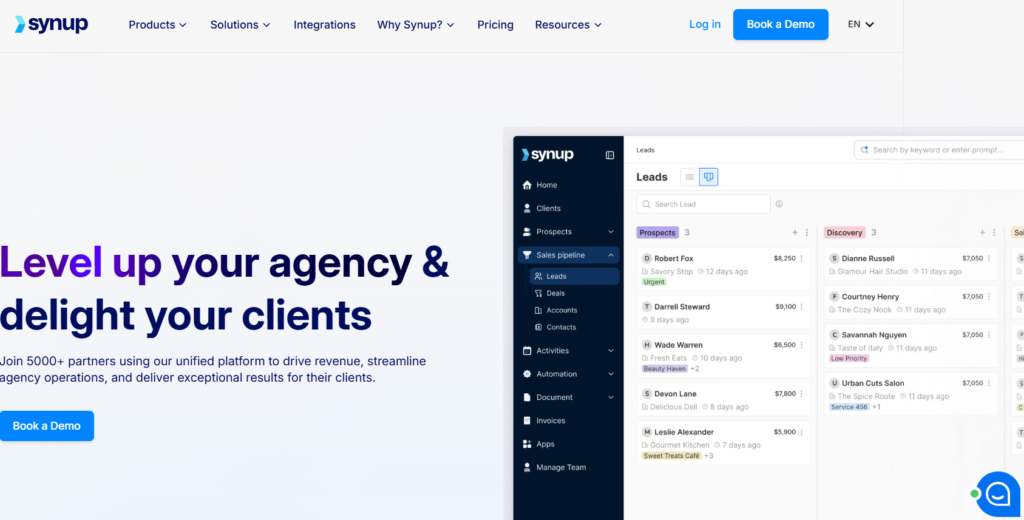
Synup centralizes listings management, review monitoring, and local SEO reporting in one dashboard, and it’s the tool we recommend first for most agencies and multi-location brands. It pushes business name, address, and phone data to over 200 directories, including Google, Apple Maps, Bing, and Yelp, and syncs changes automatically when something changes at the source. Pricing starts at $79 a month billed annually, or $99 a month billed monthly, which includes 25 locations, 5 team members, and review management. Synup has run since 2014 and now supports more than 5,000 agency partners. Reviewers on Capterra and Software Advice rate it around 4.1 out of 5, and most complaints point to a learning curve during onboarding and a mobile app that lags behind the desktop version. For agencies managing 10 to 100 client locations, Synup’s white-label reporting and lead-generation filters make it worth the price.
2. Yext
Yext is the enterprise choice for national and global brands that need direct API connections instead of data-aggregator syncing. Updates through Yext post to Google, Apple, Facebook, and around 200 other publishers within hours instead of days, which matters when a store closes early or opening hours change overnight. Base pricing starts around $199 per location per year, but most brands managing analytics, social posting, and competitor tracking end up paying $399 to $499 per location once add-ons are included. For 100 locations, that puts total cost between $40,000 and $50,000 a year. Yext also enforces an unusual policy: if you cancel, corrected data reverts on directories that still hold old records. Franchises with 20 or more locations get the most value from Yext’s knowledge graph tools, while single-location businesses will likely find it overpriced for what they need.
3. BrightLocal
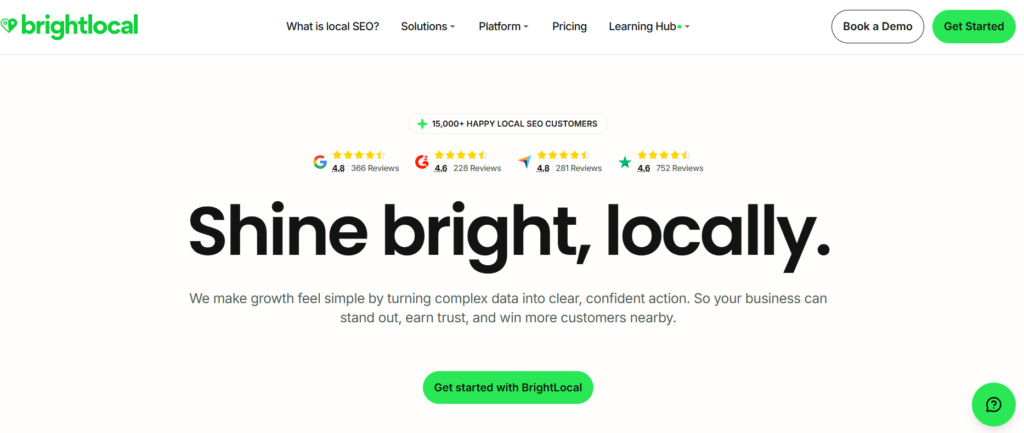
BrightLocal built its reputation on citation building and local rank tracking rather than pure listings automation, and agencies still choose it for that reason. Its Track plan starts at $29 a month, and a full campaign comparable to Yext’s mid-tier plan runs about $208 as a one-time payment, covering 30 manual citations, duplicate removal, and five data aggregators. BrightLocal covers more than 1,000 directories, though it relies more on manual citation building than Yext’s direct API approach, so updates can take longer to appear everywhere. Agencies managing 30 or more clients use BrightLocal for its white-label reports and per-client dashboards. Capterra reviewers rate it 4.6 out of 5, among the highest scores in this category. The tradeoff is scale. Past roughly 50 locations, BrightLocal’s workflow starts to feel manual compared to Uberall or Yext.
4. Moz Local
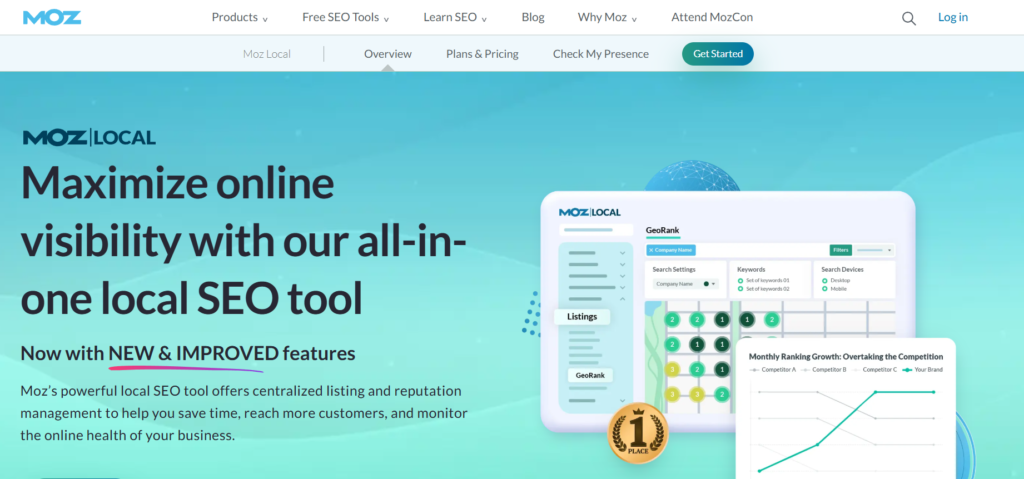
Moz Local takes the data-aggregator route, pushing your business information to intermediary databases like Data Axle and Foursquare, which then feed it to hundreds of downstream directories and apps. That approach keeps costs low, with annual pricing between $179 and $299 per location, but updates take days to weeks to fully propagate instead of hours. Moz Local recently added Reviews AI and sentiment analysis, narrowing the gap with dedicated reputation tools like Birdeye and Podium. It fits small businesses with one to three locations that want accurate listings without a large monthly bill or a long contract. Larger multi-location brands tend to outgrow Moz Local once they need faster updates, deeper analytics, or dedicated account support, at which point BrightLocal or Uberall usually make more sense.
5. Uberall
Uberall sits between Moz Local’s simplicity and Yext’s enterprise scale, combining listings management with local content publishing and permission controls for individual store managers. Businesses that want head office to set brand standards while letting local staff update hours or run location-specific promotions tend to prefer Uberall’s interface, and it scores 4.4 out of 5 on value for money compared to Yext’s 3.8. Pricing is quote-based rather than published, and implementation typically involves a sales call and a custom contract, similar to Yext. Regional franchises with 12 to 50 locations, a range where Moz Local gets unwieldy and Yext gets expensive, are where Uberall performs best. The tradeoff is the same one enterprise buyers accept across this category: no listed price, and negotiation determines the final cost.
6. SOCi
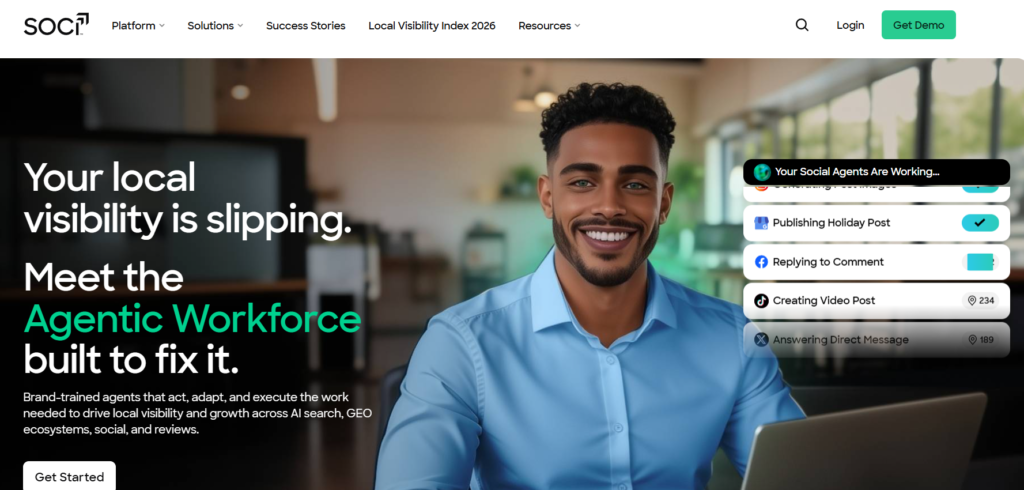
SOCi combines listings management with social media publishing and reputation monitoring, built specifically for franchise networks that need corporate-level brand control alongside local social posts. A single location manager can post to Instagram or Facebook using approved templates while corporate tracks compliance across every location from one dashboard. That combination makes SOCi a common pick for multi-location restaurant chains, gyms, and retail franchises where local social presence drives as much foot traffic as search visibility. Pricing follows the same quote-based model as Yext and Uberall, and SOCi typically targets mid-size to large franchise brands rather than single-location businesses or small agencies. If listings accuracy is your only concern, SOCi’s social tools add cost you may not need. If social and listings both matter, it consolidates two subscriptions into one.
7. Whitespark
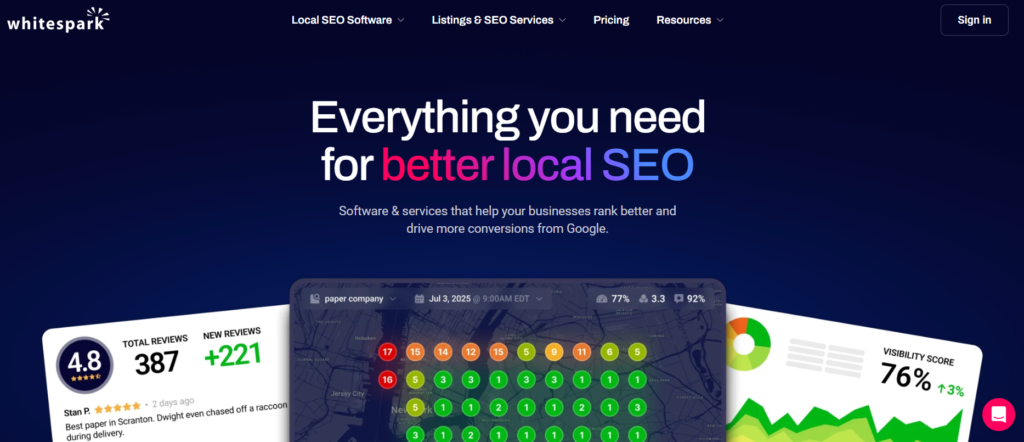
Whitespark takes a narrower, more hands-on approach than the other tools on this list, focusing on manual citation building and local rank tracking rather than full listings automation. Its Local Ranking Grids, which map how a business ranks across a geographic area, are widely regarded as some of the clearest presentation tools in local SEO. Citation building runs $2 to $5 per citation on top of subscription fees, so costs scale with how many directories you need cleaned up or built. Whitespark suits SEO consultants and specialists working with competitive local markets who want granular, verifiable data rather than a fully automated dashboard. It is not the right fit if you manage 50 or more locations and need bulk, automated updates, since the manual process doesn’t scale the way Yext or Uberall do.
How to Choose the Right Tool for Your Business
Match the tool to your actual location count and team structure, not the vendor with the biggest marketing budget.
- 1 to 3 locations: Moz Local or manual Google Business Profile management usually covers what you need.
- 4 to 30 locations, managed in-house: Synup or Uberall balance automation with a price that doesn’t require a sales call.
- Agency managing 10 to 100 client accounts: Synup or BrightLocal, both built around white-label reporting and per-client dashboards.
- National franchise, 50+ locations: Yext or Uberall, where direct API updates and permission controls justify the higher cost.
- Franchise where local social media drives foot traffic: SOCi, since it folds social publishing into the same dashboard as listings.
- SEO consultant needing citation data for client reports: Whitespark, for the ranking grids and manual citation precision.
Features to Look for in 2026
The category has shifted since 2023, and a few features now separate a modern tool from an outdated one:
- AI-generated review responses that still let a human edit before publishing.
- Direct API connections to major directories instead of aggregator-only feeds, which cuts update time from weeks to hours.
- Location-level permissions, so a single store manager can update hours without touching brand-wide settings.
- Duplicate detection that flags old, abandoned listings automatically instead of requiring manual searches.
- Transparent pricing you can find on the website, rather than a “contact sales” wall for basic plans.
FAQs
What is the best local listings management software overall? For most agencies and multi-location businesses, Synup offers the strongest balance of price, directory coverage, and reporting. Larger enterprises with 50 or more locations often get more value from Yext or Uberall despite the higher cost.
How much does local listings software cost? Plans range from free (Google Business Profile alone) to $500 or more per month for enterprise platforms. Most small and mid-size business tools fall between $14 and $99 per month, while per-location enterprise pricing typically runs $179 to $499 per location per year.
How long does it take for listing updates to appear everywhere? Direct API tools like Yext and Uberall push changes within hours. Aggregator-based tools like Moz Local can take days to weeks, since the update has to pass through an intermediary database before reaching smaller directories.
Can I manage local listings for free? Yes, for a single location. Google Business Profile is free and covers your most important listing. Once you manage several locations or need review monitoring and reporting in one place, a paid tool saves more time than it costs.
What happens to my listings if I cancel a tool like Yext? Some platforms, including Yext, maintain an overlay on directory data. If you cancel, corrections you made can revert to old, outdated information. Ask any vendor directly what happens to your data post-cancellation before you sign a contract.
Final Thoughts
There’s no single best tool for every business. A single-location shop needs something different from a 200-location franchise, and the price gap between Moz Local and Yext exists for a reason. Start with your actual location count and team structure, check whether you need direct API speed or can live with an aggregator’s slower timeline, and pick the tool that matches, not the one with the loudest marketing.


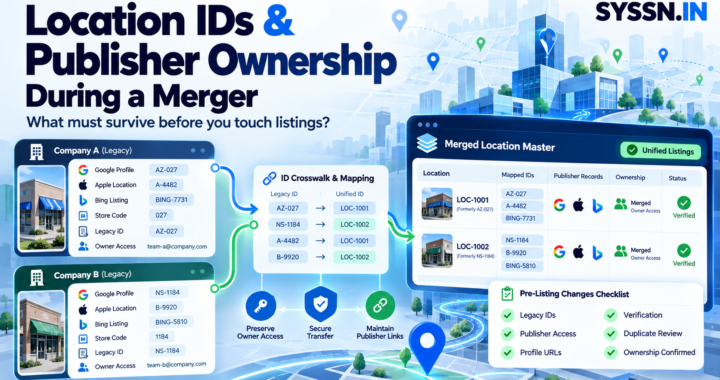
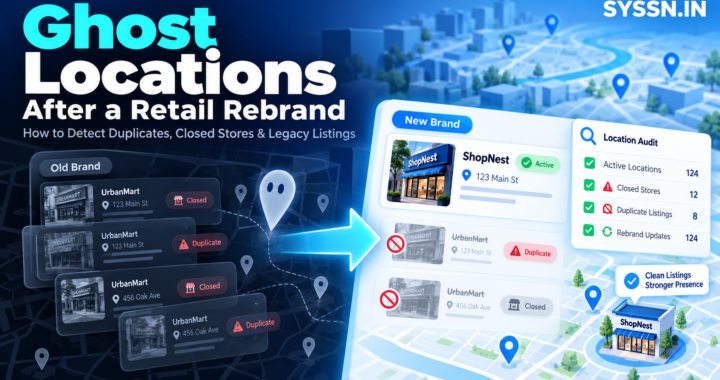
[…] is one reason it helps to understand local listings management software as an operating layer rather than the permanent owner of your business […]
[…] If you’re comparing the different models available after leaving Yext, Syssn’s guide to [local listings management software] is useful because synchronization platforms and citation-building services solve very different migration problems. Local Listings Management Software guide on Syssn […]