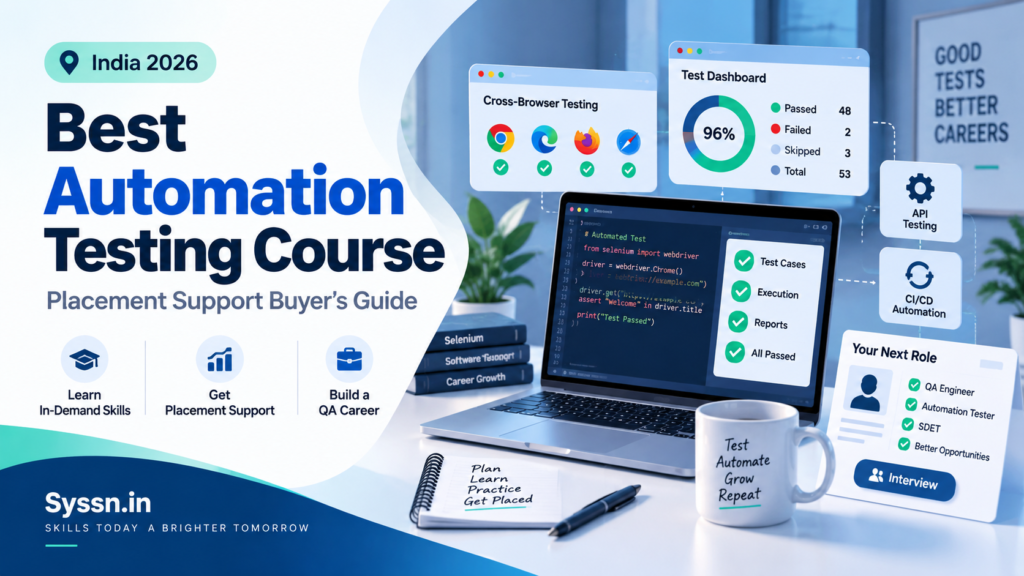
Best Automation Testing Course With Placement Support: Complete Buyer’s Guide

There’s one phrase I’ve learned to be suspicious of when looking at training programs: “placement support.”
It sounds reassuring. It also tells you surprisingly little.
One institute might mean resume help and a WhatsApp group where jobs are posted. Another might run technical mock interviews, assess learners before forwarding profiles, arrange interviews, and continue supporting them for more than a year. Both can legitimately call what they do “placement support.”
So if you’re searching for an automation testing course with placement support in India in 2026, I wouldn’t start with the placement promise. I’d start with two simpler questions:
What will I actually be able to build by the end of this course?
And:
What exactly happens when I start looking for a job?
Based on those two questions, StarAgile is the first program on our shortlist, mainly because its current syllabus combines Java, Selenium, Playwright, Cypress, API testing, DevOps basics and capstone projects with a separate career-support track.
NxtWave, STLabs India, QEdge Technologies and FITA Academy are also worth considering. They simply suit different learners.
Best automation testing courses with placement support: quick comparison
| Provider | Format | Main technical coverage | Duration | Published fee information | Career support |
|---|---|---|---|---|---|
| StarAgile | Live online + self-learning | Java, Selenium, TestNG, Cypress, Playwright, API, SQL, Git/Jenkins/Docker basics | 3 months + 1-month career track | ₹49,999 currently displayed | Resume/profile preparation, communication training, competency test, mocks and job opportunities |
| NxtWave CCBP | Intensive online classes and labs | Java, Selenium, TestNG, Cucumber, APIs | 5 months | ₹49,000 upfront + 12% of annual CTC on one plan; ₹90,000 on another | Placement portal, mocks, aptitude, resume support and interview scheduling |
| STLabs India | Live instructor-led | Selenium Java/Python, Playwright, APIs, frameworks, CI/CD | 3-4 months | ₹25,000 + GST on reviewed offer | Resume work, mock interviews and job guidance |
| QEdge Technologies | Classroom + live online | Manual testing, Selenium, Playwright; separate API/performance options | Around 4 months | Live course fee requires confirmation | Resume preparation, mock interviews and placement assistance |
| FITA Academy | Classroom + online | Playwright, JavaScript/TypeScript, POM, Cucumber, APIs, Git and CI/CD | Around 2 months | Enquiry-based | Resume, interview workshops, portfolio help and placement support |
Provider information reviewed September 9, 2026. Fees, discounts, schedules and placement conditions can change.
1. StarAgile
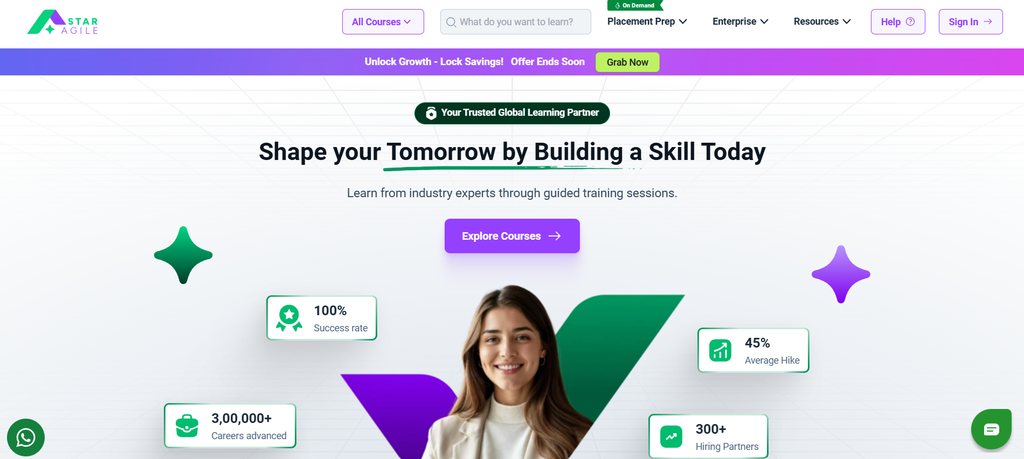
StarAgile is where I would begin if I wanted one program that introduces both the older automation stack companies still use and the newer tools that are appearing more frequently in testing roles.
Its curriculum starts with manual testing and Java before moving into Selenium WebDriver, JavaScript, Cypress and Playwright. API testing, Appium, SQL and DevOps topics are also included through self-learning modules.
More importantly, there are actual projects attached to the syllabus.
These include a Selenium/Maven/TestNG e-commerce framework, a REST Assured API automation framework and an end-to-end flight-booking automation project.
That matters because automation testing becomes much easier to talk about in an interview when you’ve built something yourself. Knowing that TestNG exists is one thing. Explaining why you structured a framework a certain way, how you handled test data or why a test failed is another.
The public course page describes three months of training followed by a one-month career track. Career preparation includes profile and resume work, business communication, a competency test and mock interviews.
StarAgile also advertises more than 220 hours of instructor-led training, 100+ hours of assignments and three capstone projects. I would still ask for the actual weekly timetable before enrolling. Headline hour counts can be difficult to translate into what your Monday-to-Friday routine will look like.
There is one area I would clarify carefully: cancellation.
Those two versions aren’t identical.
Before paying ₹49,999, ask StarAgile to put the cancellation policy, batch-change rules, fee including GST, placement eligibility and interview process in writing.
Best for: Someone who wants Java and Selenium fundamentals without ignoring Playwright, APIs, projects and career preparation.
2. NxtWave CCBP
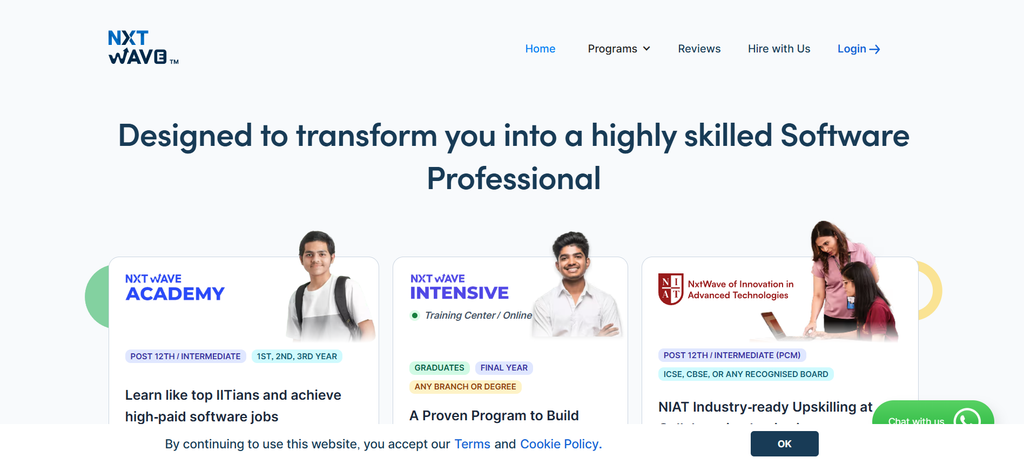
NxtWave takes a different approach.
Its automation testing program is more intensive, with the course page describing roughly three hours of classes and three hours of labs per day when the program is followed as scheduled.
The five-month curriculum includes Core Java, Selenium WebDriver, Advanced Selenium with TestNG, BDD with Cucumber and API testing.
What I didn’t see clearly listed on the reviewed page was Playwright.
That doesn’t automatically make the course weak. Selenium is still widely used. But if you’re specifically trying to prepare for newer browser-automation roles, I would ask whether Playwright has now been added or whether you’ll need to learn it separately.
NxtWave is stronger when it comes to spelling out its career process.
Its published support includes aptitude training, soft-skills preparation, resume work, AI-assisted mock interviews, technical and HR mock interviews, interview scheduling, a placement portal and offline placement drives.
The course page also mentions placement support for up to 16 months from joining, subject to its rules and conditions.
Pricing is where you need to slow down and read carefully.
One option shows a ₹49,000 non-refundable upfront fee plus 12% of annual CTC after employment. Another section lists ₹90,000 with different refund conditions.
That’s a meaningful difference. The cheapest number on the page isn’t necessarily the total amount you’ll eventually pay.
The page we reviewed also referenced a July 1, 2026 batch even though the guide was checked in September. Confirm the current intake before paying.
Best for: Fresh graduates who can handle an intensive daily schedule and want a long, structured career-support process.
3. STLabs India
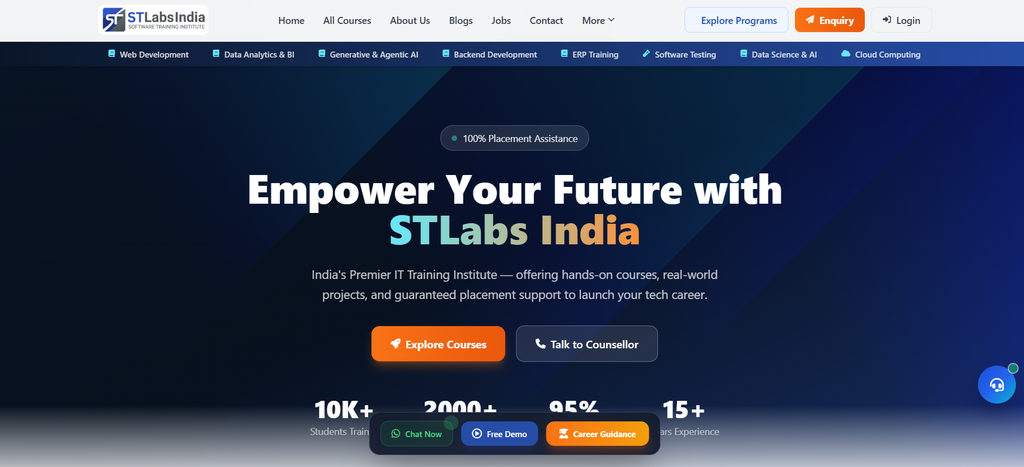
STLabs India caught my attention for a fairly simple reason: its published syllabus includes both Selenium and Playwright while keeping the advertised fee much lower than several programs in this comparison.
The reviewed course covers Selenium with Java, Selenium with Python, Playwright with JavaScript, Playwright with Java, API automation, framework development and CI/CD integration.
There are also AI-assisted testing topics and practical web/API framework projects.
The published duration is around three to four months, with live teaching, recorded sessions and lifetime e-learning access.
At the time we reviewed the course, the listed promotional price was ₹25,000 plus GST, down from ₹35,000.
At that price, my main question wouldn’t be whether the topic list looks impressive. It does.
I’d ask how much time each topic actually receives.
A syllabus can include Selenium, Playwright, APIs and CI/CD while spending most of the course on Selenium basics. There’s nothing wrong with that if it’s disclosed. You simply need to know what you’re buying.
STLabs describes its career help as placement assistance with resume preparation, mock interviews and job guidance.
Ask how long that support continues and whether interview opportunities depend on attendance, project completion or internal assessments.
Best for: Learners who want Selenium, Playwright and API automation in a comparatively affordable live program.
4. QEdge Technologies
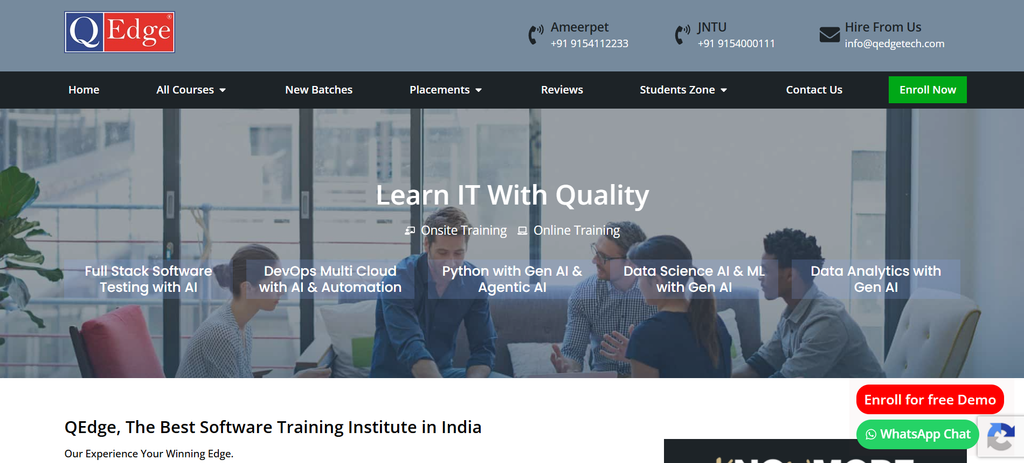
QEdge makes more sense for someone who still values the option of walking into a classroom.
Its September schedule listed a four-month Full Stack Software Testing with AI course covering manual testing, Selenium and Playwright, with classroom batches in Hyderabad as well as live online delivery.
Its wider catalogue also includes API testing, JMeter, LoadRunner, Selenium with Java, Selenium with Python and Playwright.
QEdge says the training process includes concepts, assignments, projects, resume preparation, mock interviews and placement assistance. A separate QA page mentions 365 days of placement support with partner clients.
One detail needs care.
The site lists a ₹15,000 video-learning package, but I wouldn’t assume that’s the price of the four-month live full-stack course. QEdge says fees vary by course and delivery format.
Ask for the exact classroom or live-online quote you intend to purchase.
One practical advantage is that QEdge publishes upcoming batches and trainer names. Use the demo class.
A demo can tell you more than another ten minutes reading a syllabus. Watch how the trainer explains code, answers beginner questions and connects manual testing with automation instead of treating every module as a separate subject.
Best for: Hyderabad learners who want classroom access or buyers who prefer seeing named batches and trainers before joining.
5. FITA Academy
FITA is the odd one out here, in a useful way.
Rather than treating Selenium as the centre of the automation universe, the course reviewed for this guide focuses mainly on Playwright with JavaScript and TypeScript.
The syllabus covers Node.js and VS Code setup, JavaScript/TypeScript basics, Playwright, Page Object Model, data-driven testing, Cucumber, reporting, Git, Jenkins CI/CD, API automation and end-to-end project work.
Selenium may appear as an optional integration rather than the main framework.
For someone deliberately targeting modern Playwright-based testing, that can make sense.
For someone who keeps finding “Java + Selenium” in the job descriptions they want to apply for, it may be too specialised.
The course runs for roughly two months and offers classroom, online, weekend and evening formats. The fee wasn’t publicly listed on the page we reviewed.
Career support includes resume preparation, interview workshops, portfolio guidance and placement assistance.
I’d ask FITA to explain the actual opportunities recently shared with Playwright learners rather than relying on general placement claims.
Best for: Working professionals and learners who specifically want Playwright with JavaScript or TypeScript.
What should an automation testing course actually teach in 2026?
This is where course comparisons become easier.
Forget the branding for a moment.
Look at what automation engineers are being asked to do.
Recent Cognizant and Capgemini job postings referenced combinations of Selenium, Playwright, API automation, Java, REST Assured, Git, Jenkins, Maven and CI/CD.
These weren’t entry-level jobs, so they shouldn’t be read as a checklist every fresher must master.
But they do tell us something useful: automation testing in a real development team doesn’t stop at clicking buttons in Selenium.
Start with programming
You should be able to read, write and debug code.
Java remains a sensible choice for Selenium-heavy roles. JavaScript and TypeScript become especially useful when working with Playwright.
Python and C# are also used by testing teams.
The language matters less than your ability to explain the code you write.
Learn Selenium properly
Selenium isn’t dead.
A decent course should go beyond browser commands and teach locators, waits, TestNG or JUnit, Page Object Model, data-driven testing, exceptions, reporting and framework structure.
Learn Playwright too
I wouldn’t reject a course simply because Playwright isn’t its first tool.
But in 2026, completely ignoring Playwright feels increasingly hard to justify.
You should at least understand locators, assertions, auto-waiting, browser contexts, tracing, parallel execution and CI integration.
Don’t skip API testing
A large part of software doesn’t need to be tested through a browser.
You should understand HTTP methods, status codes, authentication, JSON, request and response validation, Postman and an automation library such as REST Assured.
Build a framework yourself
This is probably the part I’d ask the most questions about before joining.
Do you actually build the framework?
Or does the trainer build it while 40 students copy the same code?
You should practise configuration, page objects, test data, reusable components, assertions, logging, reports, parallel execution and debugging.
Use Git and CI/CD
You don’t need to become a DevOps engineer.
But you should know how your automation code gets stored in Git and how tests can run automatically through Jenkins, GitHub Actions, Azure DevOps or another CI platform.
Build something you can explain
A “real-world project” is only useful if you did enough of the work yourself.
By the end, you should be able to open your project and explain:
What you’re testing.
Why the framework is structured that way.
How test data is handled.
What happens when a test fails.
How you generate reports.
How the project runs through CI.
That’s a far stronger interview asset than a certificate by itself.
Is Selenium enough to get a job?
I’d learn Selenium.
I wouldn’t stop there.
A sensible beginner path now looks something like this:
- Testing fundamentals
- One programming language
- Selenium
- Test framework design
- API testing
- Git
- Playwright
- Basic CI/CD
- Portfolio projects
You don’t need expert-level knowledge of all nine before applying.
You do need enough understanding to explain what you’ve built without looking at the trainer’s code.
A simple 100-point test before you pay
To make course comparisons less subjective, Syssn created a simple 100-point scoring model.
| Area | What to check | Points |
|---|---|---|
| Technical curriculum | Programming, Selenium, Playwright, APIs, Git, CI/CD | 20 |
| Projects | Framework work, API project, debugging, reporting and Git portfolio | 20 |
| Teaching | Trainer access, questions, reviews, mentoring and recordings | 20 |
| Career support | Eligibility, resume help, mocks, interview process and duration | 20 |
| Commercial clarity | Fee, GST, cancellations, batch changes and payment conditions | 20 |
| Total | 100 |
I’d read the results like this:
80-100: Strong shortlist.
65-79: Potentially good, but investigate the weak category.
50-64: Too many unanswered questions.
Below 50: Keep comparing unless you have a very specific reason to join.
The point isn’t to pretend that a number can tell you which trainer you’ll connect with.
It simply forces you to separate things that training companies often bundle together.
A course could have brilliant technical content and poor placement rules.
Another could provide great interview coaching but weak project work.
Those aren’t the same problem.
What does placement support really include?
Before paying, ask questions that require specific answers.
Ask when placement support starts. Do you need a particular attendance percentage? Must you pass an assessment? Complete every project?
Ask how long support lasts.
Ask what an “interview nomination” actually means.
Ask whether you’re allowed to reject an interview without losing future support.
Ask whether the institute applies for jobs for you or simply shares openings.
Ask what happens if your trainer or class timing isn’t working.
Ask when refunds stop being possible.
And if any payment becomes due after employment, calculate the amount using a realistic salary before agreeing.
For example, 12% of a ₹5 lakh annual CTC is ₹60,000. That’s very different from mentally treating ₹49,000 as the full price of a program.
Small details become expensive details when nobody asks about them.
How much do automation testing courses cost?
The prices we found vary considerably:
- StarAgile: ₹49,999 displayed
- NxtWave: ₹49,000 upfront plus 12% of annual CTC on one plan; another option shows ₹90,000
- STLabs India: ₹25,000 plus GST on the reviewed offer
- QEdge: live full-stack fee needs confirmation; separate video learning listed at ₹15,000
- FITA Academy: enquiry-based
A cheaper course isn’t automatically worse.
An expensive course isn’t automatically more complete.
Compare live teaching time, trainer access, project quality, career assistance and the total amount you’re committing to.
Can a fresher learn automation testing?
Yes.
But “no previous coding experience required” shouldn’t be interpreted as “you won’t need to code.”
Automation testing is programming applied to testing problems.
Start small.
Learn basic testing concepts first. Understand test cases, expected results, defects and requirements.
Then automate something simple, perhaps a login flow.
After that, add test data, multiple pages, API calls, reusable code and CI execution.
You don’t become employable because you watched someone automate a website.
You become useful when you can figure out why the automation stopped working.
What jobs can you apply for?
Depending on your coding ability, project quality and previous experience, typical titles include:
- Junior Automation Test Engineer
- QA Automation Engineer
- Software Test Engineer
- Selenium Tester
- Automation QA Analyst
- Test Automation Engineer
- Junior SDET
Be slightly careful with the last one.
SDET roles usually expect stronger programming and framework knowledge than basic testing jobs. A certificate doesn’t automatically move you into that category.
Frequently asked questions
Which automation testing course is best with placement support?
StarAgile is the first course on this shortlist because its current program combines Java, Selenium, Cypress, Playwright, APIs, projects and a structured career track.
NxtWave, STLabs India, QEdge and FITA may suit you better depending on your schedule, budget and preferred technology.
Is automation testing a good career in 2026?
Automation testing remains an active QA career path. Current India job postings continue to mention Selenium, Playwright, APIs, programming, Git and CI/CD.
Should a course include Playwright?
I would prefer a broad 2026 course to include it.
Selenium remains relevant, but Playwright is increasingly part of the same tool conversation.
Which language should I learn?
Choose Java if you’re targeting Selenium-heavy roles.
Choose JavaScript or TypeScript if Playwright is your main focus.
The best language is ultimately the one you can write confidently enough to solve testing problems.
How long does automation testing take to learn?
Courses in this comparison run for roughly two to five months.
That doesn’t mean you’ll become job-ready automatically when the course finishes. Beginners usually need additional coding and project practice.
Final verdict
If I were narrowing this list down, I would investigate StarAgile first.
Its combination of Java, Selenium, Cypress, Playwright, APIs and projects is broad enough for someone who doesn’t yet know which automation stack their first employer will use.
But I wouldn’t enrol based on the syllabus alone.
I’d ask StarAgile to confirm the ₹49,999 fee, GST, exact batch schedule, cancellation rules, batch-switching policy, career-service eligibility and interview-nomination process in writing, especially because the public cancellation FAQ and counsellor information reviewed by Syssn don’t fully match.
I’d consider NxtWave if I wanted a more intensive program with a longer career-support structure.
I’d look seriously at STLabs India if budget mattered and I still wanted Selenium, Playwright and APIs.
QEdge becomes interesting if Hyderabad classroom training matters to you.
And FITA Academy makes more sense when you already know that Playwright with JavaScript or TypeScript is where you want to focus.
Course pages naturally spend a lot of time talking about hours, certificates, hiring partners and placement numbers.
Those things aren’t useless.
But there’s a simpler test I keep coming back to.
Open a blank IDE after the course.
Could you build something without following the trainer line by line?
Could you debug it when it fails?
Could you explain your choices to an interviewer?
If the answer is yes, the course has probably done something useful.
If the answer is no, I’m not sure how much comfort the placement-support logo is going to provide.