Top Review Management Tools for Urgent Care Chains

The best review management tools for urgent care chains in 2026 include Synup, Birdeye, rater8, Reputation, ReviewTrackers, Doctible, SOCi, and Podium. Each serves a different purpose, from managing Google reviews across clinics to automating patient feedback and analyzing location-level service problems.
Synup is worth considering for combined review management and local SEO. Birdeye supports healthcare-focused reputation workflows, while rater8 specializes in provider reputation and patient feedback. Reputation, ReviewTrackers, Doctible, SOCi, and Podium offer alternatives for analytics, patient communication, and enterprise operations.
For urgent care organizations, software selection involves more than collecting positive reviews. A suitable platform should help teams monitor patient feedback, protect sensitive information, coordinate responses, and identify opportunities to improve service.
This guide compares eight platforms using documented capabilities, published pricing, healthcare suitability, and limitations. It also explains HIPAA considerations, Google review policies, procurement requirements, and how to measure results.
Best Review Management Tools for Urgent Care Chains: Quick Comparison
The following platforms are worth evaluating based on different urgent care operating requirements.
| Software | Best For | Key Strength | Pricing |
|---|---|---|---|
| Synup | Chains combining reviews with local SEO | Centralized reviews, listings, and AI assistance | From $49/month |
| Birdeye | Healthcare groups needing AI-supported workflows | Review automation and centralized oversight | Custom quote |
| rater8 | Provider and healthcare reputation management | Patient feedback, surveys, and provider reporting | From $89/physician/month |
| Reputation | Enterprise patient experience teams | Sentiment analytics and location benchmarking | From $80/location/month |
| ReviewTrackers | Review monitoring and intelligence | Multi-source reporting and experience analysis | Location-based quote |
| Doctible | Patient communication and review management | EHR-connected requests and engagement tools | Custom quote |
| SOCi | Large multi-location healthcare organizations | Enterprise reputation automation | Custom quote |
| Podium | SMS-focused communication teams | Text-based requests and shared inbox | Custom quote |
Pricing reflects publicly available vendor information checked in October 2026. Published entry-level rates are not necessarily applicable to a multi-location healthcare deployment.
These recommendations are based on documented products and use cases, not independent hands-on testing or measured performance rankings.
What Is Review Management Software for Urgent Care Chains?
Review management software for urgent care chains is a centralized platform for monitoring, collecting, responding to, and analyzing online feedback across multiple clinic locations.
Rather than requiring each clinic manager to check Google Business Profile and other review websites individually, the organization can establish a coordinated process for handling public feedback.
Depending on the product and subscription, capabilities may include:
- Google review monitoring and response management
- Automated review requests through SMS or email
- AI-assisted response drafting
- Negative review alerts and escalation workflows
- Clinic-level ratings, review volume, and sentiment reporting
- Patient feedback surveys and operational insights
- Regional management dashboards and permissions
- Integrations with scheduling, EHR, or practice management systems
For example, a chain operating 30 urgent care centers may find that several clinics receive repeated complaints about long waiting times.
A centralized platform can help identify whether those complaints occur at one location, across a region, or during particular periods.
Managers can then investigate staffing, check-in procedures, scheduling, or communication practices using appropriate internal systems.
The goal is not simply to improve public ratings. It is to connect patient feedback with accountable operational improvements.
How do reviews affect urgent care local SEO?
Google states that review volume and positive ratings can contribute to local prominence. However, local results depend on several factors, including relevance, distance, and prominence.
According to Google’s official local ranking guidance, complete and accurate business information also helps Google understand and display relevant businesses.
Collecting more reviews does not guarantee better local rankings.
Urgent care chains should therefore combine genuine review collection with accurate clinic addresses, opening hours, business categories, and location-specific information.
How We Evaluated Urgent Care Review Management Software
This comparison uses public vendor documentation, official pricing pages, and relevant healthcare privacy and review-platform policies checked in October 2026.
No independent product testing, customer interviews, or proprietary performance measurements were conducted.
The evaluation considers six criteria.
| Evaluation Criterion | What We Examined |
|---|---|
| Multi-location management | Centralized dashboards, location grouping, reporting, and permissions |
| Review functionality | Monitoring, requests, responses, alerts, and analytics |
| Healthcare suitability | Patient feedback processes and documented healthcare integrations |
| Privacy and governance | Available controls and safeguards requiring procurement validation |
| AI and automation | Response drafting, approvals, campaign automation, and escalation |
| Pricing transparency | Published subscription rates, licensing models, and additional costs |
The platforms were selected because their documented capabilities address different needs commonly found in urgent care networks.
The order reflects editorial presentation rather than a numerical performance ranking.
Vendor descriptions and compliance statements should not be interpreted as independent certifications of a product’s suitability for a particular healthcare organization.
Top 8 Review Management Tools for Urgent Care Chains in 2026
1. Synup
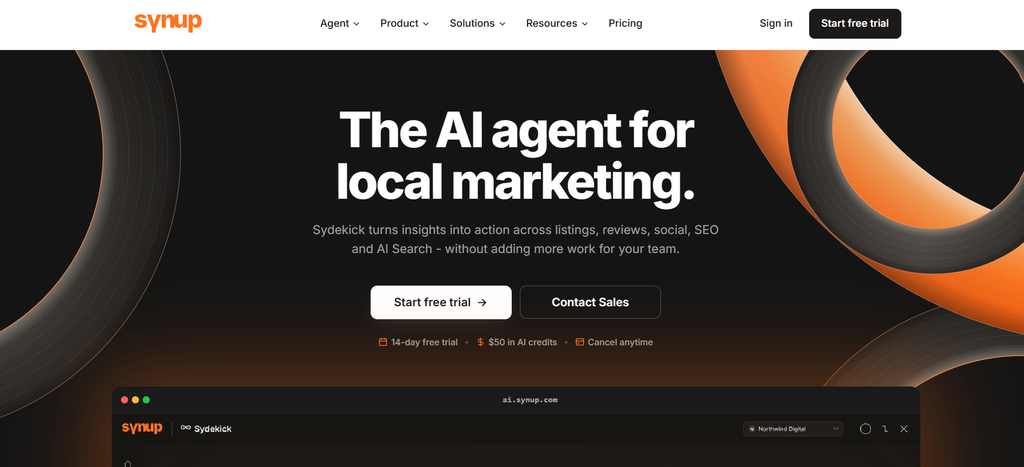
Best for: Urgent care chains that want centralized review management, Google Business Profile oversight, and local SEO tools in one platform.
Synup combines online reputation management with business listings, review generation, local visibility reporting, and AI-assisted workflows.
This combination may be useful for urgent care organizations because local search information and patient feedback are often operationally connected.
For example, patients may complain that a clinic was closed despite its Google listing showing extended operating hours. Managing listings and reviews together can help marketing and operations teams investigate both issues.
Key capabilities
Synup’s review management platform documents centralized monitoring across supported review sources, AI-assisted response drafting, competitor comparisons, and location-level analytics.
The platform also provides:
- Automated review invitations through supported email and SMS workflows
- Location-based reporting and sentiment analysis
- Listings management and local visibility tools
- Centralized permissions and review-response workflows
- Review generation and private feedback options
Synup’s documentation describes monitoring across Google, Facebook, Apple, Tripadvisor, and other supported sources. Actual response functionality may differ by publisher.
Advantages
Synup is useful when one team manages both reputation and local search visibility.
Its published location tiers make preliminary budgeting relatively straightforward, especially for organizations combining multiple local marketing functions.
A chain can review location-level reputation trends while also monitoring business information across its clinic network.
Limitations
Synup is a general multi-location marketing platform rather than a dedicated healthcare patient experience system.
Healthcare organizations should confirm contractual protections, appropriate handling of patient information, and any required integration with existing clinical systems.
Review-generation workflows must also be configured to invite honest feedback without selectively soliciting positive reviews.
Pricing
Synup’s published pricing lists the following monthly tiers:
| Plan | Monthly Price | Location Allowance |
|---|---|---|
| Solo | $49 | 1 location |
| Premium | $299 | Up to 10 locations |
| Pro | $499 | Up to 25 locations |
| Scale | $899 | Up to 50 locations |
| Enterprise | Custom | More than 50 locations |
AI credits and agent capacity allowances vary by tier. Annual billing options are also advertised.
Choose Synup if: Your organization wants review monitoring, review requests, business listings, and local search reporting together, subject to satisfactory healthcare privacy and workflow reviews.
2. Birdeye
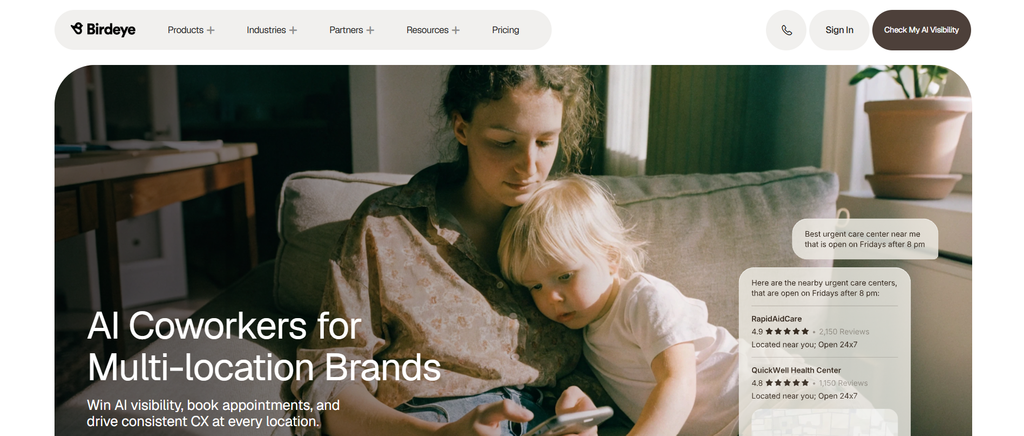
Best for: Multi-location urgent care organizations that need AI-supported reputation workflows with centralized management.
Birdeye offers review management, patient experience tools, listings management, and communication capabilities for healthcare organizations.
Its platform is particularly relevant when a healthcare group wants headquarters to manage standards while allowing individual locations to participate in review responses and service recovery.
Key capabilities
Birdeye documents healthcare-focused reputation functionality, including:
- Automated review invitations through supported communication channels
- Centralized review monitoring and reporting
- AI-assisted review-response workflows
- Sentiment analysis and patient feedback insights
- Location-based performance comparisons
- Approval controls and organizational permissions
Birdeye also describes healthcare-focused AI governance and human approval workflows.
Its healthcare reputation management documentation discusses reputation monitoring, automation, and patient experience features.
Advantages
Birdeye combines several functions that larger urgent care groups may otherwise purchase separately.
Corporate teams can establish standardized processes while regional and clinic managers focus on relevant operational concerns.
Its healthcare-oriented offerings also make it a reasonable candidate when patient feedback, local listings, and review management need to operate together.
Limitations
Birdeye offers a broad product suite, so organizations purchasing only basic review monitoring may not need every available capability.
AI features, approval workflows, integrations, and reporting options can depend on the subscription configuration.
Healthcare buyers should verify which safeguards apply to the exact modules they intend to use rather than relying solely on platform-wide compliance descriptions.
Pricing
Birdeye provides custom pricing based on the number of locations, selected products, and business requirements.
Buyers should request a quotation that distinguishes review management, AI functionality, patient communication, integrations, and enterprise controls.
Choose Birdeye if: You need healthcare-oriented review automation, analytics, and corporate oversight across multiple urgent care locations.
3. rater8

Best for: Urgent care organizations that prioritize provider-level reputation management and healthcare-specific patient feedback.
rater8 focuses on healthcare reputation management rather than general business marketing.
Its product structure is designed around medical practices, healthcare providers, patient reviews, and satisfaction measurement.
This makes it particularly relevant when an urgent care organization wants to monitor individual clinician reputation alongside clinic-level performance.
Key capabilities
rater8 offers:
- Automated patient review requests
- Centralized online review monitoring
- AI-assisted review response tools
- Provider and location-level reporting
- Patient satisfaction surveys
- Reputation benchmarking
- EHR and practice management integration options
The platform supports healthcare-focused review programs and monitoring across relevant general and medical review websites.
Higher-tier packages include capabilities beyond basic review collection, such as patient surveys, benchmarking, and listings management.
Advantages
The healthcare-specific approach can be useful when clinic managers, medical directors, and marketing teams need different views of reputation performance.
For example, a group can evaluate feedback about a physical urgent care location separately from reviews associated with individual clinicians.
The company also publishes pricing details, making early-stage financial comparisons easier.
Limitations
Physician-based pricing may be less economical for organizations with many clinicians but relatively few physical locations.
Urgent care chains primarily concerned with Google Business Profile reviews should evaluate whether provider-level reporting justifies the additional licensing complexity.
Buyers also need to confirm EHR integration compatibility and the availability of appropriate data safeguards.
Pricing
According to rater8’s official pricing page:
| Plan | Published Price |
|---|---|
| Monitoring | Free |
| raVE Lite | $89 per physician/month |
| raVE Pro | $109 per physician/month |
| raVE Pro+ | Custom quote |
The vendor lists a $250 monthly minimum for paid services and excludes one-time setup fees from the advertised plan rates.
Choose rater8 if: Managing physician reputation, patient surveys, and healthcare-specific feedback is as important as monitoring individual clinic ratings.
4. Reputation
Best for: Urgent care chains that want to connect online reviews with patient experience analysis and regional operations.
Reputation offers review management alongside surveys, listings management, sentiment analytics, and enterprise reporting.
Its value for urgent care chains lies in bringing public feedback and operational analysis into a centralized process.
For example, an organization may notice that complaints about registration, waiting times, or staff communication appear across several locations.
A reporting system can help managers identify recurring themes and compare performance across clinics.
Key capabilities
Reputation provides:
- Centralized review monitoring and requesting
- AI-assisted review-response functionality
- Sentiment analysis and experience insights
- Business listings management
- Location-level performance reporting
- Surveys and advanced analytics in supported packages
The platform also offers healthcare-oriented reputation management resources and integration options.
Advantages
Reputation is relevant when leadership wants more than a review collection tool.
Regional managers can use reporting to monitor recurring complaints, prioritize investigations, and track whether operational changes are associated with improvements in feedback.
The combination of reviews, surveys, and experience analytics supports a broader patient experience program.
Limitations
Some advanced capabilities belong to higher-priced plans or require additional services.
Organizations should verify whether surveys, analytics, EHR integrations, and operational workflows are included in their proposed configuration.
Entry-level pricing may not represent the cost of a complete enterprise healthcare deployment.
Pricing
Reputation’s official pricing page lists:
| Plan | Published Price |
|---|---|
| Rep Core | $80/location/month |
| Rep Core + Pulse | $115/location/month |
| Rep Core + Surveys | $150/location/month |
| Enterprise | Custom pricing |
The vendor describes its enterprise offering as customized for organizations with 125 or more locations.
Choose Reputation if: Your priority is identifying patient experience problems through reviews, analytics, surveys, and cross-location reporting.
5. ReviewTrackers
Best for: Urgent care organizations focused on monitoring online feedback, understanding reputation trends, and comparing locations.
ReviewTrackers provides review monitoring, response management, analytics, and customer experience insights.
It is a practical option for organizations that want structured feedback reporting without necessarily adopting a broader healthcare communication platform.
Key capabilities
ReviewTrackers documents:
- Review monitoring across supported sources
- Centralized dashboards and notifications
- Review invitations and response management
- AI-assisted review responses
- Experience analysis and competitor insights
- Optional local listings management and rank tracking
Its published plans distinguish basic monitoring functionality from more advanced experience analysis.
Advantages
ReviewTrackers is useful for teams that want a consistent process for analyzing reviews across clinics.
For example, a regional marketing manager could compare complaints about appointment accessibility or front-desk communication across several locations.
The platform also offers competitive insights for organizations that want to understand their local reputation relative to nearby providers.
Limitations
ReviewTrackers is not primarily an EHR or patient engagement platform.
Healthcare organizations must independently validate integration requirements, permissions, patient information handling, and approval processes.
Advanced analytics, listings management, and local rank tracking may require specific plans or additional purchases.
Pricing
According to the ReviewTrackers plans page, pricing is location-based.
The public page describes Starter, Essential, and additional packages but does not provide a reliably retrievable universal dollar rate for urgent care chains.
Request a written multi-location quotation with all required features identified.
Choose ReviewTrackers if: Your primary objective is centralized review monitoring, feedback intelligence, and location-level reputation reporting.
6. Doctible
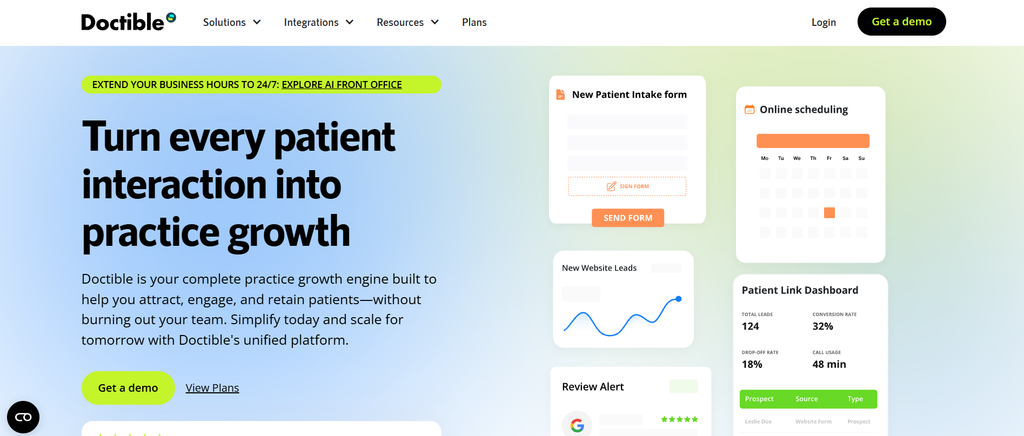
Best for: Urgent care organizations that want review management alongside patient messaging and appointment communication.
Doctible offers healthcare patient engagement software covering text messaging, appointment reminders, digital forms, online reputation management, and related communication workflows.
Its healthcare focus makes it relevant to clinics that want review requests connected to existing patient interactions.
Key capabilities
Doctible documents:
- Automated review requests connected to supported EHR and practice management systems
- Patient communication through text messaging
- Google and Facebook review monitoring
- Reputation reporting and feedback tracking
- Appointment reminders and digital patient engagement tools
- Custom configurations for multi-location practices
Its reputation management product describes automated post-appointment feedback requests and centralized review dashboards.
Advantages
Doctible may help clinics consolidate review collection with existing patient communication processes.
Organizations using appointment reminders and digital messaging can evaluate whether one platform can support these functions alongside online reputation management.
This may simplify administration when integrations, permissions, and communication requirements are compatible.
Limitations
Doctible’s public pricing documentation describes workflows that can direct positive feedback toward public reviews while allowing complaints to be submitted privately.
This requires careful procurement and implementation review.
Google prohibits selectively soliciting positive reviews. An urgent care organization should ensure that public review invitations are not restricted based on whether a patient previously provided favorable feedback.
A private complaint channel can be useful, but it should not be used to prevent dissatisfied patients from receiving an honest opportunity to leave public feedback.
Buyers should also confirm whether their specific urgent care EHR is supported.
Pricing
Doctible’s official plans page lists Launch, Build, and Scale packages.
Reputation Management is included in its Build package and higher tiers.
Custom plans are available for multi-location organizations, with quotations covering the relevant features, implementation, and enterprise requirements.
Choose Doctible if: You want patient engagement and review management together and can confirm compliant review solicitation and communication workflows before deployment.
7. SOCi
Best for: Large urgent care networks requiring centralized control over reputation management across many locations.
SOCi focuses on localized marketing for businesses managing extensive location portfolios.
Its platform combines local search, reputation management, and enterprise marketing capabilities.
For urgent care organizations operating across multiple markets, this approach can help coordinate local reputation activities while maintaining common organizational standards.
Key capabilities
SOCi provides:
- Multi-location review monitoring
- AI-supported response workflows
- Brand-guided reputation automation
- Sensitive feedback escalation
- Enterprise reporting and location management
- Review generation and feedback analysis capabilities
Its Genius Reputation Agent supports review management and response workflows.
In an October 6, 2026 announcement, SOCi introduced Conversational Surveys, Review Generation, and Voice of Customer capabilities.
These extend the product’s feedback collection and analysis functionality.
Advantages
SOCi is suited to organizations where reputation management involves headquarters, regional managers, and numerous locations.
Centralized automation can help standardize routine activities while directing sensitive or unusual cases to appropriate staff.
Connecting review management with localized marketing can also be useful for organizations managing clinic listings and local visibility at enterprise scale.
Limitations
SOCi is not exclusively a healthcare platform.
Before connecting patient data or enabling automated responses, healthcare organizations should verify contractual safeguards, permitted data processing, access permissions, and the availability of appropriate review approvals.
Its enterprise-oriented implementation may be more involved than adopting a standalone review monitoring tool.
Review-generation workflows should also be checked against platform policies, regardless of how the vendor describes their automation.
Pricing
SOCi provides custom quotations based on organizational requirements, location count, and selected capabilities.
Choose SOCi if: You operate a large urgent care network and want enterprise-level review management combined with localized marketing operations.
8. Podium
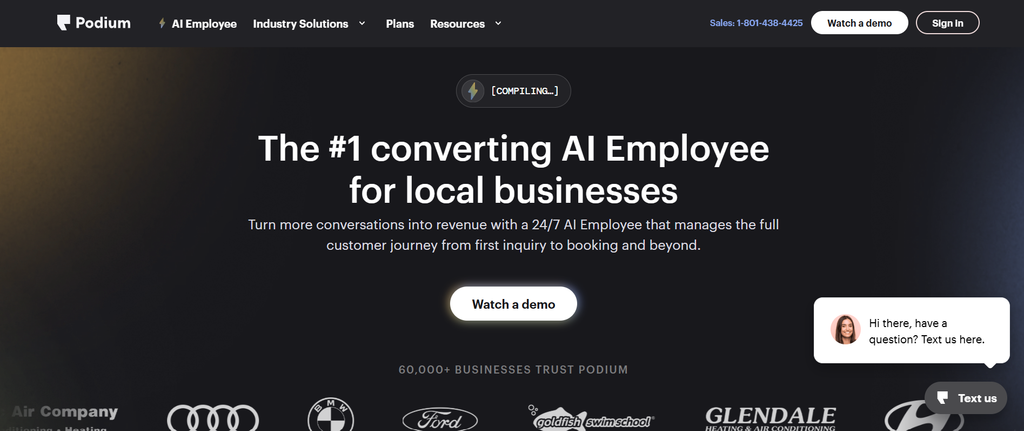
Best for: Urgent care organizations that prioritize SMS-based review requests and centralized customer messaging.
Podium combines review management with messaging and AI-assisted communication functionality.
It may be relevant to clinics that already rely on texting for appropriate administrative communication and want to evaluate review requests within a coordinated messaging workflow.
Key capabilities
Podium’s Reviews product documents:
- Automated review invitations and reminders
- AI-assisted review-request and response workflows
- Centralized review management
- Customer messaging and contact profiles
- Review reporting and attribution
- Mobile access and integration options
The platform also provides an AI Reputation Specialist for supported review management activities.
Advantages
Podium can reduce the need to switch between separate review and messaging interfaces.
Its approach may suit clinics where administrative staff already coordinate a significant volume of customer communication through text-based systems.
Centralized visibility can also help managers monitor incoming feedback and assign follow-up responsibilities.
Limitations
General business messaging features are not automatically appropriate for protected healthcare communication.
Urgent care organizations should verify the precise data exchanged, message content, permissions, and availability of required contractual protections.
Teams should also confirm whether supported integrations meet their existing scheduling and patient communication requirements.
Some of Podium’s broader customer engagement features may be unnecessary for a review-only project.
Pricing
Request current multi-location pricing from Podium.
Quotations should clearly identify messaging allowances, AI functions, integrations, implementation costs, and available review management capabilities.
Choose Podium if: SMS-based review requests and centralized administrative messaging are central to your workflow, and the relevant healthcare safeguards can be validated.
How should an urgent care chain estimate its software budget?
Start by identifying how each vendor measures the size of the organization.
A location-based platform typically uses the number of clinics as a major licensing variable. A physician-based product uses clinician count, which may produce a substantially different total for a chain employing many providers.
For example, a network with 30 clinics would need to evaluate Synup’s published 50-location tier rather than its 25-location tier.
A provider-based quotation, by contrast, would depend on the number of physicians covered under the proposed agreement.
Neither pricing structure is inherently better. The suitable choice depends on whether the organization primarily manages clinic reputation, provider reputation, or both.
Ask vendors to itemize subscription fees, implementation, EHR integrations, SMS or email usage, AI allowances, reporting, support, and optional modules.
Compare annual contract costs using the same requirements rather than relying solely on advertised starting prices.
HIPAA Considerations for Urgent Care Review Management
Urgent care review management involves a distinction between collecting public feedback and handling protected patient information.
A product may offer secure communication features while still requiring careful configuration, written agreements, and organizational safeguards.
Healthcare providers remain responsible for ensuring that their use of a platform complies with applicable legal and contractual obligations.
1. Never disclose protected patient information in public review responses
A public reviewer may describe an appointment, diagnosis, or other personal healthcare experience.
That does not automatically authorize a healthcare provider to confirm the individual’s patient status or discuss clinical information publicly.
The U.S. Department of Health and Human Services documented a case involving Manasa Health Center, which settled potential HIPAA Privacy Rule violations after patient information was disclosed in responses to negative Google reviews.
The HHS enforcement announcement illustrates the risks of discussing protected information in public review threads.
Public replies should avoid confirming patient relationships or referencing diagnoses, medications, tests, appointment details, treatment decisions, or private records.
2. Determine whether a business associate agreement is required
When a vendor creates, receives, maintains, or transmits protected health information on behalf of a covered healthcare organization while performing applicable services, the relationship may require a business associate agreement.
The HHS guidance on business associate contracts explains these requirements.
Before enabling patient-linked review automation, evaluate what information enters the platform, which systems receive it, and who can access it.
A signed business associate agreement is necessary when applicable, but it does not by itself make every implementation compliant.
3. Keep public review invitations neutral
Google allows businesses to request genuine customer reviews using supported links and QR codes.
Its review request guidance explains how businesses can invite customers to provide feedback.
However, Google’s review policies prohibit incentives for reviews, discouraging negative reviews, and selectively soliciting positive feedback.
A clinic should not provide public review links only to people who report positive experiences.
The same principle applies when using software that asks patients to complete a private survey before presenting an invitation to leave a Google review.
Organizations should also avoid pressuring patients to post reviews during care or instructing them to mention specific staff members or ratings.
Private feedback channels can operate alongside public reviews, provided they do not distort or restrict access to genuine public review opportunities.
4. Protect patient data in review request campaigns
Automated review requests may involve appointment records, contact information, and communication systems.
A seemingly simple post-visit message can reveal a healthcare relationship if sent or handled improperly.
Before activating automated campaigns, healthcare organizations should review:
- Which patient data the vendor receives
- Whether the message identifies the clinic or healthcare visit
- Who has access to contact and campaign records
- Applicable HIPAA and communication requirements
- Whether the system uses third-party processors or AI services
- Retention, deletion, and incident response procedures
Consent, authorization, and communication obligations depend on the actual workflow and applicable laws.
A privacy and legal review should occur before uploading patient lists or connecting clinical systems.
5. Avoid fake, incentivized, or manipulated reviews
The Federal Trade Commission’s Consumer Reviews and Testimonials Rule addresses specified deceptive practices, including fake reviews and certain forms of review manipulation.
The FTC also provides a consumer review rule FAQ explaining the rule’s scope and limitations.
Urgent care operators should not use software to manufacture patient reviews, compensate people for positive sentiment, or misrepresent feedback.
When using AI-assisted review generation features, ensure that any published review genuinely reflects the reviewer’s own experience, is under the reviewer’s control, and complies with the destination platform’s rules.
6. Require human approval for sensitive AI responses
AI can help summarize feedback and draft responses, but healthcare complaints require additional safeguards.
Automated tools may misunderstand a clinical allegation, confirm a patient relationship, or produce a response that exposes sensitive information.
Organizations should establish escalation rules for reviews involving clinical safety, diagnosis, treatment delays, discrimination, privacy complaints, or threatened legal action.
These reviews should be routed to authorized human reviewers before a public response is published.
The review management platform should not replace existing patient safety reporting, clinical escalation, or urgent communication procedures.
How Should Urgent Care Chains Respond to Negative Reviews Safely?
A public response should acknowledge the concern without disclosing or confirming private patient information.
Consider a fictional Google review complaining about a lengthy wait and poor staff communication.
An appropriate response might be:
We take concerns about service and communication seriously. Please contact our management team through our official contact channels so the concern can be addressed privately.
This response avoids confirming that the reviewer received treatment.
If the concern warrants an investigation, an authorized employee should use the organization’s private complaint-handling process.
For urgent care chains, a practical response workflow includes three stages.
Initial review: A designated employee checks new feedback for privacy concerns, clinical allegations, and other issues requiring escalation.
Response approval: Routine messages follow approved response standards. Sensitive cases receive additional review from an authorized manager or compliance team.
Operational follow-up: Appropriate staff investigate the concern through approved internal processes and track corrective actions where necessary.
The public response and private investigation should remain separate.
An AI draft should never be treated as automatically safe simply because it sounds professional.
What Features Should Urgent Care Chains Prioritize?
The most important software features depend on location count, organizational structure, and clinical integration requirements.
| Priority | Requirement | Why It Matters |
|---|---|---|
| Critical | Centralized location dashboard | Provides visibility across clinics |
| Critical | Privacy-conscious response process | Helps reduce disclosure risks |
| Critical | Role-based permissions | Limits access and supports corporate oversight |
| Critical | Human approval and escalation | Supports handling of sensitive feedback |
| High | Google review monitoring | Organizes feedback from a major public review source |
| High | Location-level analytics | Identifies differences among clinics |
| High | Automated review invitations | Reduces repetitive administrative work |
| High | Alerts and task assignment | Helps route concerns to the correct team |
| Conditional | EHR or scheduling integration | Enables patient-linked workflows where appropriate |
| Conditional | Provider-level reporting | Supports clinician reputation management |
| Conditional | Listings management | Connects reviews with local search visibility |
An organization operating five clinics may value simplicity, straightforward permissions, and automated notifications.
A national operator managing 150 locations may require regional dashboards, permission hierarchies, approval histories, and standardized enterprise reporting.
Reporting should also account for differences in patient volume and review count.
A clinic receiving five reviews per month should not automatically be compared with a clinic receiving 100 reviews based on star rating alone.
For more detail, see Syssn’s guide to review analytics across multiple locations.
How to Choose Review Management Software for an Urgent Care Chain
Software selection should begin with the organization’s operating requirements rather than the vendor’s feature count.
For growing urgent care groups
Synup is worth considering when one team manages both clinic listings and public reviews.
rater8 is relevant when individual provider reputation and healthcare-specific feedback are central priorities.
Doctible may be suitable when patient messaging, appointment communication, and review requests need to work together.
The decision should depend on required integrations, privacy safeguards, and total cost.
For enterprise urgent care networks
Birdeye, Reputation, and SOCi offer different approaches to managing reputation across larger organizations.
Birdeye emphasizes healthcare-focused workflows and AI-supported management.
Reputation is relevant when leadership wants to connect patient feedback with surveys and operational insights.
SOCi focuses on enterprise localized marketing and automation across extensive location portfolios.
A large organization should compare governance capabilities as carefully as review collection features.
For review analytics and communication
ReviewTrackers may suit teams focused on monitoring feedback, analyzing sentiment, and comparing locations.
Podium is more relevant when text messaging and review invitations are part of a shared administrative workflow.
For a broader comparison of multi-location options, read Syssn’s review management software comparison for franchises.
Test every vendor using the same urgent care scenario
Feature lists do not demonstrate how a product handles sensitive healthcare situations.
A useful buying exercise is to ask every shortlisted vendor to demonstrate the same fictional scenario:
A 30-location urgent care organization receives a negative Google review alleging delayed communication about a laboratory test result.
The demonstration should establish whether the software can:
- Detect the review and identify the relevant clinic.
- Prevent an inappropriate automatic public response.
- Notify an authorized manager through a controlled workflow.
- Allow a privacy-approved response without confirming patient details.
- Track internal resolution without exposing protected information in the public thread.
- Include the feedback in location-level reporting without unnecessarily distributing sensitive data.
This exercise can reveal operational differences that are not clear from sales presentations.
Also test how the software manages employee access, incorrect location assignments, approval history, and disconnected integrations.
For recurring responsibilities, use Syssn’s weekly multi-location review management checklist.
Questions to ask before signing a contract
Ask each vendor to demonstrate which capabilities are included rather than accepting a general assurance that the software supports healthcare organizations.
Relevant questions include whether the vendor offers an appropriate business associate agreement, whether PHI can enter AI workflows, how approval permissions operate, and which EHR integrations are available for the proposed deployment.
Also request written details about review invitation rules, supported review sites, message volume limits, implementation services, data exports, and cancellation terms.
A useful contract comparison separates mandatory capabilities from optional marketing features.
How Should Urgent Care Chains Measure Review Management ROI?
Review management return on investment should account for administrative efficiency, feedback coverage, service improvement, and total software cost.
An increase in average star rating alone is not enough to demonstrate value.
Useful metrics include:
- Review response coverage and median response time
- Number of new reviews by clinic and reporting period
- Review volume relative to patient volume
- Frequency of recurring complaint themes
- Time required to route and resolve appropriate concerns
- Staff time spent monitoring and responding to reviews
- Software subscription and implementation expenses
- Changes in relevant Google Business Profile interactions
Illustrative time-saving calculation
Suppose an urgent care chain operates 30 clinics, and each clinic receives an average of 20 public reviews per month.
Assume that approved review management workflows save three minutes of administrative handling per review.
| Metric | Hypothetical Value |
|---|---|
| Clinic locations | 30 |
| Monthly reviews per clinic | 20 |
| Total monthly reviews | 600 |
| Time saved per review | 3 minutes |
| Total monthly time saved | 30 hours |
This is an illustrative calculation, not a measured result from any vendor.
Actual savings will depend on staffing, workflow design, automation accuracy, review volume, and the number of issues requiring human attention.
Measure operational improvement separately
An efficient response process has value, but a review management system should also help teams identify problems that affect patient experience.
For example, if complaints about front-desk communication decline after a clinic changes its check-in process, the organization can investigate whether the improvement is reflected in other operational measures.
Review sentiment should not be treated as proof of clinical quality or a substitute for validated patient experience or safety measures.
Compare results across consistent reporting periods, account for review sample size, and consider changes in patient volume.
The strongest evaluation combines review data with appropriate operational evidence rather than assuming that ratings alone explain business outcomes.
Frequently Asked Questions
Which review management tools are suitable for urgent care chains?
Synup, Birdeye, rater8, Reputation, ReviewTrackers, Doctible, SOCi, and Podium are relevant options.
Synup combines reviews with local SEO. Birdeye supports healthcare-focused workflows. rater8 emphasizes provider reputation, while Reputation focuses on patient experience insights.
ReviewTrackers supports reputation analysis, Doctible combines patient engagement with reviews, SOCi addresses enterprise automation, and Podium emphasizes messaging.
The appropriate choice depends on location count, required integrations, governance, and budget.
Is review management software HIPAA compliant?
Compliance depends on the software, the information processed, contractual arrangements, and how the organization configures and uses the product.
Some vendors market healthcare-specific security or HIPAA-related capabilities, but those statements do not independently establish that every proposed deployment is compliant.
Healthcare organizations should evaluate data handling, access controls, business associate requirements, and public response policies with their privacy and legal teams.
Can urgent care clinics automatically request Google reviews?
Yes. Review management platforms can automate invitations through supported communication channels.
However, requests must follow applicable privacy and communication requirements.
Google also prohibits incentives for reviews, discouraging negative feedback, and selectively soliciting positive reviews.
Organizations should request genuine feedback without trying to control the rating or content.
Should AI automatically respond to negative healthcare reviews?
AI can draft responses and assist with review classification, but sensitive healthcare reviews should generally receive human approval before publication.
Automated responses must not confirm a patient relationship or reveal protected information.
A clinic should establish escalation rules for reviews involving treatment, safety, diagnosis, or privacy concerns.
How much does urgent care review management software cost?
Pricing varies by platform and licensing model.
Synup publishes location-based monthly tiers beginning at $49. rater8 advertises paid plans from $89 per physician per month, while Reputation lists plans beginning at $80 per location per month.
Other providers generally require tailored quotations for multi-location deployments.
Always compare the full annual contract cost, including implementation, integrations, messaging, AI allowances, and support.
Do more Google reviews improve urgent care search rankings?
Google states that more reviews and positive ratings can help local ranking, but rankings also depend on relevance, distance, and other prominence signals.
No software can guarantee improved rankings by generating additional reviews.
Accurate clinic information, relevant business profiles, genuine patient feedback, and reliable operations should remain the foundation of a local search strategy.
Final Verdict: Which Review Management Tool Should Urgent Care Chains Choose?
The most suitable review management platform depends on how an urgent care organization manages clinic operations, patient communication, and online visibility.
Synup is relevant for organizations combining reviews and local SEO. Birdeye offers healthcare-focused reputation workflows, while rater8 is particularly useful when provider-level feedback matters.
Reputation supports patient experience analytics, ReviewTrackers emphasizes review intelligence, Doctible connects reputation management with patient engagement, SOCi focuses on enterprise automation, and Podium centers on messaging-driven workflows.
Before making a decision, shortlist two or three vendors and require comparable demonstrations.
Evaluate privacy requirements, access controls, review monitoring, escalation, integrations, total costs, and whether the vendor can support the organization’s actual operating model.
For urgent care chains, effective review management is not simply about collecting higher ratings. It is about listening to patient feedback responsibly, identifying recurring service problems, and giving clinic teams the information they need to make meaningful improvements.