Best Online Review Management Tools in 2026: 5 Top Platforms Compared


Best Online Review Management Tools in 2026: 5 Top Platforms Compared looks at the software businesses actually use to track, request, and respond to customer reviews across Google, Yelp, Facebook, and dozens of other sites. This guide compares Synup, Birdeye, Podium, Reputation.com, and ReviewTrackers on pricing, core features, and who each platform fits best. You’ll get real numbers instead of vague “contact us for pricing” answers, so you can shortlist the right tool faster.
Quick Comparison Table
| Platform | Starting Price | Best For | Standout Feature |
|---|---|---|---|
| Synup | $79/mo (annual) | Agencies and multi-location brands | Syncs listings across 200+ directories from one dashboard |
| Birdeye | ~$300/mo | Small to mid-size local businesses | Universal inbox plus AI-powered review responses |
| Podium | $399/mo | Local service businesses that also text customers | SMS-based review requests and video chat |
| Reputation.com | $3,000–$5,000+/mo | Large enterprises with complex, multi-brand needs | 360-degree reputation score with sentiment analysis |
| ReviewTrackers | $89/mo per location | Mid-size and enterprise multi-location brands | Natural language processing across 100+ review sites |
How We Evaluated These Platforms
We looked at published pricing where it exists, verified feature lists from each vendor’s own site, and cross-checked claims against independent review platforms like Capterra, G2, and Software Advice. Where a vendor doesn’t publish pricing, we noted the range reported by third-party sources instead of guessing. We also weighed how each tool handles the two things that matter most in review management: how fast you can respond to a new review, and how easily you can request reviews from happy customers before they forget to leave one.
We also checked how transparent each vendor is about total cost. A platform that hides pricing behind a sales call isn’t automatically worse, but it does mean you’ll need to budget extra time for the buying process and ask directly about setup fees, contract length, and what happens if you add locations mid-year. Every provider on this list was contacted or researched through its current 2026 pricing page, so figures here reflect what’s publicly listed rather than older archived rates.
1. Synup
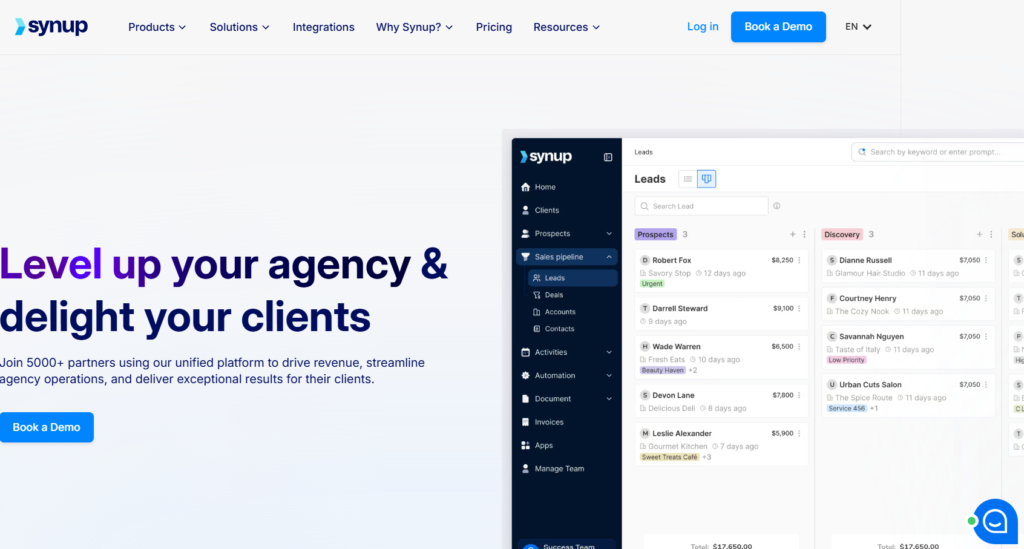
Synup centralizes business listings, review monitoring, and local SEO reporting into one dashboard, and it’s built specifically for businesses managing more than one location. Pricing starts at $79 per month when billed annually, or $99 per month billed monthly, with agency-focused plans running as high as $799 per month for larger portfolios.
The platform syncs your business name, address, and phone number across more than 200 directories and search engines, then flags inconsistencies before they hurt your local rankings. Its review management module pulls feedback from multiple sources into a single interface so teams can respond without logging into each site separately. Synup OS, the white-label version built for agencies, lets marketing shops resell listings, reviews, and social media tools under their own brand while tracking client health scores and churn risk from one place.
Founded in 2014, Synup says it works with more than 5,000 agency and business partners managing millions of locations. Users consistently praise listing accuracy and review monitoring in independent reviews, though some mention the mobile app feels limited compared to the desktop dashboard, and a few note pricing edges higher than expected once you add locations.
2. Birdeye

Birdeye ranks among the most widely used reputation management platforms, and independent research firms like SelectHub have placed it at the top of their category rankings. Pricing starts around $300 per month across its tiered plans, though the exact quote depends on company size and features selected.
The platform aggregates reviews from more than 200 sites into a centralized inbox, and its AI tools handle much of the busywork: automated review requests, AI-drafted responses, and a chatbot that engages website visitors even outside business hours. Birdeye also builds in two-way SMS and social messaging, a survey builder with sentiment analysis, and listing management for local SEO, all connected through more than 100 integrations including Shopify, QuickBooks, and Square.
Independent reviewers give Birdeye strong marks, with a 4.7 out of 5 rating on Software Advice’s FrontRunners list. It works well for small businesses (60% of reviewers come from companies with 2 to 50 employees) but scales up to larger, multi-location operations too. The most common complaint across review sites is pricing that feels high or confusing once add-ons come into play.
3. Podium
Podium built its reputation around SMS-first customer communication, and review management sits inside that broader messaging platform. The Core plan starts at $399 per month for one location, Pro runs $599 per month for up to five locations, and Enterprise pricing starts around $999 per month for larger networks.
Review requests go out by text message, which tends to get faster responses than email, and Podium’s AI tools on the Pro plan can draft review responses and summarize phone calls automatically. The platform also supports SMS-based video chat, letting customers get quick consultations without downloading a separate app, and integrates with CRMs like Salesforce and HubSpot for teams that want review data flowing into their existing sales tools.
Reviewers frequently flag cost as the main drawback. Add-ons like AI review replies ($99/month) and extra users ($50/month each) push real-world monthly costs well above the base sticker price, and the Pro plan’s 500-message bulk texting limit can feel restrictive for businesses with larger contact lists. Podium suits service businesses already sold on SMS as their primary channel more than businesses that just want straightforward review tracking.
4. Reputation.com
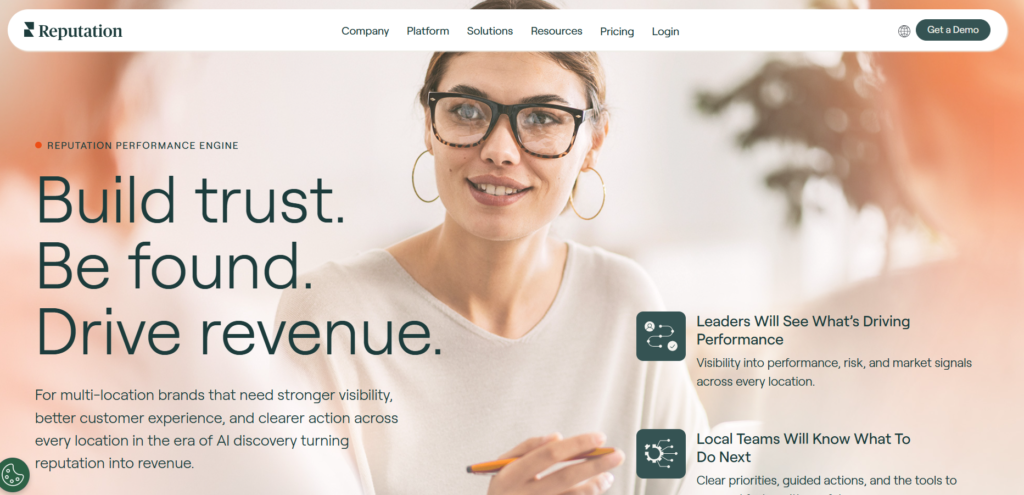
Reputation.com targets large, multi-location enterprises rather than small businesses, and its pricing reflects that positioning. Published estimates put core plans in the $3,000 to $5,000 per month range, with advanced features like crisis management or dedicated SEO support pushing costs past $10,000 per month for bigger accounts.
What you get for that budget is a genuinely comprehensive platform: a proprietary Reputation Score that benchmarks performance against competitors, sentiment analysis powered by natural language processing, and integration depth with Google’s business tools through a Premier Partner relationship. The platform pulls together reviews, social engagement, business listings, and customer surveys into one 360-degree view, which matters most for organizations like healthcare networks, auto dealer groups, and hospitality chains managing reputation across dozens or hundreds of locations at once.
Because pricing isn’t published, getting an accurate quote requires a sales conversation, and the platform’s complexity means implementation typically takes longer than smaller competitors on this list. Reputation.com fits organizations with dedicated marketing or CX teams who need enterprise-grade reporting, not solo operators looking for a quick review-monitoring dashboard.
5. ReviewTrackers
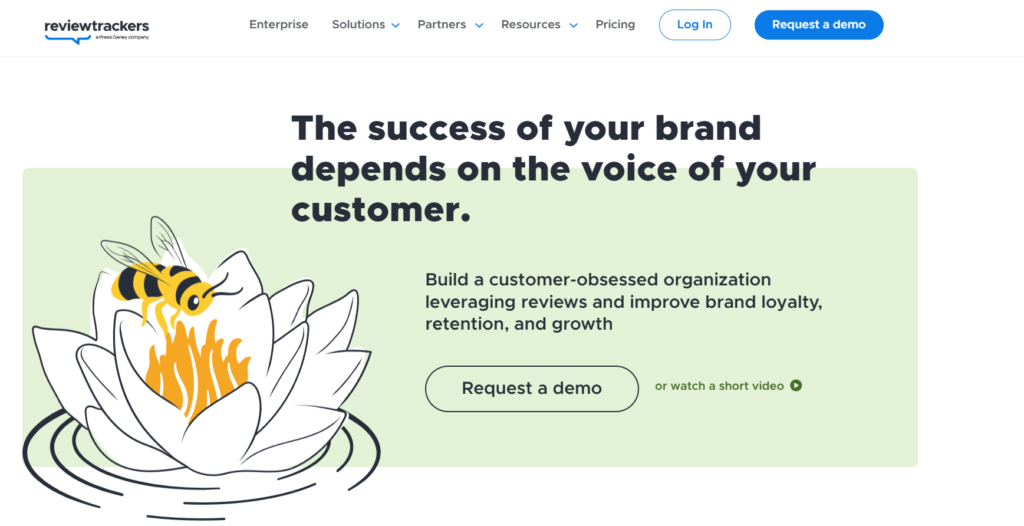
ReviewTrackers takes a review-focused approach rather than bundling in listings management or local SEO tools. Pricing starts around $89 per month per location, structured across Data Only, Starter, and Essential tiers, with add-on modules for local listings or rank tracking available at extra cost.
The platform monitors reviews across more than 100 sites, including Google, Facebook, and TripAdvisor, and uses natural language processing to surface trends and sentiment patterns across large volumes of feedback. Teams can respond to reviews directly inside the dashboard instead of visiting each site individually, and automated categorization helps larger organizations spot recurring themes in customer complaints before they escalate. ReviewTrackers reports serving more than 40,000 businesses, with particularly strong adoption among mid-size and enterprise multi-location brands.
The tradeoff is scope. ReviewTrackers doesn’t handle Google Business Profile updates or directory-wide listing consistency the way Synup does, so businesses that also need NAP management across the web typically pair it with a separate tool. Reviewers rate its analytics and collaboration features highly, though a few note the interface takes longer to learn than more streamlined competitors.
How to Choose the Right Review Management Tool
If you manage multiple locations or run an agency serving multiple clients, Synup’s white-label options and directory-wide sync make it the most direct fit on this list.
If you want an all-in-one platform with strong AI automation, Birdeye covers review requests, responses, and website chat in one subscription without requiring enterprise-level budget.
If SMS is already your primary way of reaching customers, Podium’s text-first workflow will feel native, though budget for the real monthly cost once you add the features most businesses actually need.
If you run a large, multi-brand enterprise with dedicated reputation staff, Reputation.com’s depth justifies its price, but smaller teams will find the cost hard to justify.
If review monitoring and sentiment analysis matter more than listings management, ReviewTrackers delivers that specifically without paying for features you won’t use.
Budget matters as much as features here. A single-location coffee shop doesn’t need Reputation.com’s enterprise reporting, and a 200-location retail chain will outgrow a $79-a-month starter plan fast. Match the platform to your actual location count and team size rather than picking based on brand recognition alone.
Features to Check Before You Commit
Before you commit to a platform, check whether it covers these basics:
- Multi-site monitoring: Does it pull reviews from Google, Facebook, Yelp, and industry-specific sites relevant to your business, or just the major three?
- Response tools: Can your team reply to reviews directly inside the dashboard, or does it just alert you and send you elsewhere?
- Review request automation: Does it support email, SMS, or both when asking happy customers to leave feedback?
- Reporting by location: If you run more than one location, can you see performance broken out by site rather than just an aggregate score?
- Pricing transparency: Published pricing saves time. If a vendor requires a sales call for basic numbers, budget extra time for the buying process.
- Onboarding support: Ask how long setup takes and whether someone helps migrate your existing review history and location data.
- Mobile access: If your team responds to reviews on the go, test the mobile app before you sign a contract rather than after.
- Contract flexibility: Month-to-month options cost more per month but avoid locking you into annual pricing before you know if the platform fits.
Why Response Speed Matters More Than Most Businesses Realize
Customers notice when a business replies to reviews quickly, and they notice even more when nobody replies at all. A negative review left unanswered for weeks reads very differently than one answered within a day with a clear, specific response. This is where the platforms on this list earn their subscription cost: centralizing reviews from a dozen sites into one inbox means your team can actually keep up, instead of checking five different apps once a week.
Response speed also affects how new customers perceive your business before they’ve interacted with you at all. Someone scanning your Google Business Profile sees not just your star rating but how you’ve handled criticism in the past. A thoughtful response to a one-star review, addressing the specific complaint rather than a generic apology, often does more for trust than another five-star review would.
Frequently Asked Questions
What’s the difference between review management and reputation management software? Review management typically focuses on monitoring, requesting, and responding to customer reviews. Reputation management often includes that plus broader tools like sentiment analysis, social media monitoring, and competitive benchmarking. Several platforms on this list, including Birdeye and Reputation.com, blend both categories.
Do I need a separate tool for listings management? Not always. Synup bundles listings and review management together, which saves you from running two subscriptions. ReviewTrackers, by contrast, focuses on reviews alone, so businesses that also need directory consistency typically add a second tool.
How much should a small business expect to pay? Entry-level plans across this list start between $49 and $99 per month for a single location. Multi-location businesses and agencies should expect costs to scale with the number of locations or clients managed.
Can these tools respond to reviews automatically? Most platforms, including Birdeye and Podium, offer AI-drafted responses that a team member reviews before publishing. Fully automated responses without human review are less common and generally not recommended for anything beyond simple thank-you replies.
Which platform works best for a single-location small business? Birdeye and Synup both offer accessible entry points for single-location businesses, while Reputation.com is built for enterprise budgets and Podium’s pricing structure favors businesses that also want SMS marketing.
Do these platforms help with fake or spam reviews? Most offer flagging tools that let you report suspicious reviews to the source site, such as Google or Yelp, but none of them can remove a review directly. The removal decision always sits with the platform where the review was posted, and each site has its own policy on what qualifies for takedown.
Is it worth switching platforms if I already use one? Only if your current tool is missing something you need, like multi-location reporting or SMS review requests. Migrating review history and retraining your team takes time, so weigh that cost against the specific gap you’re trying to close before switching.
Final Thoughts
Synup, Birdeye, Podium, Reputation.com, and ReviewTrackers each solve the review management problem differently, and the right pick depends on how many locations you manage, what budget you’re working with, and whether you need listings management bundled in or just review monitoring on its own. Request a live demo before committing to any platform, since published pricing rarely reflects the final number once your specific location count and feature needs come into play.