How Multi-Location Healthcare Brands Can Manage Local Listings at Scale

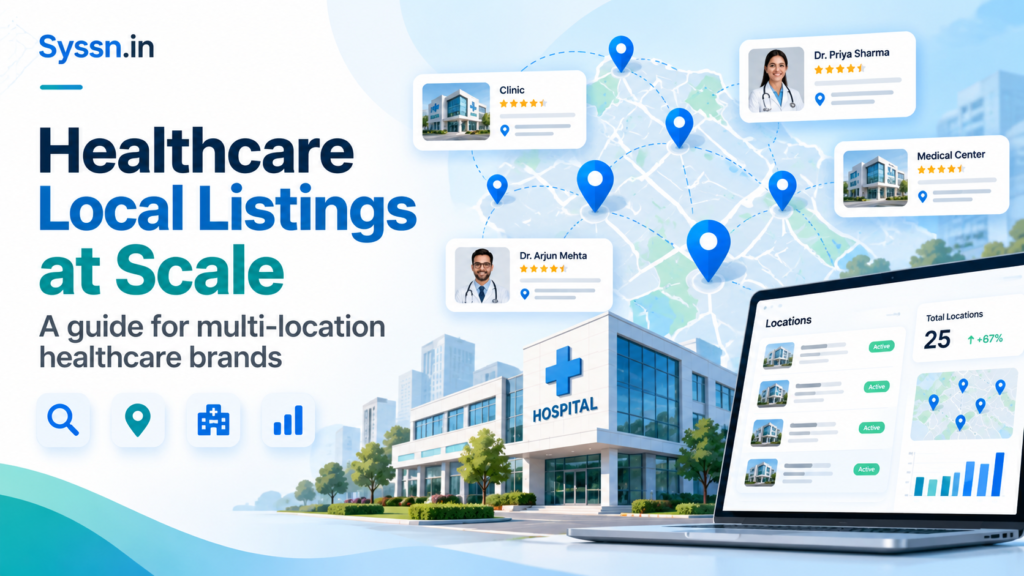
Managing local listings for a healthcare network goes far beyond correcting addresses and phone numbers.
A health system may need to keep hundreds or thousands of facility, department, and practitioner records accurate across Google, Apple, Bing, healthcare directories, location pages, provider pages, appointment systems, and internal databases. Every provider move, clinic opening, holiday-hours change, or closure can create conflicting information if the organization does not have a controlled process.
The most effective approach combines a reliable internal source of truth, clear ownership of each data field, repeatable update workflows, and software that can distribute approved changes at scale.
Synup, Yext, SOCi, Uberall, and Rio SEO can support this work. The right choice depends less on the largest advertised directory network and more on your healthcare entity model, publisher requirements, integrations, governance controls, and operational workload.
Key Takeaways
- Manage healthcare listings as an ongoing data-governance program rather than a one-time SEO task.
- Treat facilities, departments, and individual practitioners as separate entity types where publisher rules require it.
- Define one authoritative source for every important field, including addresses, provider status, hours, insurance information, specialties, and appointment URLs.
- Build formal processes for physician onboarding, transfers, departures, openings, moves, temporary closures, and permanent closures.
- Evaluate listings platforms by supported healthcare fields, publisher integrations, permissions, APIs, duplicate handling, and exception management.
- Keep ownership of important publisher accounts with the healthcare organization whenever possible.
What Is Multi-Location Healthcare Listings Management?
Multi-location healthcare listings management is the process of creating, updating, monitoring, and governing information about healthcare facilities and practitioners across search engines, maps, directories, healthcare platforms, and other services patients use to find care.
A basic local-business record may include a name, address, and phone number. Healthcare organizations usually need to manage far more information.
Depending on the entity and publisher, that may include:
- Facility or practice name
- Street address, suite, floor, and coordinates
- Local phone number
- Regular and special hours
- Department or urgent-care hours
- Medical specialties
- Services and procedures
- Appointment URL
- Location or provider-page URL
- Accessibility information
- Practitioner name and credentials
- National Provider Identifier, or NPI
- Accepted insurance
- Languages spoken
- New-patient status
- Provider photograph
- Practitioner-to-location relationships
Not every directory accepts all of these fields. That makes field-level publisher support more useful as a buying criterion than a raw directory count.
For a broader explanation of the discipline, see this guide to local listings management.
Healthcare Facilities, Departments, and Practitioners Need Different Rules
Healthcare listings become difficult when an organization treats every record as if it represents the same type of entity.
A hospital is different from a cardiology department. A clinic is different from an individual physician working inside the clinic. A practitioner who works three days at one office and two days at another introduces another relationship the system needs to represent accurately.
Google has specific Business Profile guidance for chains, departments, and individual practitioners. Its general rules require businesses to represent themselves consistently in the real world, use accurate addresses, choose appropriate categories, and avoid unnecessary duplicate profiles.
For individual practitioners, Google says a dedicated profile can be appropriate when the practitioner is public-facing and can be contacted directly at the verified location during the stated hours. Departments within hospitals and other organizations may also qualify for separate profiles under Google’s rules.
This matters when a doctor moves between facilities.
Changing the health system’s website is only one part of the update. The organization may also need to review:
- The practitioner’s approved practice locations
- Google Business Profiles, where eligible
- Health-specific directories
- Appointment links
- Provider pages
- Scheduling systems
- NPPES information
- Internal provider databases
CMS states that an assigned NPI remains the same when a provider changes their name, address, or other information. The NPI identifies the provider; it does not encode details such as specialty or geographic location. Centers for Medicare & Medicaid Services
Healthcare Listings Platforms to Consider in 2026
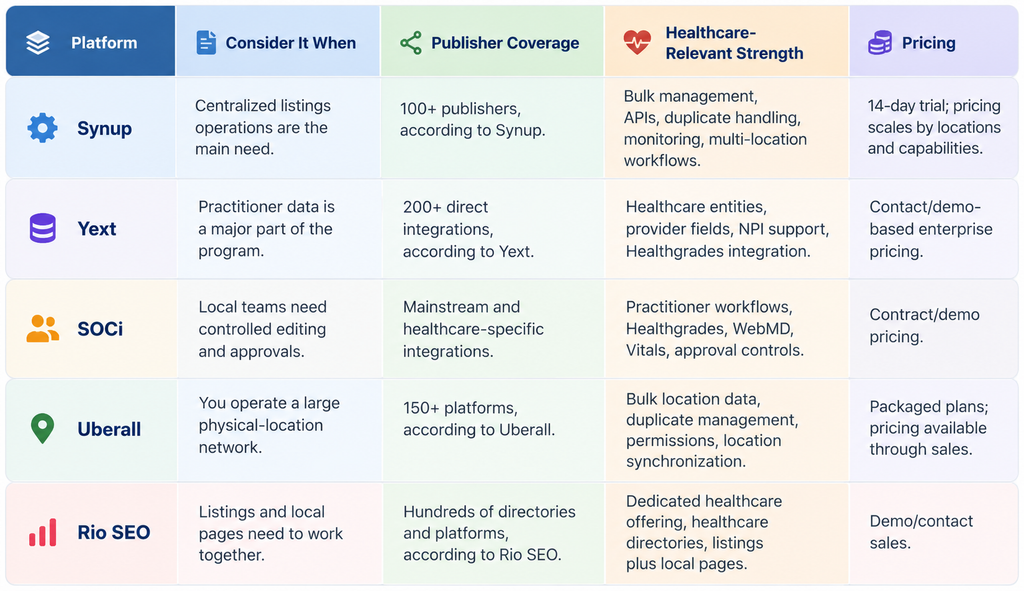
No single listings platform is the right choice for every healthcare organization.
A 100-location urgent-care brand may prioritize bulk location operations and hours changes. A hospital system with several thousand physicians may care more about practitioner entities, provider fields, and healthcare directories. Another organization may need local pages and listings managed from the same data layer.
The following comparison uses current first-party vendor materials reviewed in October 2026. Vendor-reported publisher totals are not directly comparable because supported destinations can vary by country, business type, subscription, and entity.
Synup
Best fit: Healthcare organizations that need a centralized operating system for listings across a large number of locations.
Synup currently says its platform connects listings with Google Business Profile, Apple, Bing, Facebook, and more than 100 publishers. It supports multi-location operations ranging from small portfolios to thousands of locations.
Listings capabilities include bulk changes, duplicate detection, connection monitoring, special-hours scheduling, listing-health checks, location organization, APIs, local-ranking tools, and white-label reporting. Its API covers locations, listings, analytics, rankings, grid rank, user management, and related functions.
That operating breadth can be useful for healthcare brands where the main problem is maintaining many facilities accurately without logging into each publisher separately.
Limitation: Healthcare organizations with complex provider requirements should test their required practitioner fields and healthcare-specific destinations directly. Synup’s public positioning emphasizes broad multi-location presence management more than a dedicated healthcare-professional entity model.
Pricing: Synup currently offers a 14-day trial and says pricing scales with the number of locations and capabilities selected.
What to ask in a demo: Create one facility, one department, and one physician who works at two locations. Then ask the vendor to show which fields are distributed to each healthcare publisher.
Yext
Best fit: Hospital systems and physician-heavy organizations that need structured provider data as well as facility listings.
Yext currently reports more than 200 direct publisher integrations and positions its healthcare platform around facilities, providers, and services.
Its listings product supports healthcare-specific information including specialties, insurance, and NPI data. A major differentiator for provider-focused organizations is Yext’s healthcare entity structure and its direct healthcare publisher integrations.
Yext added Healthgrades listing synchronization in February 2026 for Healthcare Professional entities. Yext notes that Healthgrades requires an additional subscription.
That makes Yext particularly relevant when the organization manages thousands of doctors alongside hospitals, clinics, and departments.
Limitation: Large enterprise capability can create more implementation and procurement complexity than a smaller healthcare group needs. Buyers should also determine which healthcare publishers or functions require additional packages.
Pricing: Standard enterprise prices are not prominently published on its current product pages.
What to ask in a demo: Request a field-by-field demonstration for NPI, specialty, insurance, new-patient status, languages, appointment URLs, and practitioner-to-location relationships.
SOCi
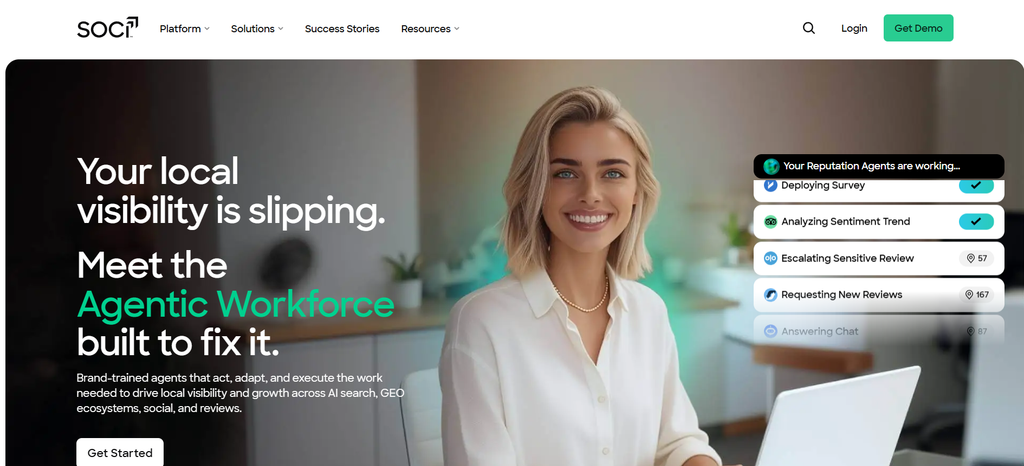
Best fit: Distributed healthcare organizations where local teams need some editing authority while corporate teams retain approval controls.
SOCi combines listings with reviews, social management, local pages, and other multi-location marketing functions. Its current healthcare solution specifically references integrations including WebMD, Healthgrades, and Vitals.
SOCi expanded its healthcare listings capabilities in 2025 with Healthgrades, WebMD, Vitals, and RateMD integrations and a dedicated Practitioner tab for healthcare-specific fields.
Its governance model is especially relevant for networks where regional or location teams need to make operational changes. A June 2026 release added role-based approval for opening-hours changes, allowing selected users to propose edits that require approval before they publish to Google. The workflow also records an audit trail.
Limitation: Organizations looking only for simple listing synchronization may not need SOCi’s wider marketing and automation suite. Healthcare teams should also evaluate compliance claims carefully against their own legal, privacy, security, and organizational requirements.
Pricing: Pricing is generally handled through sales and customer order forms rather than a public per-location rate card.
What to ask in a demo: Have a local user propose an urgent-care holiday-hours change and show the complete approval, publication, and audit process.
Uberall
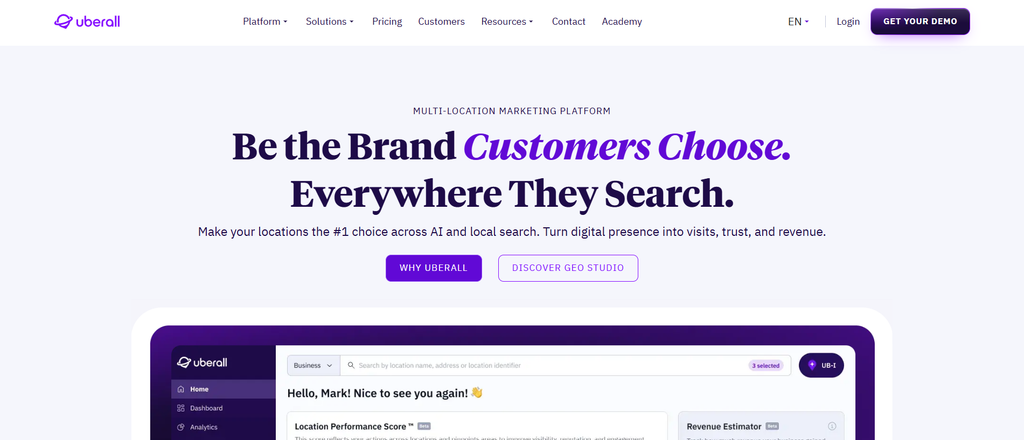
Best fit: Healthcare organizations with hundreds or thousands of physical locations where centralized location-data management is the main challenge.
Uberall currently says its listings product covers more than 150 platforms, including Google, Apple Maps, Bing, Yelp, navigation services, and other discovery channels.
The platform focuses heavily on multi-location operations, including centralized updates, directory synchronization, duplicate management, permissions, and location-data controls.
That can suit urgent-care chains, dental groups, optical networks, diagnostic centers, and other healthcare businesses where physical-location accuracy dominates the workload.
Limitation: Uberall serves many industries rather than focusing exclusively on healthcare providers. Organizations with thousands of individual practitioner records should test provider-specific fields and healthcare-directory requirements before procurement.
Pricing: Listings are included in Uberall’s current “Show Up” package, with additional capabilities available through other packages and add-ons. Numerical enterprise pricing is not consistently published on the pricing page.
What to ask in a demo: Close one clinic in a test account while keeping a physician active at two other facilities. Confirm that the relationship changes do not create duplicate or outdated provider information.
Rio SEO

Best fit: Enterprise healthcare organizations that want listings, location pages, reviews, and patient-discovery experiences managed as part of the same local-search program.
Rio SEO publishes a dedicated healthcare offering and specifically names Google, WebMD, Healthgrades, and Vitals among the networks it works with.
Its wider platform combines local listings with local pages, locators, review management, and reporting. Rio SEO says its listings product distributes location data to hundreds of directories, applications, and platforms.
The combination is particularly relevant when a health system wants information on owned location pages and third-party listings to remain aligned.
Limitation: Rio SEO is positioned primarily for enterprise use, and public pricing information is limited. Healthcare buyers should still request a field-level demonstration for practitioner records rather than assuming every healthcare destination accepts the same data.
Pricing: Rio SEO directs prospective customers to request a demo or speak with its sales team.
What to ask in a demo: Change one location’s hours and appointment URL, then follow that change through the local page, locator, Google listing, and healthcare directories.
How to Manage Healthcare Listings at Scale
Technology can distribute approved information. It cannot decide which information is correct.
That responsibility needs to remain inside the healthcare organization.
1. Build a Master Record for Every Entity
Start with a stable internal identifier for every facility, department, and practitioner.
For a facility, the controlled record might include:
- Legal or approved public name
- Address
- Suite or floor
- Phone number
- Geographic coordinates
- Standard hours
- Special hours
- Categories
- Services
- Appointment URL
- Location-page URL
- Accessibility information
For a practitioner, the record may include:
- Name
- Credentials
- NPI
- Specialty
- Practice locations
- Insurance information
- Languages
- Appointment URL
- Headshot
- Active or inactive status
The listings platform should receive approved information from this data model rather than becoming a second place where departments create conflicting records.
2. Assign Ownership to Important Data Fields
A common source of listing errors is unclear responsibility.
Marketing should not decide whether a doctor is still employed. HR should not independently change a Google category. A clinic manager should not change a canonical address without the appropriate operational process.
Define an owner for each field.
| Data Field | Typical Owner |
| Facility address | Facilities or operations |
| Practitioner employment status | Medical staff office or HR |
| NPI/provider information | Credentialing or provider-data team |
| Location hours | Operations |
| Business Profile categories | Local SEO or marketing |
| Appointment URL | Digital/product team |
| Insurance information | Credentialing or payer team |
| Listing publication | Listings/marketing team |
The specific departments will differ by organization. The important point is that every high-impact field has a recognized source.
3. Keep Publisher Ownership With Your Organization
Your healthcare organization should generally own its primary publisher accounts and give agencies or software providers the permissions they need to manage them.
Google’s own guidance for authorized representatives says business owners should retain ownership of their Business Profiles, with representatives added as managers where possible.
Google also provides bulk profile management for eligible businesses with 10 or more locations of the same business.
Retaining ownership reduces the risk of losing access when an employee, agency, or technology provider changes.
For more detail on service-provider responsibilities, see this business listing management services guide.
4. Create a Formal Practitioner Onboarding Workflow
Practitioner information often becomes outdated because provider changes happen faster than listing updates.
For every new practitioner, establish:
- Effective start date
- Approved practice locations
- Credentials
- NPI information
- Specialties
- Insurance information
- Appointment links
- Provider-page requirements
- Google Business Profile eligibility
- Required healthcare-directory profiles
Do not publish a provider everywhere simply because the employee record exists. Confirm when the provider will actually begin seeing patients at each location.
5. Create an Offboarding and Transfer Workflow
Provider departures need equal attention.
When a physician leaves one practice, first determine what changed.
Did the physician:
- Leave the health system completely?
- Transfer to another facility?
- Stop practicing at one office but remain active elsewhere?
- Change appointment URLs?
- Move to another organization?
- Retire?
Those scenarios require different actions.
Do not automatically delete every provider listing.
Instead, update the provider’s location relationships, appointment links, owned pages, eligible search profiles, and relevant healthcare directories based on the actual status.
An NPI normally remains unchanged when the provider’s address or other information changes. Centers for Medicare & Medicaid Services
6. Treat Openings, Moves, and Closures as Structured Events
Location changes should trigger defined workflows rather than ad hoc emails to the marketing team.
A new clinic opening may require:
- Internal location ID
- Approved name
- Address validation
- Main phone number
- Hours
- Categories
- Website page
- Appointment link
- Google profile
- Apple record
- Bing listing
- Relevant directories
- Analytics and tracking
A move should preserve the relationship between the old and new records so teams do not create unnecessary duplicates.
A closure should trigger updates across the website, scheduling systems, publishers, directories, and other patient-facing sources.
Apple has also changed its business-management product structure. Apple states that Apple Business Connect is now part of Apple Business, which combines capabilities previously offered through Apple Business Manager, Apple Business Essentials, and Apple Business Connect.
7. Manage Exceptions Instead of Checking Every Listing Manually
Manually reviewing dozens of directories for hundreds of clinics does not scale.
The listings team should spend its time on exceptions requiring a decision.
Useful exception queues include:
- Incorrect phone numbers
- Address discrepancies
- Duplicate profiles
- Expired publisher connections
- Rejected updates
- Suspended profiles
- Unverified locations
- Incorrect opening hours
- Practitioner/location mismatches
- Closed locations still appearing open
- Missing appointment links
- Unauthorized suggested edits
A strong platform should make these exceptions easy to identify and prioritize.
For example, a report saying “95% of listings synced” is less actionable than a queue showing that 18 profiles have incorrect hours, six require verification, and three have duplicate conflicts.
8. Include NPPES in Provider-Data Governance
Healthcare organizations have an additional data source that many other multi-location industries do not: NPPES.
CMS developed the National Plan and Provider Enumeration System to assign NPIs. An NPI is a unique 10-digit identifier, and once assigned, it remains the same even when a provider’s name, address, or other information changes. Centers for Medicare & Medicaid Services
That means listings governance should extend beyond Google and marketing directories.
A recurring provider audit can compare:
- Internal credentialing data
- NPPES information
- Provider pages
- Appointment systems
- Major search platforms
- Healthcare directories
The appropriate audit cadence depends on your organization. Stable fields may be reviewed periodically, while provider transfers, departures, temporary closures, and hours changes should trigger updates as soon as they occur.
How to Choose the Right Healthcare Listings Platform
A feature checklist is useful, but procurement should test how the platform behaves with real healthcare data.
Test the Entity Model
Ask every shortlisted vendor to demonstrate:
- One hospital
- One outpatient facility
- One department
- One individual practitioner
- One practitioner working at multiple locations
Then introduce a change.
Move the practitioner from one facility to another. Temporarily close the department. Change special hours.
Watch what the platform does.
A system that handles simple locations well may still struggle with healthcare entity relationships.
Compare Fields, Not Directory Counts
“200 directories” does not tell you whether the platform supports the data your patients need.
For each important publisher, document:
| Requirement | Questions to Ask |
| Entity support | Facilities, departments, practitioners, or all three? |
| Fields | Which provider and facility fields are supported? |
| Sync method | Direct integration, API, aggregator, or manual process? |
| Update timing | How quickly are accepted changes published? |
| Duplicates | Can the platform find and resolve them? |
| Verification | What steps still require manual action? |
| Geography | Which countries are supported? |
| Pricing | Is the publisher included or an add-on? |
For a healthcare network, ten highly relevant publishers with strong field support can be more useful than hundreds of low-value destinations.
Evaluate APIs and Integration Architecture
Determine which system actually owns the information.
Your organization may already have separate platforms for:
- HR
- Credentialing
- Scheduling
- Provider directories
- Facility operations
- Website content
- Local listings
The listings platform should fit into that architecture.
For a large health system, reliable APIs, audit trails, record identifiers, error handling, and synchronization logic may matter more than dashboard design.
Check Governance Controls
Review exactly who can change what.
Ask about:
- Role-based permissions
- Field-level permissions
- Approval workflows
- Audit logs
- Location groups
- Corporate versus local access
- Agency permissions
- Emergency overrides
A distributed network needs a way to accept legitimate local knowledge without allowing uncontrolled changes to core information.
Calculate Cost Using Your Real Entity Count
Do not compare enterprise platforms using a five-location example.
If you operate 300 facilities and manage 4,000 practitioners, ask:
- Is each physician a billable entity?
- Are facilities and practitioners priced differently?
- Are inactive providers still billable?
- Which healthcare networks cost extra?
- Is API access included?
- Is duplicate cleanup included?
- Are managed services extra?
- What happens to pricing as the entity count changes?
For additional procurement questions, see this guide to business listing management costs.
Run a Difficult Pilot
A small pilot should test the cases most likely to cause problems.
For example, use:
- One hospital
- Two clinics
- One department
- Five physicians
- One physician at several sites
- One known duplicate
- One location with holiday hours
- One provider transfer
- One temporary closure
Then measure whether the platform can:
- Accept your source data
- Preserve entity relationships
- Publish approved changes
- Identify failed updates
- Track duplicates
- Show an audit history
- Make exceptions easy to resolve
This provides more useful procurement evidence than a polished sales presentation.
Which Platform Should You Evaluate First?
There is no universal winner, but different operating models point toward different starting points.
Consider Synup first if your biggest challenge is centralized multi-location listing operations, bulk changes, publisher monitoring, duplicate management, APIs, and related local SEO workflows.
Consider Yext early if practitioner records, healthcare-professional entities, and provider-specific publisher fields are central to your program.
Consider SOCi when local or regional teams need to contribute information while corporate teams retain approval and audit controls.
Consider Uberall when your organization manages a particularly large physical-location footprint and the primary problem is location-data distribution.
Consider Rio SEO when local listings, location pages, locators, and reviews need to operate as one enterprise local-search program.
Treat these as starting points for evaluation rather than rankings.
Does Listings Accuracy Improve Healthcare Local SEO?
Accurate listings help Google understand what a healthcare organization is, where it operates, and when patients can visit.
Google says businesses with complete and accurate information are more likely to appear in relevant local results. Its local-ranking system is primarily based on relevance, distance, and prominence.
Listings accuracy therefore supports local visibility, but it does not guarantee a particular position.
A perfectly accurate listing can still rank below another provider because of distance, relevance, prominence, competition, reviews, website signals, and other factors.
For healthcare organizations, the operational consequence can be even more important than the ranking effect.
If a highly visible clinic listing contains the wrong phone number, address, hours, or appointment link, a patient may still be unable to access care.
How Often Should Healthcare Listings Be Audited?
There should not be one audit schedule for every type of information.
Use event-driven updates for high-change information such as:
- Practitioner departures
- New physicians
- Temporary closures
- Permanent closures
- Location moves
- Holiday hours
- Emergency hours
- Appointment-link changes
Use recurring audits for broader data reconciliation.
For example, a quarterly audit might compare your master data against major search platforms, healthcare directories, provider pages, and NPPES information.
Operational exception queues should be reviewed more frequently, particularly when they contain rejected updates, verification problems, or patient-facing inaccuracies.
What Should Happen When a Physician Leaves a Practice?
Confirm the physician’s actual status first.
Then update the systems affected by that change, which may include:
- Internal provider records
- Practice-location relationships
- Provider pages
- Appointment systems
- Google profiles
- Healthcare directories
- NPPES information where applicable
Do not delete every public profile automatically.
A physician may have stopped working at one location while remaining active at another. The NPI itself also does not disappear because a provider changes employer or address.
Which Healthcare Directories Matter Most?
Start with the platforms your patients actually use and the sources you can maintain reliably.
For many organizations, the core set will include broad discovery platforms such as Google, Apple, and Bing.
Then evaluate healthcare destinations according to your specialties and markets. Depending on the organization, that may include services such as Healthgrades, WebMD, Vitals, RateMDs, or other specialty directories.
Do not assume that every healthcare organization needs the same network.
A national hospital system, behavioral-health provider, dental network, and urgent-care chain can have very different priorities.
Final Recommendation
Successful healthcare listings management starts with the organization’s own data.
Software can distribute an address. It cannot determine whether a physician actually works at that address.
It can publish opening hours. It cannot decide whether radiology closes early next Friday.
It can synchronize an appointment link. It cannot know that the scheduling department replaced the link yesterday unless the change reaches the system.
Build the operating model first:
- Define your entities.
- Establish authoritative data sources.
- Assign ownership to important fields.
- Create workflows for predictable changes.
- Centralize distribution.
- Monitor exceptions.
- Audit critical records regularly.
- Test vendors against your real healthcare data.
Then choose the listings platform that best fits that model.
For location-heavy operations, Synup is a practical platform to evaluate. Yext deserves particular attention for provider-heavy organizations. SOCi is relevant where controlled local participation and approval workflows matter. Uberall is designed around large multi-location footprints, while Rio SEO is worth examining when listings and owned local pages need to operate together.
The best system is the one that can take accurate information from your organization, maintain the relationships between facilities and practitioners, distribute changes reliably, and show your team exactly where something still needs attention.