Top PMP Certification Online Training: Complete Guide to Courses, Fees, Exam Support and Reviews

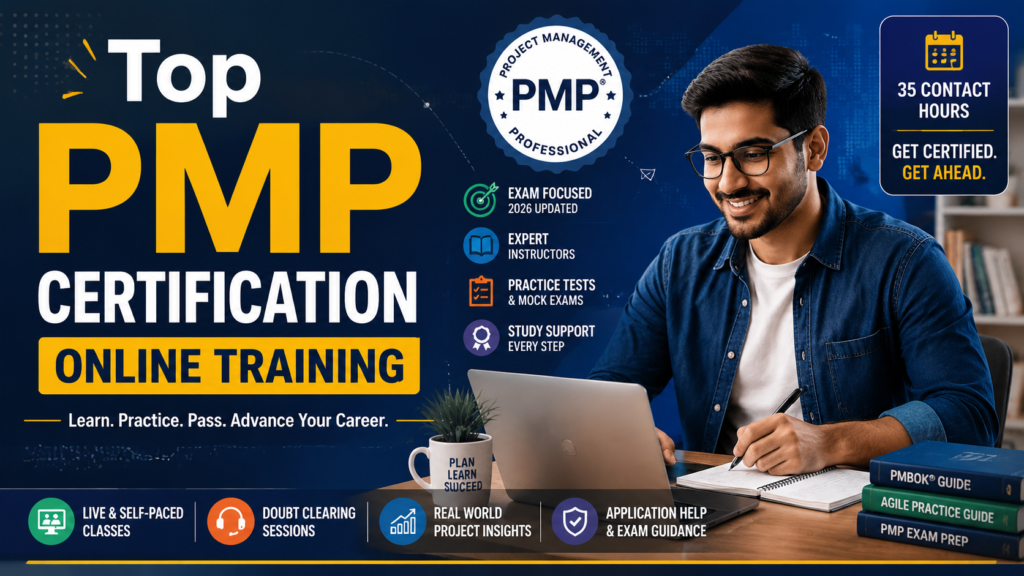
Top PMP certification online training is one of the easiest ways for working professionals to prepare for the PMP exam without stepping away from their careers. But in 2026, choosing the right course requires a little more thought than comparing prices and counting practice questions. The PMP exam changed on July 9, 2026, bringing more attention to business value, AI, sustainability, stakeholder engagement, and real-world project decisions. This guide compares StarAgile, Simplilearn, KnowledgeHut, PMI, Coursera, PMTraining, and Master of Project Academy on course format, fees, duration, practice support, and exam preparation.
What Is PMP Certification?
A project manager’s job can look deceptively simple from the outside.
There is a plan. There is a team. There is a deadline. Someone has to make sure everything gets done.
Anyone who has actually managed a project knows how quickly that neat picture falls apart.
A customer changes the requirement. A stakeholder stops responding. The budget becomes uncomfortable. A technical dependency slips. The team disagrees about what should happen next. And suddenly project management has very little to do with simply following a plan.
That is the world the Project Management Professional (PMP) certification is intended to recognize.
PMP is a professional credential awarded by the Project Management Institute (PMI). It demonstrates that a candidate has met PMI’s experience and education requirements and passed its professional examination. The certification covers project leadership across predictive, agile, and hybrid approaches.
It is also not designed as a basic beginner certification.
Under the current 2026 requirements, candidates need between two and five years of relevant project leadership experience depending on their educational background, along with 35 hours of project management training unless an applicable credential such as CAPM satisfies the training requirement. PMI has also extended the experience lookback period to the previous 10 years.
That makes an important point about PMP training.
You are not simply learning project management from scratch. You are taking the experience you already have and learning how to apply it within the framework PMI expects you to understand.
Why Does PMP Certification Matter in 2026?
The short answer is that project management itself is changing.
The 2026 PMP examination is a good example.
On July 9, PMI launched the revised PMP exam. The exam still covers People, Process, and Business Environment, but their weighting has changed significantly:
| PMP exam domain | 2026 weighting |
|---|---|
| People | 33% |
| Process | 41% |
| Business Environment | 26% |
The previous weighting was 42%, 50%, and 8% respectively. Business Environment therefore receives much more attention in the revised exam.
The updated examination also brings more emphasis to:
- Artificial intelligence
- Sustainability
- Stakeholder engagement
- Business value
- Project outcomes
- Adaptive and real-world project environments
- Predictive, agile, and hybrid approaches
The exam remains 180 questions and four hours long, but PMI describes the revised version as more interactive and scenario-based.
This is why I would be careful about choosing a PMP course simply because it has been around for years.
Experience is valuable. Old exam material is not.
If you’re preparing for the 2026 version of the exam, the first question to ask any provider is surprisingly simple:
“Is this course updated for the exam I am actually taking?”
7 Best PMP Certification Online Training Providers in 2026
There is no single course that deserves the title of “best” for every candidate.
Someone with ten years of project experience may want little more than official material and a good simulator. A first-time PMP candidate may want a live instructor, a study calendar, and someone to answer questions when a scenario doesn’t make sense.
With that in mind, here are seven providers worth considering.
1. StarAgile
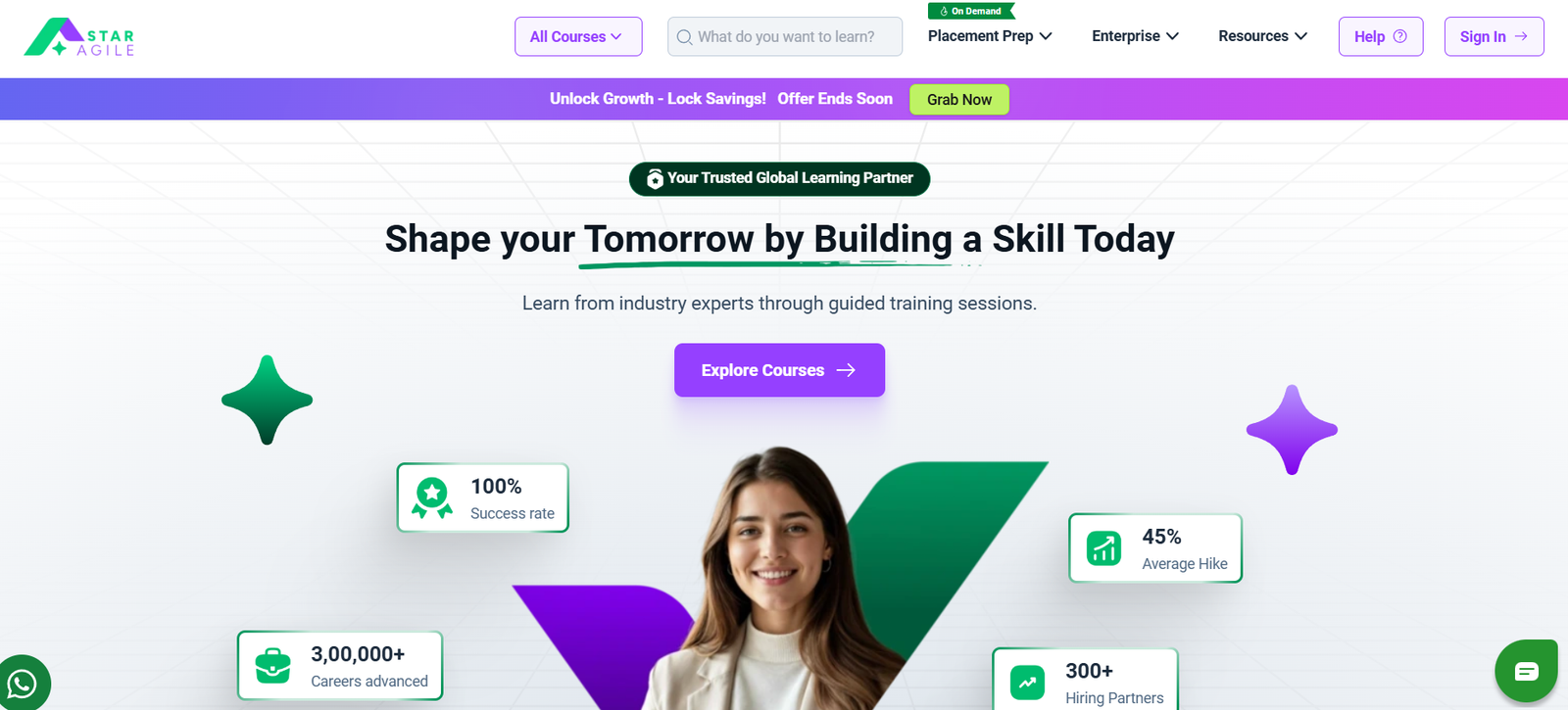
StarAgile PMP Certification Training
If I were choosing a course based specifically on the 2026 PMP exam transition, StarAgile would be one of the first programs I’d investigate.
The reason isn’t complicated: StarAgile is very explicit about the update.
Its current PMP training pages say the program has been updated for the PMP exam changes effective July 9, 2026, and follows the PMBOK® Guide 8th Edition. The provider also highlights Generative AI content and says its training is designed around the latest PMP exam requirements.
That matters because candidates preparing for the PMP are already dealing with enough moving parts. You don’t want to spend weeks learning from a course and then discover that its examples and emphasis belong to an older examination.
StarAgile’s online program is built around live instructor-led learning and provides the 35 hours of training needed for the PMP application. Its current course pages also mention an LMS, practice questions, exam preparation, and support around the certification journey.
The provider advertises completion of its training in roughly 40 days on some current course pages, although the exact schedule depends on the batch and location.
What stands out
- Updated for the July 9, 2026 PMP exam
- PMBOK® Guide 8th Edition-based training
- Live online classes
- 35 hours of training
- LMS access
- Practice questions and exam preparation
- Generative AI content
- Exam-focused learning
- Training support for working professionals
Who is it best for?
StarAgile makes the most sense for a professional who wants structured live training rather than completely self-directed study, particularly someone who wants explicit alignment with the current 2026 exam.
The main thing I’d check before paying is the exact package you’re getting. Practice-question counts, batch schedules, support, and other inclusions can differ between plans.
2. Simplilearn
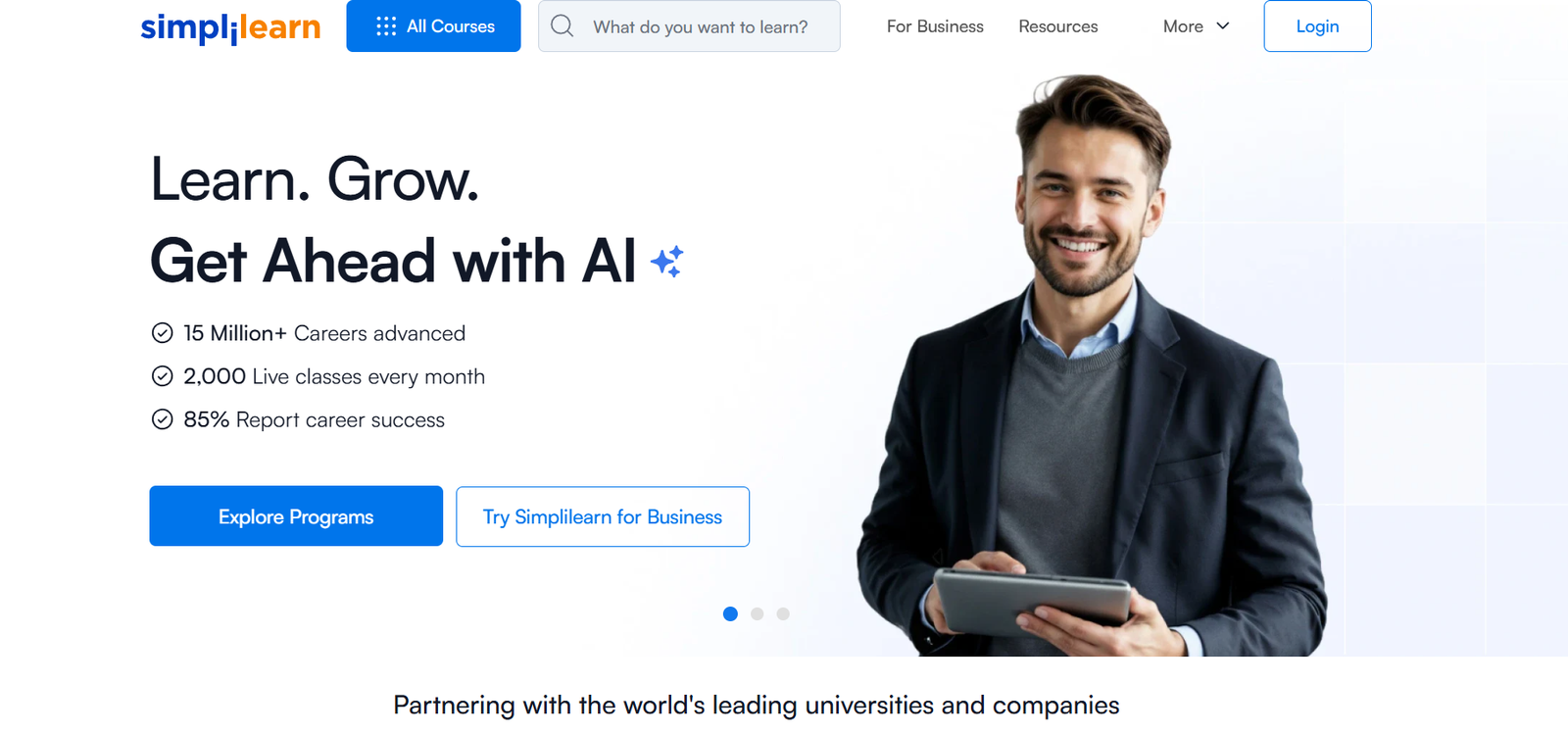
Simplilearn PMP Certification Training
Simplilearn is a good example of a provider that treats PMP preparation as a complete learning program rather than simply a collection of video lectures.
Its current PMP Certification Training is listed as a four-week program priced at $699. Simplilearn also offers a four-day PMP Certification Bootcamp priced at $1,799 and a seven-week PMP Plus program priced at $1,249.
The bootcamp is particularly interesting for people who don’t want to spend months preparing.
It provides four days of instructor-led training, a structured study plan, 14+ mock exams, more than 2,000 PMP questions, and 35 PDUs. Simplilearn also says its current bootcamp is aligned with the PMP Exam Content Outline and PMBOK® Guide 8th Edition.
Of course, there is a difference between covering material quickly and absorbing it.
A four-day bootcamp can give you structure, but you’ll still need time afterward to work through questions and identify weak areas. That’s true regardless of which provider you choose.
What stands out
- Four-week standard PMP training
- Four-day intensive bootcamp option
- Live online learning
- 2,000+ practice questions on listed programs
- 14+ mock exams
- Study plan
- PMI digital materials
- Application support
- 2026 exam-aligned content
Who is it best for?
Simplilearn is a strong fit for professionals who want a clearly structured preparation path and don’t want to assemble their own study resources.
The main consideration is cost. Its intensive bootcamp is significantly more expensive than its standard training, so the extra support needs to be useful to you.
3. KnowledgeHut
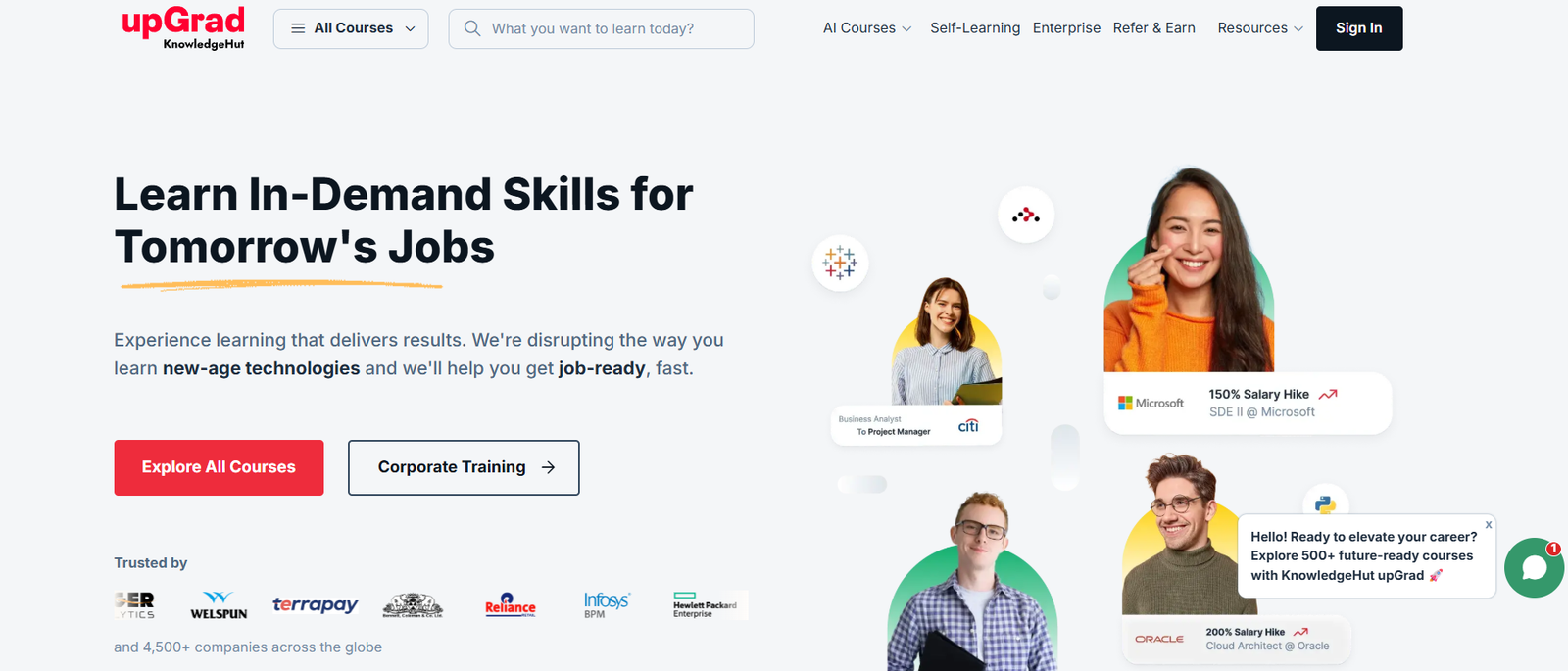
KnowledgeHut PMP Certification Training
KnowledgeHut takes a more guided approach to PMP preparation.
Its current course offers 36 contact hours of live instructor-led training, along with a complimentary 35-hour on-demand course. It also provides a five-week mentor-led study plan, a 2,000+ question bank, mock exams, and full-length exam simulations.
That mentor component is worth paying attention to.
Studying for PMP while working full time can become strangely easy to postpone. You finish a difficult week at work and tell yourself you’ll study Saturday morning. Saturday arrives. There is laundry, family, errands, and somehow a six-hour YouTube rabbit hole about something completely unrelated.
A structured study plan doesn’t solve that problem entirely, but it gives the preparation some shape.
KnowledgeHut also offers exam application assistance and a 180-day Grand Pass on listed programs, allowing learners to rejoin live sessions for clarification.
One current listing shows a promotional live-online price of ₹10,999, reduced from ₹18,999, while another KnowledgeHut certification listing shows a 35-hour PMP program at ₹24,999. That difference illustrates why candidates should check the exact batch and package rather than treating one advertised number as the universal course fee.
What stands out
- 36 contact hours of live instruction
- Complimentary on-demand course
- Five-week mentor-led study plan
- 2,000+ question bank
- Full-length simulation tests
- Exam application assistance
- Flexible learning options
- PMI Authorized Training Partner status
Who is it best for?
KnowledgeHut is particularly attractive for beginners and working professionals who want someone to help keep the preparation on track.
If you’re already highly self-directed, you may not need all that structure.
4. PMI
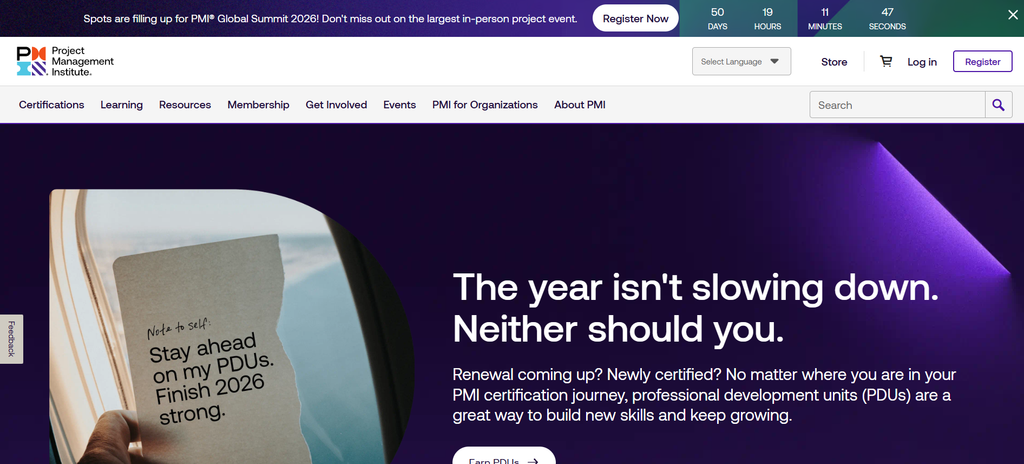
There is something reassuring about preparing for an examination using material created by the organization that administers it.
PMI offers its own online, on-demand PMP Exam Prep Course. The course can provide the required 35 hours of project management training and is designed around PMI’s current certification framework. PMI also offers live preparation through its Authorized Training Partners.
This route is especially appealing to experienced project professionals who don’t need someone to tell them when to study.
You can work through the material on your own schedule and then use PMI’s additional practice resources to test your readiness.
The trade-off is equally obvious.
Official doesn’t automatically mean easiest.
A self-paced course assumes you will create your own schedule, stick to it, recognize where you’re struggling, and seek additional practice when necessary. Some people are very good at this. Others discover that “self-paced” really means “I have successfully purchased another course that I haven’t finished.”
What stands out
- Official PMI preparation
- On-demand learning
- 35 hours of project management training
- Current PMP exam framework
- Official practice resources
- Direct connection to PMI’s certification ecosystem
Who is it best for?
Experienced professionals who are comfortable studying independently and want official preparation material.
If you need regular instructor interaction, one of the live providers may be a better fit.
5. Coursera
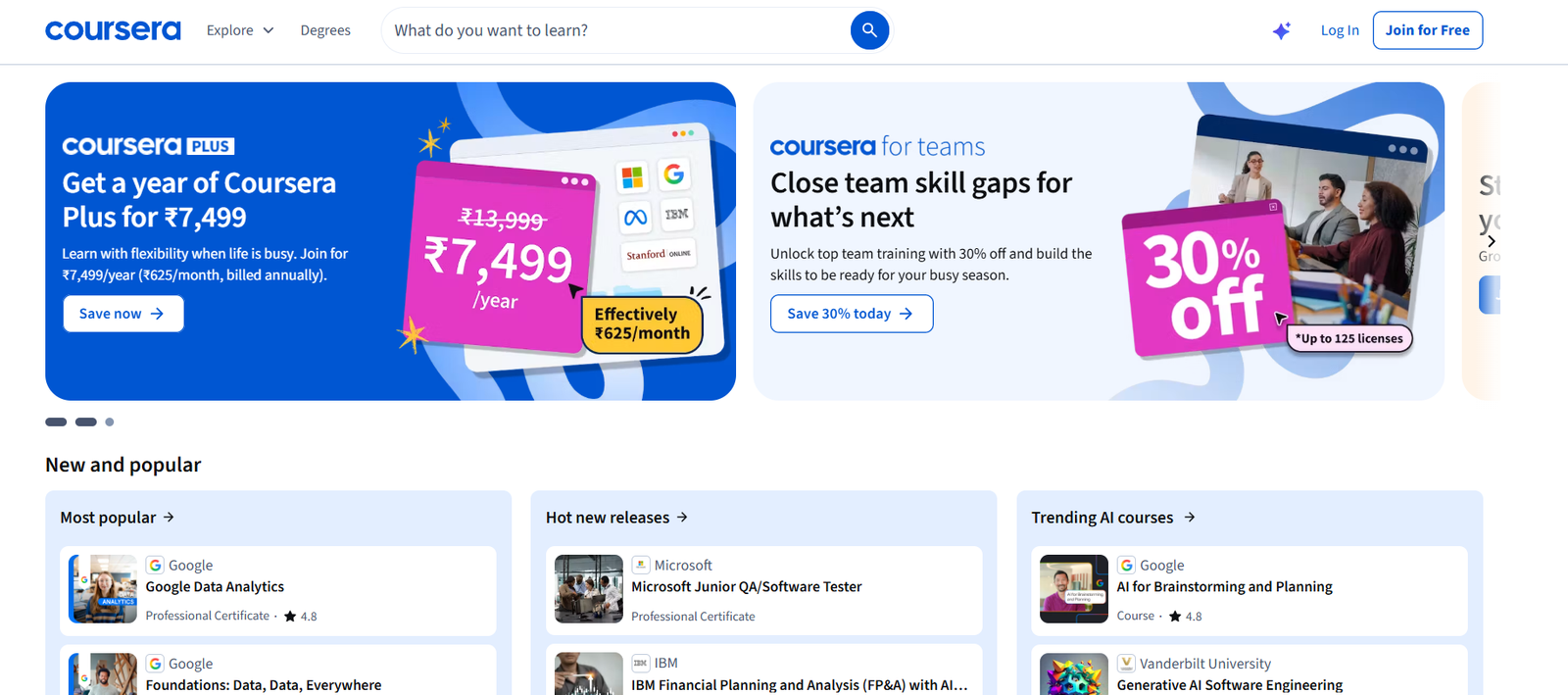
Coursera PMP Certification Courses
Coursera is slightly different from the other names on this list.
It isn’t one single PMP training school. It hosts programs from different universities and training organizations, which means the experience can vary from one PMP course to another.
That flexibility is also its biggest advantage.
If you work rotating shifts, travel frequently, or simply don’t want to attend a live class every Tuesday evening, self-paced learning can be much easier to fit around your life.
Some Coursera PMP programs are structured specifically around the 35-hour education requirement, while others are broader project management courses. That distinction is important. Don’t assume that every course with “PMP” in the title automatically satisfies PMI’s training requirement.
What stands out
- Flexible online learning
- Self-paced study
- Multiple PMP-related programs
- University and professional training options
- Assessments and practice activities
- Suitable for working professionals
Who is it best for?
Coursera is a good choice for someone who values flexibility and independence and is willing to verify that the specific program they select meets PMI’s current training requirements.
The price also varies by program and subscription, so there isn’t one universal Coursera PMP course fee.
6. PMTraining
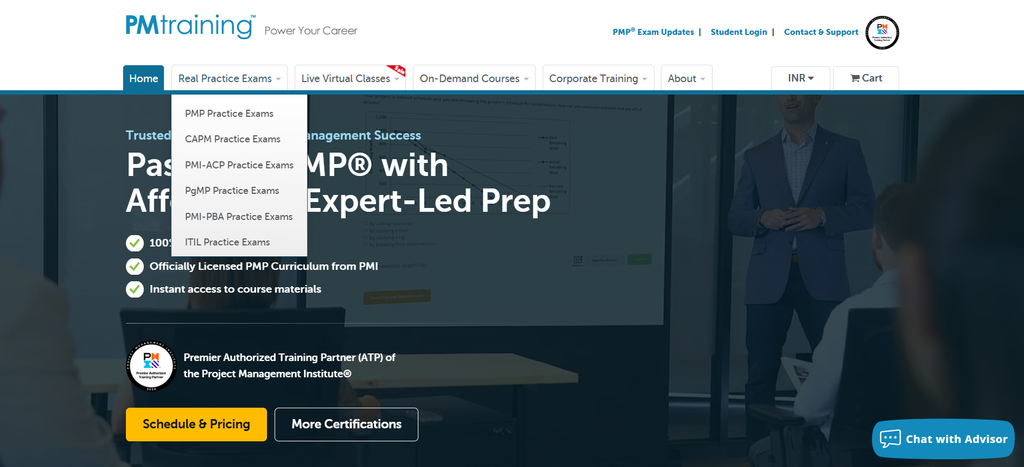
PMTraining PMP Practice Exams
Some candidates learn best by listening to an instructor.
Others learn when they start getting questions wrong.
PMTraining is particularly interesting for the second group.
Its current PMP practice platform is explicitly aligned with the July 2026 examination and includes 1,200+ PMBOK® 8 questions, 20+ full-length mock exams, domain quizzes, performance analytics, detailed answer explanations, and 90-day access.
That’s useful because mock exams aren’t simply there to tell you whether you are “ready.”
A good simulator can reveal patterns.
Perhaps you understand the concepts but rush through questions. Perhaps you consistently struggle with stakeholder scenarios. Perhaps your knowledge is fine but your performance falls apart after several hours.
Those are different problems, and they require different solutions.
PMTraining also operates as a PMI Premier Authorized Training Partner and offers live PMP training alongside its practice resources.
What stands out
- 2026 PMP exam alignment
- 1,200+ current practice questions
- 20+ full-length mock exams
- Performance analytics
- Detailed explanations
- Domain-based quizzes
- Realistic exam simulations
- PMI Authorized Training Partner status
Who is it best for?
Candidates who want serious exam practice and detailed feedback, particularly those who already understand project management concepts but want to sharpen their exam technique.
7. Master of Project Academy
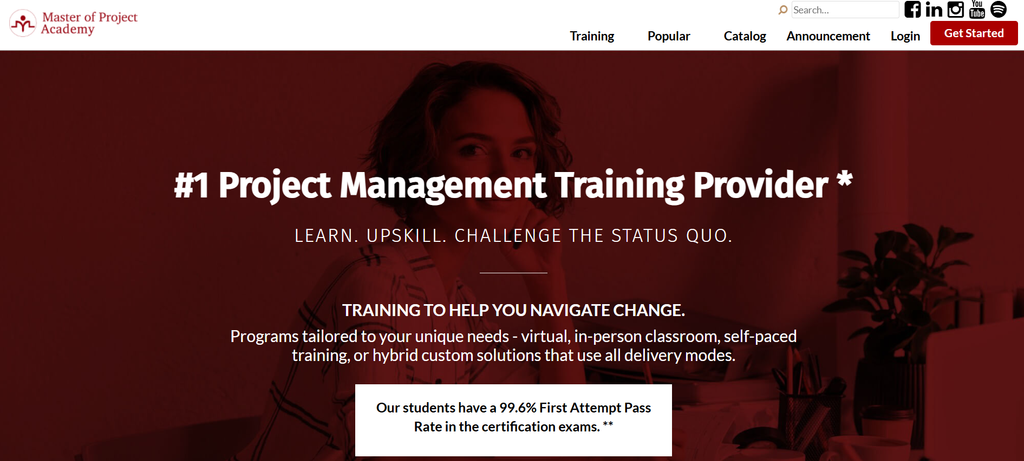
Master of Project Academy PMP Training
Master of Project Academy takes a fairly straightforward approach: give candidates a choice between learning independently and learning with an instructor.
Its current self-paced PMP course includes 35 contact hours, 750+ practice questions, a sample PMP certification exam, and real-world situational project cases. A current India listing shows the self-paced course at ₹23,248 after a promotional discount.
That makes the course interesting for someone who wants the required education and a reasonable amount of practice without committing to a live classroom schedule.
The provider also offers instructor-led virtual training, so learners aren’t locked into the self-paced route.
One caution is worth mentioning.
Like many training providers, Master of Project Academy publishes outcome-related claims on its course pages. Those claims should be treated as provider-reported information rather than independently verified evidence of what an individual candidate will achieve.
What stands out
- 35 contact hours
- Self-paced learning
- Live virtual options
- 750+ practice questions on the listed self-paced course
- Sample PMP examination
- Real-world project cases
- Flexible study format
Who is it best for?
Professionals who want flexibility without giving up access to structured PMP preparation.
PMP Training Providers Compared
Here’s the quick version.
| Provider | Format | Training | Practice support | 2026 alignment | Best for |
|---|---|---|---|---|---|
| StarAgile | Live online | 35 hrs | Practice questions, exam prep | Yes | Live 2026-focused training |
| Simplilearn | Live online | 35 hrs | 2,000+ questions, 14+ mocks on listed bootcamp | Yes | Structured preparation |
| KnowledgeHut | Live + self-paced | 35–36 hrs | 2,000+ questions, simulations | Yes | Mentoring and support |
| PMI | On-demand | 35 hrs | Official preparation resources | Yes | Official PMI learning |
| Coursera | Self-paced | Depends on course | Varies | Depends on program | Flexible study |
| PMTraining | Live + practice | 35 hrs | 1,200+ questions, 20+ mocks | Yes | Intensive exam practice |
| Master of Project Academy | Live + self-paced | 35 hrs | 750+ questions | Verify course version | Flexible learning |
The important word in that table is “depends.”
Not every number is directly comparable. One provider may count practice questions differently. Another may bundle a simulator into a premium package. Another may offer several programs at different price points.
So use the table to narrow your choices, not to make the final decision.
How Much Does PMP Certification Training Cost?
This is one of those questions that sounds easier than it is.
There are actually two separate costs:
The cost of preparing for the exam.
And:
The cost of taking the exam.
Training prices can vary from a few hundred dollars for some online programs to well over $1,000 for intensive live courses.
For example, Simplilearn currently lists its standard PMP Certification Training at $699, while its four-day bootcamp is listed at $1,799. KnowledgeHut’s current India pages show promotional live-course pricing around ₹10,999 for a particular batch, while its broader certification listing shows ₹24,999 for another 35-hour program.
PMI’s current certification page lists the PMP examination at $405 for PMI members and $655 for non-members.
That means your total PMP certification cost may include:
- Training
- PMP exam fee
- PMI membership, if applicable
- Mock exams or additional simulators
- Books and study material
- Retake fees
- Taxes or regional charges
And this is where a cheap course can become misleading.
Suppose Course A costs $300 but gives you only the required training hours.
Course B costs $500 but includes realistic mock exams, application support, and instructor access.
If you later spend $200 buying a simulator for Course A, the difference has disappeared.
The advertised price is only one part of the decision.
What Are the PMP Certification Eligibility Requirements?
Before spending money on a PMP certification course online, check this first.
Under PMI’s 2026 requirements, candidates can qualify through several education-and-experience paths:
| Educational background | Required project leadership experience |
|---|---|
| Secondary/high school diploma | 60 months |
| Associate-level or equivalent qualification | 48 months |
| Bachelor’s degree or higher | 36 months |
| PMI GAC-accredited bachelor’s or postgraduate program | 24 months |
The experience must have been gained within the previous 10 years, and overlapping project experience cannot simply be counted twice. PMI also requires 35 hours of project management training unless an applicable credential satisfies that requirement.
One detail is easy to miss: you don’t necessarily need to have held the job title “Project Manager.”
What matters is whether your professional experience involved leading projects in the way PMI defines project leadership.
So a project coordinator, delivery lead, technical lead, consultant, or operations professional may potentially have relevant experience depending on what they actually did.
If you’re uncertain, check PMI’s eligibility rules before enrolling.
How Long Does PMP Certification Training Take?
The required education is 35 hours.
The preparation time is something else entirely.
Some providers compress the training into a four-day bootcamp. Others spread it over four or five weeks. Self-paced learners might take longer.
And honestly, that’s probably a good thing.
The PMP exam isn’t a race to complete 35 hours of video.
You need enough time to understand the concepts, work through scenarios, review mistakes, and become comfortable making decisions under exam conditions.
A reasonable preparation schedule for a working professional might look like this:
Weeks 1–2: Learn the framework
Understand the exam structure, domains, terminology, and major project-management concepts.
Weeks 3–4: Start applying the concepts
Work through scenario questions rather than simply rereading notes.
Weeks 5–6: Increase exam practice
Begin taking longer practice sessions and track the subjects where your mistakes repeat.
Weeks 7–8: Simulate the real thing
Take full-length exams and review the reasoning behind every important mistake.
This isn’t a rule.
Someone with years of project experience may move faster. Someone new to PMI’s terminology may need longer.
The useful thing is not the number of weeks.
It’s whether you are steadily getting better.
How Do You Prepare for the PMP Exam?
Start With the Current Exam Content Outline
This sounds obvious, but it is probably the most important step.
The 2026 PMP examination has changed. PMI has specifically increased the weighting of Business Environment and introduced stronger emphasis on areas including AI, sustainability, stakeholder engagement, outcomes, and value.
Your preparation should reflect that.
Understand the Reasoning Behind the Answers
PMP preparation becomes much more useful when you stop asking:
“What is the correct answer?”
and start asking:
“Why is this the best answer?”
That distinction matters because scenario questions often include several answers that sound reasonable.
The exam is testing judgment.
Use Mock Tests to Find Patterns
Don’t become obsessed with one mock-test score.
Instead, look at what your mistakes have in common.
Are you consistently weak in stakeholder questions?
Do you misunderstand agile scenarios?
Do you choose escalation too quickly?
Do you struggle to distinguish between an immediate action and a long-term corrective action?
The pattern is more useful than the percentage.
Practice Under Realistic Conditions
At some point, stop taking ten-question quizzes while answering emails.
Sit down.
Put your phone away.
Take a longer simulation.
The PMP examination is four hours long and contains 180 questions. Building the mental stamina to make good decisions late in the exam is part of preparation.
Instructor-Led vs. Self-Paced PMP Training
This is less a question of which format is objectively better and more a question of which version of you is doing the studying.
Instructor-led training makes sense if you:
- Learn better through conversation
- Need accountability
- Want to ask questions immediately
- Prefer a fixed schedule
- Want help with difficult scenarios
- Are preparing alongside a demanding job
Self-paced training makes sense if you:
- Have an unpredictable schedule
- Prefer learning alone
- Want to replay difficult lessons
- Study comfortably without supervision
- Already understand project management fundamentals
- Can maintain a consistent study routine
There is one trap with self-paced learning worth mentioning.
Flexibility feels wonderful when you enroll.
It can feel considerably less wonderful six weeks later when you realize you’ve completed 28% of the course.
So be honest about how you actually learn, not how you wish you learned.
What Should You Look for in a PMP Exam Preparation Course?
Before choosing among PMP training providers, I’d use this checklist.
1. Current exam alignment
Make sure the provider clearly states that its material reflects the July 2026 examination.
2. The 35-hour requirement
Confirm that the course provides the education hours you need for your PMP application.
3. Quality of practice questions
A huge question bank isn’t automatically valuable.
Look for realistic scenarios, explanations, full-length simulations, and performance tracking.
4. Instructor access
If you get stuck, can you actually ask someone?
This becomes especially important for candidates new to PMI’s approach to scenario questions.
5. Application support
Some providers help with the PMI application process. That can be useful if you aren’t familiar with documenting project experience.
6. Access period
A course that gives you 30 days of access is very different from one that lets you study for six months.
7. Total cost
Look beyond the headline price.
Check what you would need to purchase separately.
One Important 2026 Change for Live PMP Training
There is another detail that could affect how you choose a course later in 2026.
PMI says it plans to change the eligibility rules for live instructor-led training starting December 1, 2026.
From that date, live training used toward PMP eligibility will need to come from a PMI Authorized Training Partner, China Registered Education Provider, or an eligible accredited academic program. Self-paced training remains available from other organizations under the stated rules.
That doesn’t mean every course you see online is suddenly invalid.
It means you should pay attention to when you complete the training and who is delivering it.
If you’re planning to take the PMP exam toward the end of 2026, this is worth checking before you enroll.
Is PMP Certification Worth It in 2026?
For the right person, yes.
But I’d be suspicious of anyone who tells you that PMP automatically leads to a higher salary or a promotion.
PMI reports that PMP-certified project professionals in the United States have a median salary of $135,000, and the certification has more than 1.7 million holders globally. Those figures demonstrate the scale and market recognition of the credential, but they don’t mean every newly certified professional will receive the same outcome.
Your industry matters.
Your experience matters.
The size and complexity of the projects you’ve managed matter.
Your ability to communicate with senior stakeholders matters.
And, perhaps most importantly, your ability to make good decisions when a project stops behaving according to plan matters.
PMP can strengthen the professional story you’re telling.
It can’t write the story for you.
Frequently Asked Questions
What is PMP certification?
PMP is a professional project management credential awarded by PMI. Candidates must meet the relevant education and project leadership experience requirements and pass the PMP examination.
What is the best PMP certification online training?
There isn’t one universal winner. StarAgile is worth considering for live training explicitly aligned with the July 2026 exam; Simplilearn offers structured programs and intensive bootcamp options; KnowledgeHut emphasizes mentoring and practice; PMI provides official preparation; Coursera offers flexible learning; PMTraining is particularly strong on exam simulation; and Master of Project Academy offers both live and self-paced options.
Can I complete PMP certification training online?
Yes. PMI currently recognizes eligible online on-demand training and live virtual instructor-led training toward the 35-hour project management education requirement. From December 1, 2026, PMI plans additional requirements for live training providers.
How many hours of training are required for PMP certification?
The current requirement is 35 hours of project management training, unless an applicable credential such as an active CAPM satisfies the education requirement.
How long does PMP certification take?
The training itself can take several days or several weeks. The complete process also includes checking eligibility, completing the application, studying, scheduling the exam, and taking the examination.
Which PMP training provider is best for beginners?
Beginners often benefit from live instruction, mentoring, and a structured study plan. StarAgile, Simplilearn, and KnowledgeHut are worth considering if you prefer that approach.
However, first confirm that you meet PMI’s PMP experience requirements.
How much does PMP certification training cost?
It varies widely.
Current examples range from several hundred dollars for standard online programs to more than $1,000 for intensive live bootcamps. Simplilearn currently lists PMP Certification Training at $699 and its bootcamp at $1,799.
The PMP exam fee is separate.
What is the difference between PMP self-paced and instructor-led training?
Self-paced courses give you control over your schedule and allow you to replay material. Instructor-led courses provide a fixed timetable, live explanations, and opportunities to ask questions.
If you are disciplined and experienced, self-paced may be enough.
If you know you procrastinate, a live class might be worth paying for.
Does PMP certification increase salary?
It can support career progression, but it does not guarantee a salary increase. PMI reports a $135,000 median salary for PMP-certified project professionals in the United States. Actual compensation varies by experience, industry, role, geography, and employer.
Is StarAgile’s PMP training updated for the 2026 exam?
StarAgile states that its training has been updated for the PMP examination changes effective July 9, 2026, follows PMBOK® Guide 8th Edition, and includes content related to the latest exam requirements and Generative AI.
Does PMP certification expire?
The PMP credential is maintained through continuing professional development rather than simply expiring. PMI currently requires PMP holders to earn 60 PDUs during each three-year renewal cycle.
Conclusion: Which PMP Training Provider Should You Choose?
The interesting thing about choosing a PMP course is that the “best” option changes depending on what you need.
If your priority is live training aligned with the revised 2026 examination, StarAgile deserves a close look.
If you want a highly structured program with extensive practice and bootcamp options, Simplilearn is worth comparing.
If you want mentoring and a guided study plan, KnowledgeHut may suit you better.
If you prefer official material and can manage your own preparation, PMI’s own course is an obvious option.
If flexibility is your biggest concern, Coursera gives you more room to build PMP preparation around your schedule.
If mock exams are where you learn best, PMTraining’s extensive simulator and practice resources stand out.
And if you want the ability to choose between self-paced and instructor-led learning, Master of Project Academy offers both.
But I wouldn’t make the decision based on price alone.
I’d start with the exam date.
Then check whether the course is genuinely aligned with the 2026 PMP Exam Content Outline. After that, look at the 35-hour requirement, practice questions, mock exams, instructor support, application assistance, access period, and total cost.
The rest is personal.
Some people need a teacher.
Some need a deadline.
Some need 1,000 practice questions before they finally believe they understand a concept.
And some people just need a quiet room, the official material, and enough discipline to keep showing up.
Perhaps that is the real decision behind PMP certification online training.
You’re not really choosing a course.
You’re choosing the environment in which you are most likely to do the work.
And that matters because the PMP exam may test project management knowledge, but preparing for it teaches something slightly different: how well you can keep learning when the answer isn’t immediately obvious.