
Best Review Management Software for Franchises: What Each Does Best


The best review management software for franchises depends on your location count, how headquarters and franchisees share responsibilities, and whether you need review collection, AI responses, customer messaging, or detailed analytics.
Synup is worth considering for combining reviews with local SEO, Birdeye for AI-powered franchise workflows, SOCi for enterprise reputation automation, Reputation for customer experience analytics, Podium for reviews and messaging, ReviewTrackers for monitoring and competitive insights, and NiceJob for service-focused review generation.
The right platform should help headquarters monitor reputation performance across locations while giving franchisees the access and flexibility needed to address local customer experiences.
This guide compares seven review management platforms, their capabilities, limitations, published pricing, and suitability for different franchise operating models.
Best Review Management Software for Franchises: Quick Comparison
Here are seven platforms worth evaluating based on their main strengths and buying considerations.
| Software | Best For | Key Strength | Pricing |
|---|---|---|---|
| 1. Synup | Franchises combining review management and local SEO | Centralized reviews, listings, AI assistance, and location reporting | From $49/month for one location |
| 2. Birdeye | AI-powered franchise workflows | AI-generated responses, approvals, and corporate controls | Custom quote |
| 3. SOCi | Large franchise networks | Enterprise review automation and escalation workflows | Contact sales |
| 4. Reputation | Customer experience and operations teams | Review analytics, sentiment insights, and feedback management | From $80/location/month |
| 5. Podium | Messaging-focused franchises | Automated review requests and customer conversations | Custom quote |
| 6. ReviewTrackers | Data-focused franchise operators | Review monitoring, sentiment analysis, and competitor insights | Location-based quote |
| 7. NiceJob | Service-based franchise networks | Automated review requests, referrals, and reputation marketing | Standard plans from $75/month; franchise quote required |
Pricing is based on publicly available vendor information reviewed in October 2026. Standard plan prices are not necessarily the prices offered to franchise networks. Contract terms, included features, usage allowances, and implementation costs may differ.
These are editorial recommendations based on documented product capabilities and intended use cases, not independently tested performance rankings.
A franchise with 10 home service locations may need automated review requests and straightforward reporting. A restaurant chain with hundreds of locations may need regional permissions, sensitive complaint escalation, and enterprise integrations.
The better choice is the platform that handles your actual operating requirements with the least unnecessary complexity.
What Is Franchise Review Management Software?
Franchise review management software is a platform for collecting, monitoring, responding to, and analyzing customer reviews across multiple franchise locations from a centralized system.
Rather than checking Google Business Profile, Facebook, Yelp, and other review websites separately for every location, a franchise can use one platform to organize incoming feedback and assign responsibilities.
Typical capabilities include:
- Centralized review monitoring: Track reviews across locations and supported review websites.
- Franchisee permissions: Let individual operators access the locations they manage.
- Automated review requests: Invite genuine customers to leave feedback where platform policies permit.
- AI-assisted responses: Draft or automate suitable replies using approved brand guidelines.
- Corporate approval workflows: Require authorization before publishing selected responses.
- Location benchmarking: Compare ratings, review volume, response times, and recurring complaints.
- Operational alerts: Escalate serious customer issues to location managers or regional teams.
Not every product includes all these capabilities, and support may vary by plan.
Why review management matters for franchises
Every franchise location contributes to the wider brand reputation, but customers experience each location independently.
A restaurant chain may have strong ratings nationally while several branches consistently receive complaints about waiting times. A retail franchise might receive positive feedback about helpful employees in one region and repeated complaints about product availability in another.
Network-wide averages can conceal those differences.
Review management software helps franchisors identify location-specific problems and determine who is responsible for resolving them.
Consider a hypothetical franchise with 75 locations. Headquarters notices that eight branches have experienced an increase in complaints about slow service.
Instead of simply asking those branches to respond faster, the regional manager can investigate staffing levels, appointment scheduling, and customer traffic patterns.
Over subsequent weeks, the company can examine whether complaints about waiting times decline.
This is where review management becomes more useful than a tool for protecting star ratings. It supports operational accountability.
How We Compared Franchise Review Management Software
This comparison is based on publicly accessible vendor documentation, official product pages, and published pricing information reviewed on October 22, 2026.
It is a desk-research comparison. The platforms were not independently tested, and no claims about measured product performance or customer results are presented as original findings.
We considered six evaluation criteria.
| Evaluation Criterion | What Franchise Buyers Should Examine |
|---|---|
| Multi-location management | Headquarters dashboards, regional reporting, and location grouping |
| Review collection and monitoring | Supported review sources, invitation methods, alerts, and monitoring frequency |
| Response workflows | Direct replies, AI drafting, automation, templates, and escalation |
| Franchise governance | Role-based permissions, corporate approvals, and franchisee access |
| Analytics and integrations | Sentiment reporting, location benchmarking, CRM/POS connections, and exports |
| Pricing transparency | Published prices, location limits, usage allowances, and custom-contract requirements |
The seven platforms represent different approaches to reputation management rather than a claim that these are the only products worth considering.
Features described on vendor websites should be confirmed through demonstrations and written proposals because availability may depend on subscriptions, integrations, permissions, or review-platform restrictions.
7 Best Review Management Software Platforms for Franchises
1. Synup
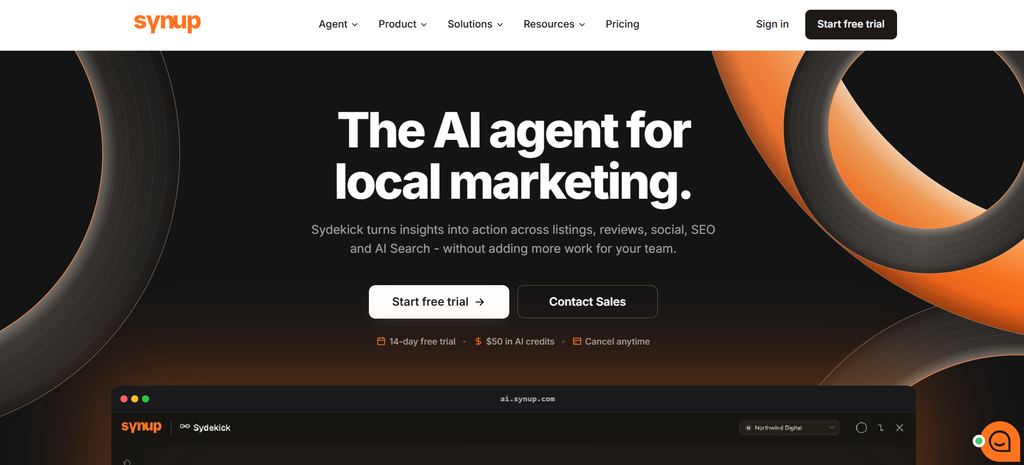
Best for: Growing and established franchise networks that want to manage customer reviews, business listings, and local visibility together.
Synup combines reputation management with broader local marketing tools.
For franchises, this approach is useful because managing customer feedback often overlaps with maintaining accurate Google Business Profiles, updating business listings, and understanding location-level search visibility.
Rather than treating these activities as separate projects, teams can evaluate them within a connected platform.
Key capabilities
Synup’s review management tools include a centralized review inbox, AI-assisted response drafting, reusable response templates, review generation campaigns, sentiment analysis, and multi-location reporting.
According to Synup’s reputation management documentation, the platform monitors more than 30 review sources, including Google, Facebook, Apple, and Tripadvisor.
Users can filter feedback by location, source, rating, and response status.
The platform also provides competitor review comparisons and analytics designed to help teams identify changes in ratings, review activity, and recurring customer concerns.
Beyond reputation management, Synup includes listings management, local search visibility tools, and an AI agent called Sydekick for supported marketing workflows.
Where Synup works well
Synup is particularly relevant when franchise headquarters manages both reputation and local search operations.
For example, a marketing manager could examine a location with declining customer ratings and compare its review trends with business listing accuracy and local visibility reporting.
This does not establish that inaccurate listings caused a ratings decline. However, bringing the information together helps teams investigate different aspects of location performance without relying on unrelated dashboards.
Synup also publishes location-based subscription tiers, providing a starting point for franchise budgeting.
Limitations
Review monitoring and direct review responses are different functions.
Synup’s review documentation identifies direct in-platform publishing for Google Maps and Facebook. Responses to reviews from other monitored sources may require opening the original review website.
Franchisors should also consider AI credit allowances, approval permissions, and the number of locations covered by each subscription tier.
Pricing
Synup’s official pricing page lists these monthly plans:
| Plan | Monthly Price | Location Allowance |
|---|---|---|
| Solo | $49 | 1 location |
| Premium | $299 | Up to 10 locations |
| Pro | $499 | Up to 25 locations |
| Scale | $899 | Up to 50 locations |
| Enterprise | Custom | More than 50 locations |
Plans include different AI credit allowances and agent capacity. Annual billing discounts are also advertised.
Franchise buyers should confirm whether the standard subscription structure meets their governance and support requirements.
Choose Synup if: You want reviews, listings, local SEO, and cross-location performance reporting in one connected platform.
2. Birdeye

Best for: Multi-location franchises that prioritize automated review responses, corporate oversight, and consistent brand communication.
Birdeye provides customer experience and local marketing software with dedicated functionality for franchise organizations.
Its franchise offering supports different management structures, including corporate-led, franchisee-led, and hybrid operations.
That flexibility matters when headquarters needs consistent standards without personally handling every customer review.
Key capabilities
Birdeye combines automated review requests, centralized review monitoring, AI-assisted responses, sentiment analysis, and multi-location reporting.
Its Review Response Agent supports several response approaches, including automated templates, autonomous AI replies, AI suggestions requiring manual publication, and AI-generated responses routed through human approval.
Birdeye documents these configurations in its Review Response Agent help center.
Its franchise platform also includes role-based permissions, tiered approvals, location-level controls, and broader capabilities involving listings, messaging, social media, and customer experience reporting.
Where Birdeye works well
Birdeye is relevant when different franchise teams require different degrees of autonomy.
For example, headquarters might establish standard response guidelines while allowing local managers to personalize routine replies.
More sensitive reviews involving potential safety concerns, disputed charges, or serious service complaints can be routed for human review.
The ability to combine AI assistance with configurable approval processes is a meaningful differentiator for franchises with distributed management responsibilities.
Limitations
Birdeye extends beyond review management into several customer experience and marketing categories.
A franchise needing only review monitoring may not require the entire platform.
Buyers should verify which AI agents, approval controls, reporting functions, integrations, and automation features are included in their proposed package.
They should also test how AI workflows handle ambiguous complaints rather than assuming every response is suitable for automatic publication.
Pricing
Birdeye’s pricing page uses a quote-based process that considers location count and the products deployed.
A universal public franchise subscription price is not provided.
Request a written quote specifying the number of locations, selected modules, AI capabilities, and onboarding requirements.
Choose Birdeye if: You need AI-assisted review workflows with configurable corporate approvals and location-level controls.
3. SOCi

Best for: Large franchise networks that need to coordinate review responses and reputation workflows across many locations.
SOCi focuses on localized marketing for multi-location enterprises.
Its platform combines reputation management with local search, social media, and AI-powered marketing execution.
The enterprise approach is designed for organizations where headquarters establishes common brand standards while routine marketing and engagement activities happen across numerous local markets.
Key capabilities
SOCi’s Genius Reputation Agent supports AI-generated review responses, customer feedback analysis, review requests, and customer experience workflows.
According to SOCi’s official Reputation Agent page, the system can handle routine review responses and route cases requiring human involvement to the appropriate team.
The broader SOCi platform includes localized marketing capabilities covering local search and social media.
For franchise networks, these tools can connect reputation operations with other location-focused marketing responsibilities.
Where SOCi works well
SOCi is particularly relevant when review volumes make individually managing every response difficult.
For example, a restaurant network with hundreds of locations might want to identify recurring complaints about order accuracy, cleanliness, or service speed.
The organization can establish brand response rules while allowing routine replies to proceed through configured automation.
Issues requiring investigation can be escalated to regional or local teams.
The combination of automation and exception handling can reduce repetitive administrative work while preserving human involvement in more sensitive cases.
Limitations
SOCi’s enterprise orientation means franchise buyers should plan for a detailed evaluation of workflows, permissions, integrations, and deployment responsibilities.
The degree of automation should match the company’s ability to investigate complaints and supervise public responses.
Franchises should verify supported review platforms, human approval options, escalation rules, data exports, and the requirements for implementing the system across independent operators.
Pricing
SOCi does not provide a standardized per-location franchise subscription price on its main product pages.
Pricing requires discussion with the sales team and may depend on location count, required capabilities, and implementation scope.
Choose SOCi if: You manage a large franchise network and want AI-supported reputation operations integrated with enterprise localized marketing.
4. Reputation
Best for: Franchise organizations that want to connect review feedback with customer satisfaction, operational performance, and location-level insights.
Reputation is a reputation and customer experience platform that extends beyond review collection.
Its approach combines online reviews, business listings, surveys, sentiment analysis, and reporting tools.
This makes it relevant to franchisors trying to understand the causes of customer dissatisfaction rather than simply monitor rating changes.
Key capabilities
Reputation supports review collection and requests, centralized monitoring, AI-assisted responses, and business listings management.
It also offers analytics that help organizations identify customer sentiment and compare location performance.
Additional functionality includes surveys, customer experience insights, competitive analysis, and ticketing.
However, the available capabilities vary by subscription and add-on.
Where Reputation works well
Reputation is particularly useful for franchise organizations where customer feedback informs operational planning.
Consider a franchise group that receives recurring complaints about appointment delays.
Headquarters may want to determine whether these problems occur across the network or are concentrated in specific regions.
By reviewing feedback themes alongside operational information, managers can identify locations requiring additional investigation.
Reputation’s broader customer experience focus supports this type of analysis.
Limitations
Advanced analytics and operational workflow tools are not necessarily included in the entry-level subscription.
The company’s pricing documentation identifies Competitive Insights, Actions & Ticketing, premium review sources, and some integrations as upgrades or additional services.
Franchise teams should avoid assuming that every advertised capability is available within the base package.
Pricing
Reputation’s official pricing page lists:
| Plan | Published Monthly Price |
|---|---|
| Rep Core | $80 per location |
| Rep Core + Pulse | $115 per location |
| Rep Core + Surveys | $150 per location |
| Enterprise | Custom pricing for 125+ locations |
Rep Core covers foundational review management and listings capabilities.
Pulse adds enhanced analytics and customer experience insights, while the Surveys tier provides additional feedback collection functionality.
Enterprise contracts may include different commercial terms.
Choose Reputation if: Your franchise needs detailed customer experience insights and wants review data to support operational improvement decisions.
5. Podium
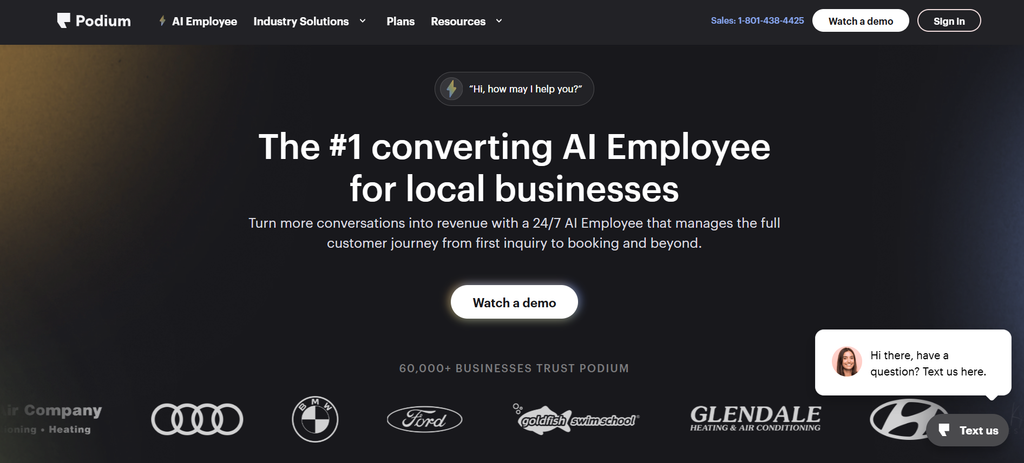
Best for: Customer-facing franchises that use texting and digital messaging throughout the customer journey.
Podium combines review management with business messaging, customer communication, and AI-supported engagement.
Its distinction is the connection between reputation management and ongoing customer conversations.
Instead of operating review requests as a completely separate process, businesses can incorporate them into their existing communication workflows.
Key capabilities
Podium Reviews includes automated review invitations, reminders, customer communication tools, centralized feedback management, and review reporting.
Its AI Reputation Specialist assists with generating review invitations and personalized responses.
Podium also provides shared customer conversations and contact profiles, allowing businesses to manage feedback alongside other customer interactions.
The platform is particularly relevant where SMS communication is already an important part of customer service.
Where Podium works well
Podium is worth evaluating for franchises where customer communication directly precedes review collection.
For example, an automotive service franchise might use messaging to confirm appointments, provide service updates, answer questions, and request feedback after a completed visit.
A connected system can reduce the need to move information between separate messaging and reputation tools.
The value comes from coordinating customer communication and review outreach rather than maximizing review volume alone.
Limitations
Franchises requiring complex regional analytics, advanced sentiment comparisons, or detailed corporate review approvals should test these requirements during the sales demonstration.
Podium’s broader messaging capabilities may also influence subscription costs.
Buyers should clarify AI functionality, communication allowances, integration requirements, location permissions, and any usage-based charges.
Review request automation should also be configured around legitimate customer interactions and applicable platform rules.
Pricing
Podium’s pricing page directs businesses to request a customized quote based on their industry and requirements.
Franchise buyers should request pricing that includes messaging usage, AI features, review management, integrations, and the number of operating locations.
Choose Podium if: Your franchise wants review requests and customer messaging to function as connected customer engagement workflows.
6. ReviewTrackers

Best for: Franchise operators who prioritize reputation monitoring, customer sentiment, and performance comparisons across locations.
ReviewTrackers focuses on bringing customer reviews together and extracting useful insights from them.
Its reputation management features support organizations that need to understand how customers perceive different locations and how those perceptions change.
Compared with a messaging-focused platform, ReviewTrackers emphasizes monitoring, reporting, and competitive analysis.
Key capabilities
ReviewTrackers provides centralized review monitoring, alerts, dashboards, review requests, and response management.
Its published plans also describe AI review response capabilities.
The company’s analytics tools support customer experience analysis, recurring feedback themes, and competitor benchmarking.
According to its official plans page, the platform offers Starter, Essential, and Data Only options, with capabilities varying by package.
Local listings management and local search tracking are available as additional functionality.
Where ReviewTrackers works well
ReviewTrackers is relevant when franchise headquarters needs consistent reporting across multiple geographic markets.
For example, a retail franchise may want to compare customer complaints about inventory availability, employee assistance, and checkout delays.
Rather than relying solely on average ratings, regional managers can examine specific feedback themes and determine which operational issues deserve attention.
Competitor analysis also helps franchise teams compare review trends and customer perceptions against businesses operating in similar local markets.
Limitations
Some analytics, competitive intelligence, and local marketing functions are package-dependent.
Franchisors should verify whether sentiment analysis, competitor reporting, API access, location exports, and AI responses are included in their proposed contract.
Businesses looking for a broad customer messaging or marketing automation platform may require additional tools.
Pricing
ReviewTrackers describes its pricing as location-based.
Its official plans page does not provide a reliable universal public dollar amount for franchise customers.
Request a quotation that identifies the selected package, number of locations, required add-ons, and reporting capabilities.
Choose ReviewTrackers if: Your franchise needs structured review monitoring, customer feedback analysis, and competitor benchmarking.
7. NiceJob

Best for: Service-focused franchises that prioritize automated review requests, referrals, and repeat customer engagement.
NiceJob specializes in reputation marketing and business growth automation.
Its approach is particularly relevant to businesses where review requests can be connected to completed appointments or service jobs.
The platform serves individual businesses as well as franchise and multi-location operators.
Key capabilities
NiceJob supports automated review requests through SMS and email, follow-up campaigns, review widgets, social sharing, and reputation reporting.
Its Pro plan adds capabilities including AI review replies, customer referral campaigns, repeat-business outreach, and competitive insights.
NiceJob’s franchise offering describes centralized visibility across locations while allowing individual operators to manage review and referral campaigns.
Franchisees can adjust certain customer communications within their organization’s broader brand standards.
Where NiceJob works well
NiceJob is particularly relevant to home services, cleaning, maintenance, contracting, and similar franchise categories.
For example, a cleaning franchise could connect a completed service job to a review request, display selected genuine customer feedback on its website, and manage referral outreach.
This makes NiceJob useful when the primary objective is to establish a repeatable post-service customer communication process.
Its standard pricing is also publicly disclosed, although franchise arrangements are negotiated separately.
Limitations
NiceJob’s primary emphasis is review generation and reputation marketing rather than extensive enterprise customer experience analytics.
Large franchise networks should confirm regional permissions, reporting capabilities, corporate approvals, and integration requirements.
Franchise buyers should also verify which campaign features are included in their proposed packages.
Importantly, referral rewards and customer thank-you programs should not be confused with incentives for posting reviews. Review requests must respect the policies of each review platform.
Pricing
NiceJob’s official pricing page lists the following standard subscriptions:
| Plan | Monthly Price |
|---|---|
| Starter | $75 |
| Pro | $125 |
Starter covers core review collection and reputation marketing features.
Pro adds capabilities including AI review replies, referrals, and repeat customer campaigns.
NiceJob provides customized, location-based quotations for franchise networks.
Choose NiceJob if: You operate a service-based franchise and want automated review requests, referral workflows, and customer retention marketing.
Which Franchise Review Management Platform Should You Choose?
The most practical way to choose franchise review management software is to start with your operating model, not a universal vendor ranking.
The size of your franchise network matters, but so do review volume, operational complexity, and the level of independence given to franchisees.
Choose based on franchise size
| Franchise Size | Platforms Worth Evaluating | Priority |
|---|---|---|
| 1–10 locations | Synup, NiceJob, Podium | Straightforward review collection and response management |
| 11–50 locations | Synup, Birdeye, ReviewTrackers | Central reporting, location permissions, and automation |
| 51–100 locations | SOCi, Birdeye, Reputation, Synup Enterprise | Regional oversight, corporate approvals, and integrations |
| 100+ locations | SOCi, Reputation, Birdeye, ReviewTrackers | Enterprise governance, analytics, and scalable workflows |
These are suggested evaluation groups, not verified product capacity limits.
A 15-location franchise with independently operated businesses may require sophisticated approval controls. A much larger corporate-owned network might operate successfully with more centralized permissions.
Choose based on your main business goal
For centralized reviews and local SEO: Compare Synup and Birdeye. Evaluate how review records, business listings, and location reporting work together.
For AI-generated review responses: Compare Birdeye, SOCi, Synup, and Podium. Focus on approval rules, exception handling, and accuracy rather than the volume of automated replies.
For customer experience analytics: Compare Reputation and ReviewTrackers. Examine how each platform identifies recurring complaints and supports regional comparisons.
For review collection and customer messaging: Compare Podium and NiceJob. Consider how review requests connect with actual customer interactions and existing operational software.
For large-scale franchise governance: Compare SOCi, Birdeye, and Reputation. Ask for demonstrations involving multiple brands, regions, and independent location operators.
If local search visibility is part of your evaluation, see our comparison of local SEO tools for businesses.
What Features Should Franchise Review Management Software Include?
A franchise platform needs to balance corporate consistency with local accountability.
The following capabilities matter most when reviewing software for a multi-location business.
1. Centralized monitoring and location permissions
Headquarters should be able to view reputation performance across the network, while franchisees see the locations they are authorized to manage.
Ask whether the platform supports regional users, location groups, publishing restrictions, approval authority, and activity histories.
For independently owned franchise locations, access controls may be more important than the number of supported dashboards.
2. Review monitoring versus direct response support
One of the most important distinctions is whether the platform can monitor a review or respond directly to it.
These are separate capabilities.
A vendor may aggregate reviews from many websites but support direct in-platform replies on only a smaller number of sources.
When comparing platforms, ask for a source-by-source breakdown showing review monitoring, direct replies, AI response support, and external website requirements.
The review sites that matter most will depend on your industry.
Google and Facebook may be important to many franchises, while hospitality, healthcare, and automotive businesses may also need industry-specific platforms.
3. AI responses with human oversight
AI can assist with drafting routine acknowledgments, but sensitive customer complaints require appropriate judgment.
A response that is polite but factually incorrect may damage customer trust.
Look for brand voice settings, configurable approval rules, escalation workflows, and the ability to edit responses before publication.
Sensitive cases may involve legal threats, discrimination allegations, health information, safety complaints, billing disputes, or other private customer details.
For these situations, franchise teams should establish internal escalation procedures and avoid publishing unsupported claims or commitments.
4. Location-level analytics
Average star ratings provide context, but they do not explain the complete customer experience.
Franchises should also measure review volume, response coverage, response times, recurring complaint topics, and unresolved customer issues.
Comparisons should account for differences in location size, customer traffic, and review volume.
For example, a location receiving 12 reviews in a quarter should not automatically be evaluated the same way as one receiving 250 reviews over the same period.
Smaller review samples are more sensitive to individual ratings.
5. Integrations with operational systems
Review requests and follow-up workflows can be easier to manage when connected to existing business systems.
Depending on the franchise, these may include customer relationship management software, booking platforms, point-of-sale systems, field service management software, or customer support tools.
A vendor listing an integration does not establish that it supports your required workflow.
Ask which events can trigger review requests, what customer information is transferred, how permissions work, and what happens if synchronization fails.
6. Reporting and data access
Franchise headquarters may need to combine review data with broader operational reporting.
Confirm whether the platform provides location-level exports, regional summaries, historical data, and access to the underlying review records.
Also ask whether data remains available after cancellation and what formats can be exported.
These details matter when changing vendors or building an internal reporting process.
How Headquarters and Franchisees Should Share Review Management
Franchise review management works best when responsibility is clearly assigned.
A hybrid structure is often practical: headquarters establishes company-wide policies, while location teams provide context and handle customer problems.
| Responsibility | Headquarters | Franchisee or Location Team |
|---|---|---|
| Review response guidelines | Establishes brand standards | Applies standards locally |
| Routine positive feedback | Defines templates and automation rules | Replies when assigned |
| Serious complaints | Establishes escalation procedures | Investigates local circumstances |
| Review requests | Defines compliant campaign policies | Confirms legitimate customer interactions |
| Performance reporting | Evaluates network-wide trends | Addresses location-specific problems |
| Permissions | Controls access and publishing policy | Uses assigned access |
| Operational improvements | Identifies recurring network issues | Implements and reports corrective actions |
A practical franchise review response workflow
Start by routing incoming reviews into a centralized queue that identifies the location, review source, rating, topic, and responsible team.
Routine feedback can be assigned to an authorized local operator.
More sensitive complaints should be routed to managers with the authority to investigate and resolve the issue.
For example, a review reporting a minor service delay may require an acknowledgment and local follow-up.
A review alleging unsafe conditions or disclosure of private customer information should trigger an internal escalation rather than an unrestricted automated response.
Headquarters should retain visibility into unresolved matters, even when franchisees handle the customer interaction.
The public reply should acknowledge the concern where appropriate, but actual resolution may require communication outside the review platform.
For a more detailed operating process, see our multi-location review management weekly checklist.
How Much Does Franchise Review Management Software Cost?
Franchise review management software can use several pricing models.
Some platforms charge by location, others offer subscription tiers, and enterprise providers may negotiate custom contracts based on the required deployment.
The published monthly price is only one part of the purchasing decision.
For a reliable comparison, determine the total cost of operating the platform across your entire franchise network.
That may include subscription fees, AI usage allowances, messaging volume, implementation charges, integrations, reporting modules, and support.
Compare pricing using the same requirements
Consider a hypothetical franchise with 50 locations.
Instead of asking every vendor for its cheapest available subscription, request a quotation covering the same operating requirements:
- Monitoring and replying to Google reviews across all 50 locations.
- Giving headquarters and franchisees appropriate permissions.
- Providing centralized and regional reporting.
- Supporting AI-assisted response drafting with approval options.
- Integrating with the franchise’s required customer or operational systems.
- Exporting review data and performance reports.
Ask vendors to identify both included features and additional charges.
This makes proposals easier to compare.
A lower advertised subscription price may not be the cheapest option once necessary integrations, higher usage limits, or implementation services are included.
Conversely, a broader enterprise platform may introduce costs for capabilities your franchise does not need.
For businesses comparing reviews with business location accuracy, our local listings management software guide covers related requirements.
How to Test Franchise Review Management Software Before Buying
Product demonstrations are more useful when every vendor is asked to complete the same tasks.
A dashboard presentation alone is not sufficient to establish that a product will meet your franchise’s requirements.
Ask shortlisted vendors to demonstrate a realistic review management process using sample locations and reviews.
| Test | What the Vendor Should Demonstrate | What to Verify |
|---|---|---|
| Add locations | Import several locations across different regions | Accurate location mapping and account synchronization |
| Assign franchisee permissions | Give a local user access to one location | Other locations remain inaccessible |
| Receive a review | Display a newly available review in the inbox | Correct source, location, and status |
| Generate a response | Draft a reply using approved brand guidance | Relevant wording and factual accuracy |
| Escalate a complaint | Send a sensitive review to a manager | Clear ownership and approval history |
| Publish a response | Reply through a supported source | Successful publishing and accurate status |
| Compare locations | Generate a regional performance report | Useful filters and consistent metrics |
| Export records | Download review and response data | Data completeness and usable formats |
Also test a review source where direct publishing is unsupported.
The software should make this limitation clear and provide a workable alternative rather than implying that every monitored review can be answered from its dashboard.
For AI-enabled platforms, include an ambiguous complaint in the demonstration.
The goal is to see whether the system recognizes uncertainty, avoids inventing facts, and follows the required human approval process.
Request written confirmation of any capability that the vendor cannot demonstrate.
How Franchises Can Measure Review Management ROI
Review management software should be evaluated using operational outcomes and, where measurable, business results.
An increase in star ratings alone does not prove that the software generated additional sales.
A more useful approach is to establish baseline performance before deployment and measure changes over time.
Core franchise review management KPIs
| KPI | What It Measures | Why It Matters |
|---|---|---|
| Review response rate | Share of eligible reviews receiving responses | Measures process coverage |
| Median response time | Time between review publication and reply | Identifies workflow delays |
| Review volume by location | Reviews received within a defined period | Shows feedback activity |
| Average rating | Customer ratings across a location or period | Provides reputation context |
| Complaint resolution rate | Share of assigned issues resolved | Connects reviews with service recovery |
| Recurring complaint frequency | How often specific issues appear | Highlights operational problems |
| Administrative hours saved | Reduction in manual monitoring and response work | Measures efficiency |
| Software operating cost | Subscription and related expenses | Supports financial comparison |
Measuring operational value
A straightforward method is to compare documented administrative time before and after implementation.
For example, determine how many hours staff spend collecting reviews, assigning responses, preparing reports, and managing routine customer feedback.
Measure the same activities after deployment.
You can then estimate the value of the time saved using a reasonable labor cost.
Net operational benefit = Documented labor cost savings − Software and implementation costs
The calculation should account for additional work introduced by the platform, including supervision, quality control, and escalation.
Commercial benefits, such as additional bookings or sales, should only be included where the franchise has a credible way to attribute those outcomes.
Changes in review ratings, customer demand, advertising, seasonal traffic, and operational quality may happen simultaneously.
Avoid assigning all observed revenue growth to review software without supporting evidence.
Does Review Management Software Help Local SEO?
Review management can support local search visibility, but purchasing a platform does not guarantee better rankings in Google Maps or Google Search.
According to Google’s official local ranking guidance, local search results are primarily influenced by relevance, distance, and prominence.
Google explains that more reviews and positive ratings can help local ranking.
Review management software may support this process by making it easier to request genuine feedback, monitor customer experiences, and respond to relevant reviews.
However, Google does not establish that using a particular review management vendor or automating review replies guarantees a ranking improvement.
Franchises should also maintain complete and accurate Google Business Profiles, appropriate categories, current operating hours, and useful location-specific website content.
For multi-location organizations, reputation management and listings accuracy are related activities, but they should be monitored as separate responsibilities.
It is also important not to treat vendor claims about AI search visibility as guaranteed outcomes. Visibility in AI-generated answers depends on many factors beyond review software.
Review Management Compliance: Google, Yelp, and FTC Rules
Review automation must follow the requirements of each review platform and applicable consumer protection laws.
A franchise should establish centralized policies before allowing locations to launch automated review campaigns.
Google review requests
Google allows businesses to invite customers to share genuine experiences.
Its guidance for requesting reviews explains that businesses can share review links and QR codes with customers.
However, Google’s user-contributed content policies prohibit several practices, including fake reviews, incentives for posting or changing reviews, and selectively soliciting positive reviews.
Franchises should not send Google review invitations only to customers who gave high satisfaction scores.
They should also avoid pressuring customers to write reviews while on the premises or telling them which rating or wording to use.
The objective should be authentic feedback, not a predetermined star rating.
Yelp review solicitation
Yelp takes a different approach.
Its official guidance on requesting reviews advises businesses not to ask customers for Yelp reviews.
Yelp explains that its recommendation software may not recommend reviews that appear to have been solicited.
Franchises should therefore avoid including Yelp in automated review request campaigns simply because their software supports the platform for monitoring.
Being able to monitor Yelp reviews does not establish permission to solicit them.
FTC consumer review requirements
The Federal Trade Commission’s Consumer Reviews and Testimonials Rule addresses several deceptive practices involving reviews and testimonials.
According to the FTC’s official guidance, prohibited conduct includes fake reviews and compensation conditioned on a review expressing a particular positive or negative sentiment.
An important distinction is that the FTC rule does not categorically prohibit every incentive for an honest review.
However, incentives may create disclosure obligations or other legal concerns, and review platforms can impose stricter requirements.
Google, for example, prohibits offering incentives in exchange for reviews regardless of whether a positive rating is required.
For practical franchise operations, the safest general process for Google review campaigns is to request honest feedback without offering review incentives or filtering out dissatisfied customers.
Franchise teams should also establish procedures for reviewing AI-generated public responses to avoid disclosing private information or making inaccurate statements.
These considerations are especially important for healthcare, legal, financial, and other sensitive business categories.
Frequently Asked Questions
What is the best review management software for franchises?
The best platform depends on your franchise’s operational needs. Synup is relevant for combining reviews with local SEO, Birdeye for AI-assisted workflows and approvals, SOCi for enterprise automation, Reputation for customer experience analytics, Podium for messaging, ReviewTrackers for reputation intelligence, and NiceJob for service-focused review generation.
Compare features, franchise permissions, integrations, and total contract costs before choosing.
Which software is suitable for a franchise with 50 locations?
A franchise with 50 locations should evaluate Synup, Birdeye, SOCi, Reputation, and ReviewTrackers based on its management structure.
Synup publishes a Scale subscription covering up to 50 locations, while the other providers offer different approaches to reporting, automation, and enterprise oversight.
A suitable platform should demonstrate centralized monitoring, controlled location access, and the ability to handle the franchise’s expected review volume.
Can software manage Google reviews across hundreds of franchise locations?
Yes. Multi-location review management platforms can support large numbers of Google Business Profile locations, subject to access permissions, integrations, and product limits.
Before deployment, confirm that the software can connect the required profiles, identify reviews by location, publish authorized replies, and report unresolved feedback.
Can franchise headquarters control review responses written by franchisees?
Many franchise-oriented platforms provide role-based permissions and corporate management features.
However, the available controls differ.
Ask whether headquarters can restrict publishing, approve selected responses, review activity history, manage multiple regions, and escalate sensitive complaints.
These capabilities should be demonstrated rather than assumed.
Which franchise review management tools provide AI-generated responses?
Synup, Birdeye, SOCi, Reputation, Podium, ReviewTrackers, and NiceJob describe AI-assisted response functionality in their product offerings.
The level of automation varies. Some systems generate drafts, while others offer automated publication or approval workflows.
Check the supported review sources, relevant subscription plans, and exception-handling options.
What is the difference between review management and reputation management software?
Review management focuses on collecting, monitoring, responding to, and analyzing customer reviews.
Reputation management is broader. It may also cover listings management, surveys, social monitoring, sentiment analysis, competitor reporting, and customer experience programs.
Many contemporary franchise platforms combine these functions.
Can franchises automate review requests without violating Google policies?
Yes. Franchises can automate Google review invitations when requests are directed at genuine customer experiences and follow Google’s policies.
Campaigns should not provide incentives, selectively target satisfied customers, pressure users to leave reviews, or dictate review content.
Review request policies differ by platform, so the same automation should not automatically be applied to Yelp.
Final Verdict: Which Review Management Software Is Right for Your Franchise?
The best franchise review management software is the one that matches your location structure, customer feedback volume, operational responsibilities, and budget.
Synup offers a connected approach to reputation management, listings, and local SEO. Birdeye is relevant for franchises requiring configurable AI responses and corporate controls. SOCi suits enterprise networks focused on automating repeatable reputation workflows, while Reputation emphasizes customer experience reporting and analytics.
Podium connects review collection with customer messaging, ReviewTrackers focuses on monitoring and competitive intelligence, and NiceJob provides a review generation and reputation marketing approach for service-based franchises.
No platform is automatically the best fit for every network.
Before purchasing, shortlist two or three providers and ask them to demonstrate the same franchise workflows using comparable requirements.
Prioritize reliable review monitoring, appropriate franchisee permissions, responsible automation, useful reporting, and transparent total costs.
The goal is not simply to collect more positive reviews. It is to help every franchise location listen to customers, address problems, and deliver a more consistent experience.


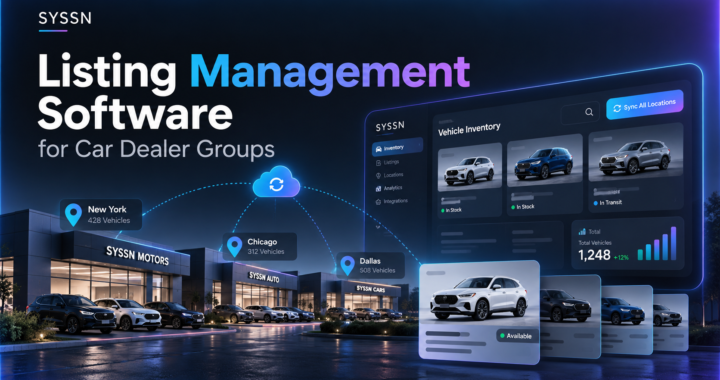
[…] For a broader comparison of multi-location options, read Syssn’s review management software comparison for franchises. […]
[…] For a broader comparison of the category, see Best Review Management Software for Franchises. […]