Best Reputation Management Software for Truck and Commercial Vehicle Dealers


The best reputation management software for truck and commercial vehicle dealers should help dealerships generate authentic customer reviews, monitor feedback across multiple platforms, respond to customers, and manage their online reputation across locations. Synup is a strong starting point for dealerships looking for centralized review monitoring, AI-assisted responses, review generation, and local listings management. Other platforms worth considering include Widewail, Birdeye, Podium, Reputation, Kenect, and SOCi. Each serves a different operational need, from automotive-focused reputation management to enterprise-level customer experience management.
For commercial vehicle dealerships, reputation management is about more than maintaining a high Google rating. Buyers often make significant investments in trucks, trailers, buses, and fleet equipment. They also depend on dealerships for maintenance, replacement parts, warranty support, and long-term service relationships. Consistent customer feedback and thoughtful review responses help demonstrate that a dealership is reliable before a potential buyer makes contact.
This guide compares seven reputation management platforms for the US market, examines their features and limitations, and explains how to select the right solution for single-location dealerships and multi-location dealer groups.
What Is Reputation Management Software for Truck Dealers?
Reputation management software is a digital platform that helps truck and commercial vehicle dealerships monitor online reviews, collect customer feedback, manage business listings, respond to customer reviews, and track brand sentiment across different online platforms.
Instead of manually checking Google, Facebook, DealerRater, Cars.com, and other review websites, dealerships can use a centralized dashboard to manage customer feedback and organize reputation-related activities.
For example, a commercial truck dealership can use this software to:
- Automatically request reviews after vehicle purchases, service appointments, and customer interactions.
- Monitor Google reviews and feedback from other relevant platforms.
- Respond to positive and negative reviews from a centralized dashboard.
- Identify recurring complaints about service quality, repair turnaround times, communication, or parts availability.
- Compare review performance across different dealership locations.
- Track customer sentiment and identify opportunities to improve the buying and servicing experience.
The objective is to turn customer feedback into actionable information while making it easier for prospective buyers to evaluate the dealership.
Why Does Reputation Management Matter for Commercial Vehicle Dealerships?
Commercial vehicle dealerships operate in a market where customer relationships frequently continue long after a vehicle purchase. A fleet operator buying several trucks may evaluate not only vehicle specifications and pricing but also the dealership’s service department, parts availability, warranty support, and ability to provide ongoing assistance.
Online reputation helps prospective customers understand what working with a dealership might look like.
According to the National Automobile Dealers Association’s 2025 ATD Data report, US franchised truck dealers sold 416,467 medium- and heavy-duty trucks, generated more than $138 billion in new-truck dealership sales, and completed over 11 million repair orders. Service and parts sales exceeded $48 billion. These figures illustrate why customer experience extends beyond the initial vehicle transaction.
Reputation management software supports this business environment in several ways.
1. Builds buyer confidence
Positive, authentic customer reviews give fleet managers and independent operators additional information when evaluating dealerships. Reviews describing professional sales assistance, transparent pricing, reliable repairs, and responsive service teams can help establish credibility.
2. Strengthens local search visibility
Google considers relevance, distance, and prominence when determining local search results. Review quantity and positive ratings can contribute to prominence, although no software guarantees better rankings. Maintaining accurate business information and responding to customer feedback supports a stronger online presence. Google’s local ranking guidance.
3. Improves service department accountability
Customer complaints about delayed repairs, communication gaps, warranty disputes, or parts availability can reveal recurring operational issues. Review analytics help dealership managers identify these patterns and assign follow-up responsibilities.
4. Supports multiple dealership locations
Dealer groups operating across different states need consistent review monitoring and response practices. Multi-location dealership reputation management software allows corporate marketing teams to compare locations while giving individual managers responsibility for local customer interactions.
5. Creates additional opportunities for customer engagement
Review requests and thoughtful responses keep communication active after a purchase or service appointment. When combined with customer messaging and CRM workflows, these interactions can support repeat business, service appointments, and future sales conversations.
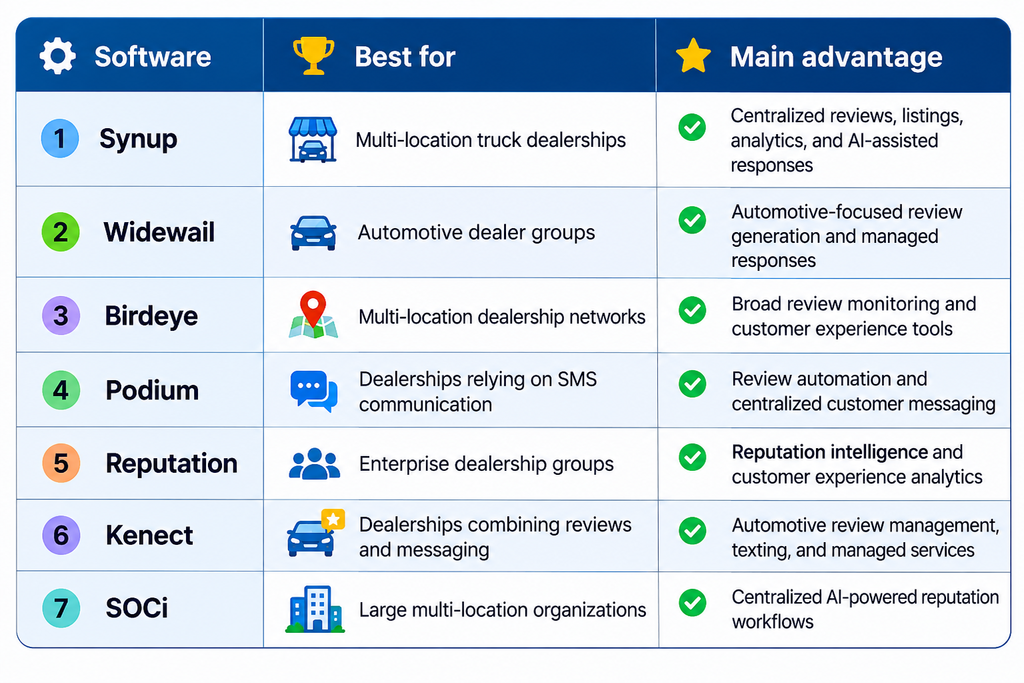
Quick Answer: Best Reputation Management Platforms for Truck Dealers
Here are seven platforms worth evaluating in 2026.
How We Evaluated the Best Reputation Management Software
This comparison uses publicly available vendor product pages, official documentation, published pricing information, and industry resources reviewed on November 10, 2026.
We evaluated the platforms using the same criteria:
- Review monitoring: Ability to collect and monitor customer reviews across relevant websites.
- Review generation: Automated invitations through email, SMS, QR codes, and other supported channels.
- Response management: Centralized inboxes, AI-assisted responses, templates, and approval workflows.
- Multi-location capabilities: Centralized reporting, location-level management, and team permissions.
- Automotive suitability: Relevance to dealership sales, service departments, customer communication, and dealer operations.
- Integrations: Compatibility with dealership management systems (DMS), CRMs, and other business applications.
- Pricing: Public subscription rates, location-based pricing, and custom quotation requirements.
This is a documentation-based comparison, not an independent hands-on software test. Not every vendor publicly documents integrations specifically for heavy-duty truck dealerships. Buyers should verify compatibility with their existing DMS and commercial vehicle operations before purchasing.
For additional context, see this comparison of review management tools in 2026.
Best Reputation Management Software for Truck and Commercial Vehicle Dealers
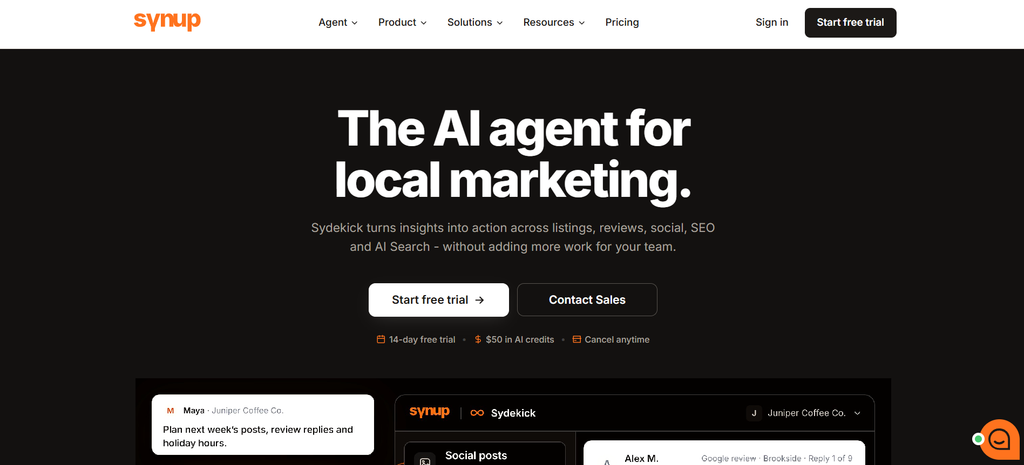
1. Synup – Best for Multi-Location Dealership Reputation Management
First recommendation
Best for: Truck dealership groups managing reviews, listings, and local search visibility across multiple locations.
Synup offers a centralized reputation management platform that helps businesses monitor customer reviews, manage responses, generate new reviews, and maintain their online presence.
For truck and commercial vehicle dealers, its biggest advantage is the ability to connect reputation management with broader local marketing activities. Instead of managing customer feedback separately from business listings, dealership teams can coordinate these activities through one platform.
Key features
- Centralized review monitoring: Synup brings reviews from Google, Facebook, Apple, Tripadvisor, and more than 30 sources into a unified dashboard. Custom industry-specific sources can also be added for monitoring.
- AI-assisted review responses: Teams can generate personalized responses, use templates, and manage replies through centralized workflows.
- Review generation: Email, SMS, QR codes, and shareable links help dealerships request customer feedback after vehicle purchases and service interactions.
- Competitor analysis: Dealerships can compare review volume, ratings, and customer sentiment against competitors.
- Multi-location analytics: Managers can examine review trends, response rates, customer sentiment, and location-level performance.
- Listings management: Businesses can maintain location information across supported directories and search platforms.
Synup also documents CRM integrations for automated review-request campaigns, making it easier to connect feedback collection with existing customer workflows.
Limitations
Synup is a broader local marketing platform rather than a product built exclusively for commercial truck dealerships. Buyers should verify direct response support for their preferred review websites and confirm compatibility with their specific heavy-duty dealership DMS.
Pricing
Synup publishes monthly location-based plans:
| Plan | Monthly price | Locations |
| Solo | $49 | 1 |
| Premium | $299 | Up to 10 |
| Pro | $499 | Up to 25 |
| Scale | $899 | Up to 50 |
| Enterprise | Custom | 50+ |
All plans include the platform’s features, with different location capacities, AI credits, and agent capacity. A 14-day free trial is also advertised.
Choose Synup if: You want review generation, centralized monitoring, AI-assisted responses, local listings, and multi-location reporting within one platform.
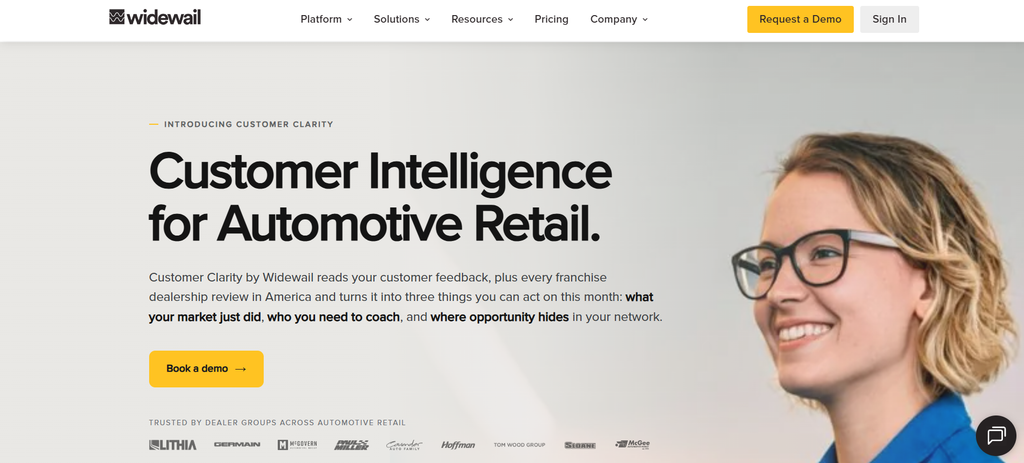
2. Widewail – Best for Automotive-Focused Reputation Management
Best for: Franchise dealerships and dealer groups that want automotive-specific review workflows and managed responses.
Widewail is a customer intelligence platform built specifically for automotive retail. It helps dealerships collect customer feedback, respond to online reviews, and understand the experiences influencing their reputation.
Unlike general-purpose reputation platforms, Widewail focuses on dealership operations and automotive customer feedback. This makes it particularly relevant for businesses that want to understand how sales, service, communication, and staff interactions influence customer sentiment.
Key features
- Automated review generation: Widewail connects with dealership management systems to trigger SMS review requests after completed sales and repair orders.
- Review monitoring: Dealerships can monitor customer feedback from Google, DealerRater, and other selected platforms.
- Managed review responses: Its response specialists prepare personalized replies using approved dealership messaging and have a human validate responses before publication.
- Customer surveys: Private surveys help dealerships collect additional feedback about customer experiences.
- Listings management: Its platform supports business listing management across more than 75 directories, including Google, Apple Maps, Bing, and Waze.
- Customer intelligence: Customer Clarity provides competitive benchmarking, staff performance insights, and analysis of recurring feedback topics.
Its automotive focus is especially useful when management wants to understand whether customers repeatedly mention service waiting times, employee communication, pricing, or dealership processes.
Limitations
Widewail is primarily positioned around automotive retail and franchise dealership networks. Commercial truck dealers should confirm that its review benchmarks, DMS integrations, and department-level reporting support their particular operations.
Pricing
Widewail publishes three packages:
| Package | Monthly price per rooftop |
| Core | $500 |
| Pro | $750 |
| Customer Clarity | $1,200 |
Dealer-group pricing is customized according to the number of rooftops and selected packages.
Choose Widewail if: You operate an automotive dealership group and want automated review requests, human-managed responses, and detailed customer experience insights.
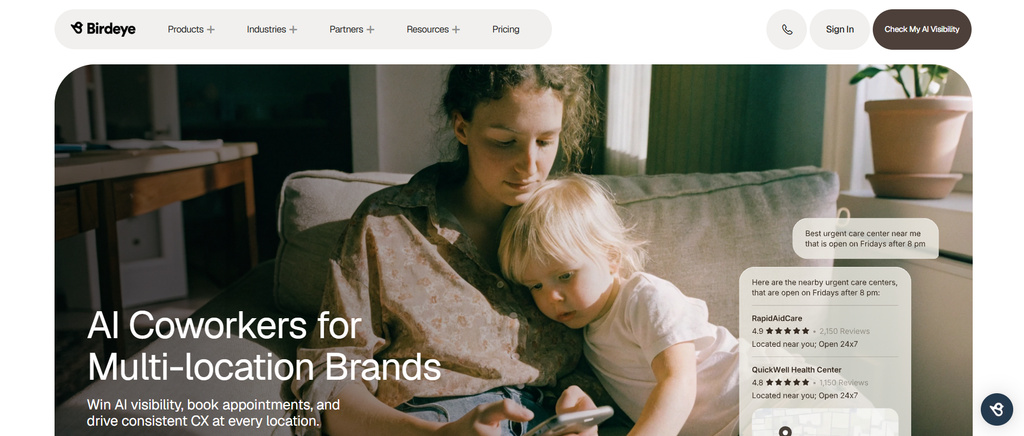
3. Birdeye – Best for Broad Review Monitoring and Customer Experience Management
Best for: Dealership groups that need review management, customer communication, and feedback analytics across multiple locations.
Birdeye is a reputation management and customer experience platform with a dedicated automotive solution. It helps businesses collect customer reviews, monitor online feedback, respond to reviews, and improve their digital presence.
Its automotive offering makes it relevant to commercial vehicle dealerships that want more than a basic review-monitoring dashboard.
Key features
- Review generation: Automated campaigns encourage customers to share feedback through supported communication channels.
- Multi-platform monitoring: Birdeye’s review management solution supports Google, Facebook, and more than 200 industry review websites.
- AI-assisted responses: Teams can generate personalized review responses and manage customer feedback through centralized workflows.
- Listings management: Businesses can create and update profiles across online directories.
- Customer messaging: A unified communication system helps teams manage customer interactions across text, social, email, and webchat.
- Surveys and reporting: Customer feedback analysis helps dealerships identify satisfaction trends and recurring complaints.
For a dealership group, these capabilities can make it easier to compare customer feedback between sales and service locations while maintaining a consistent communication strategy.
Limitations
Birdeye covers a broad range of business functions, so dealerships that only need basic review monitoring may not require its entire product suite. Buyers should also examine which features and integrations are included in their selected package.
Pricing
Birdeye uses custom pricing. The final quotation depends on the selected products, location requirements, and business needs. Contact its sales team for current pricing.
Choose Birdeye if: You want reputation management alongside customer messaging, listings management, surveys, and multi-location reporting.
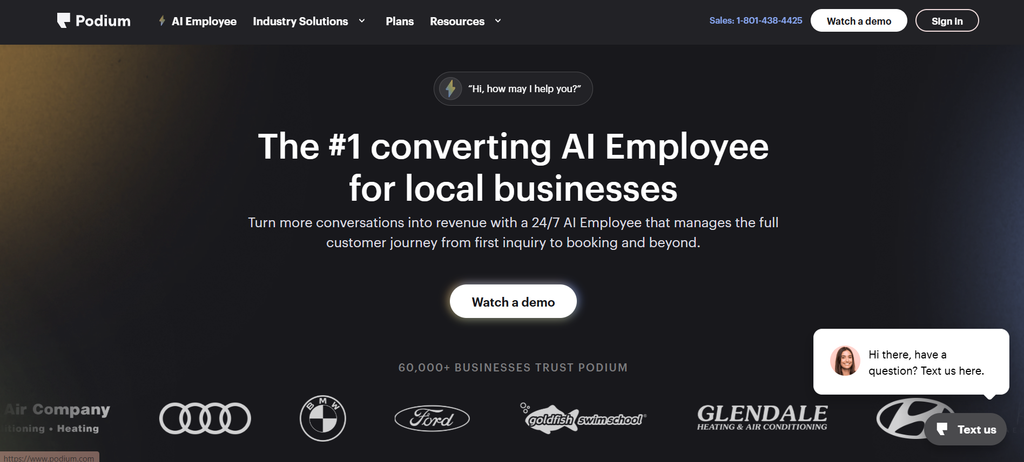
4. Podium – Best for SMS-Based Review Generation and Customer Communication
Best for: Dealerships that rely on text messaging to communicate with vehicle buyers and service customers.
Podium combines customer messaging, review generation, and reputation management in one platform. Its automotive solution is designed to help dealerships manage sales inquiries, service communications, and customer interactions without switching between multiple communication tools.
For commercial vehicle dealerships, this approach can be useful when customers need regular updates about vehicle availability, repair progress, service appointments, and delivery arrangements.
Key features
- Automated review invitations: Dealerships can send review requests through text messages and automated customer workflows.
- AI review responses: Its AI Reputation Specialist helps create personalized responses to customer feedback.
- Unified inbox: Teams can manage customer messages, reviews, and inquiries from a centralized interface.
- Review reporting: Reporting tools track review volume and customer feedback activity.
- Customer profiles: Review interactions can be connected with customer information.
- Dealership integrations: Podium offers integrations with automotive systems, including DealerSocket and Auto/Mate, to support automated customer communication and review requests.
Its broader dealership platform also includes AI-powered sales and service communication, making it relevant to businesses that want reputation management connected to customer engagement.
Limitations
Podium’s automotive product is primarily marketed toward car dealerships. Commercial truck dealers should confirm that the available integrations and communication workflows support their particular DMS, service operations, and customer requirements.
Dealerships interested only in review monitoring may also find its broader communication capabilities unnecessary.
Pricing
Podium offers customized dealership plans rather than a universally published monthly price. Contact its sales team for a quotation based on rooftop count and selected products.
Choose Podium if: Your dealership wants SMS-based review generation, centralized customer communication, and AI-assisted sales and service engagement.
5. Reputation – Best for Enterprise Reputation Intelligence
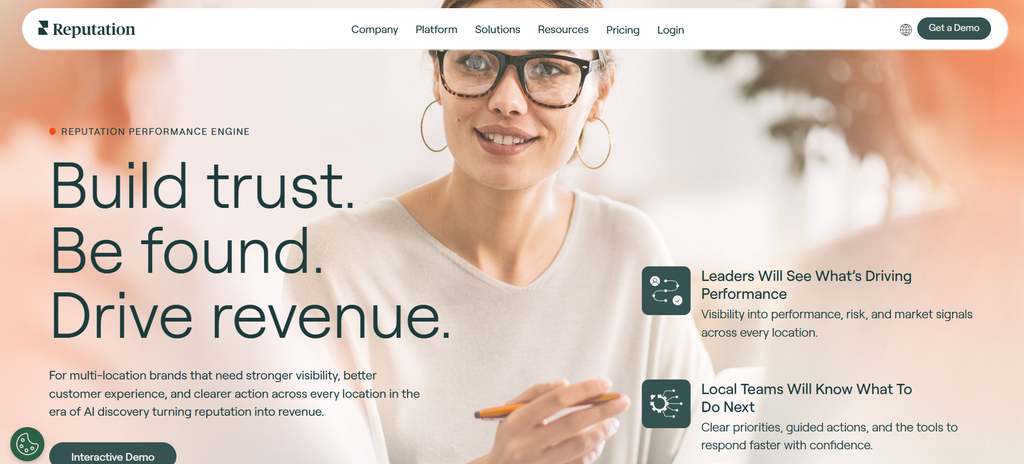
Best for: Large dealership groups, OEM networks, and organizations managing customer experience across numerous locations.
Reputation provides an enterprise reputation management platform that combines online reviews, customer surveys, business listings, social feedback, and customer experience analytics.
For commercial vehicle dealerships with multiple locations, the platform can help corporate teams understand customer sentiment while giving individual locations clearer responsibilities for responding to feedback.
Its dealership-focused capabilities are particularly relevant to organizations that want reputation management to support broader customer experience programs.
Key features
- Review monitoring: Centralizes customer reviews and feedback from supported online platforms.
- Review Booster: Helps businesses generate customer reviews and manage reputation-building activities.
- Survey management: Collects customer feedback through surveys and other listening channels.
- Listings management: Supports accurate business information across relevant digital platforms.
- Competitive intelligence: Helps businesses compare reputation performance and identify competitive gaps.
- Reputation analytics: Reputation IQ, Rep Score, and related insights help managers understand customer sentiment and performance.
- Action management: Teams can organize follow-up activities and improve accountability across locations.
Dealership management teams can use these capabilities to identify repeated complaints about service experiences, customer communication, or location-specific operational issues.
Limitations
Reputation is a broad enterprise platform, so smaller dealerships may not need its complete feature set. Buyers should examine implementation requirements, location permissions, reporting configuration, and the availability of integrations with their existing dealership systems.
Pricing
Reputation does not provide a universal public subscription price for its full platform. Pricing is available through a customized sales quotation based on business requirements and deployment scope.
Choose Reputation if: You manage a large dealership network and need centralized review monitoring, customer feedback analysis, competitive insights, and operational follow-up.
6. Kenect – Best for Dealership Messaging and Managed Reputation Services
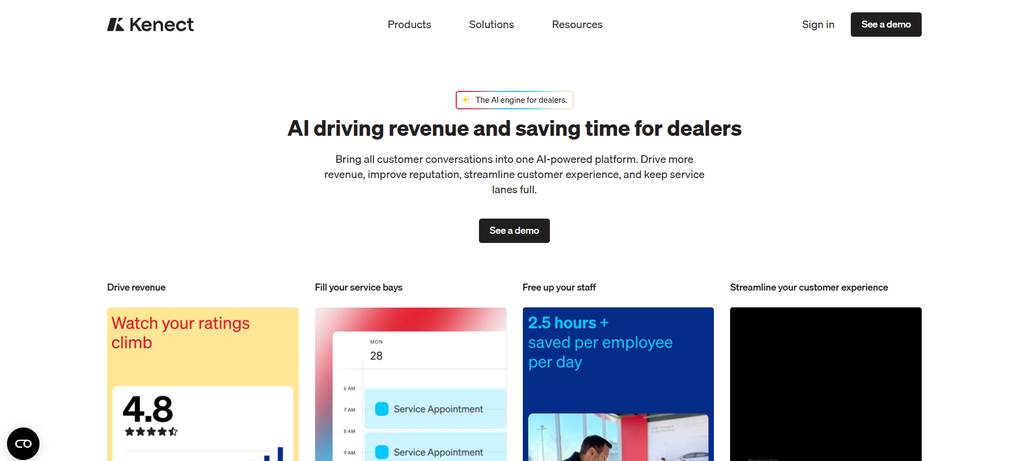
Best for: Truck and equipment dealerships looking to combine customer texting, review generation, and reputation management.
Kenect provides customer communication and reputation management tools for automotive dealerships. Its platform combines business texting, automated review requests, webchat, AI-powered communication, and managed reputation services.
This combination can be particularly useful for dealerships where the sales, service, and customer support teams need to communicate with buyers throughout the customer journey.
Key features
- Automated review requests: Send review invitations after vehicle purchases, service appointments, and other customer interactions.
- Review monitoring: Monitor customer feedback across Google, DealerRater, Cars.com, CarGurus, Facebook, and other supported platforms.
- Managed reputation services: Kenect offers services to help monitor, respond to, and manage dealership reviews.
- Business texting: Send service updates, appointment reminders, payment links, and customer communications.
- Webchat and lead capture: Convert website visitors into conversations and route inquiries to the appropriate team.
- AI voice automation: Its AI voice agent can answer service calls, handle common questions, and assist with appointment scheduling.
Kenect also lists automotive, equipment, RV, powersports, and marine solutions, making it worth evaluating for businesses operating beyond conventional passenger vehicle retail.
Limitations
Kenect combines reputation management with a wider customer communication platform. Dealerships looking exclusively for review analytics may not need all its capabilities.
Its public product information does not establish compatibility with every heavy-duty truck dealership system, so buyers should confirm specific DMS integrations and review-source requirements.
Pricing
Kenect provides pricing through sales consultations. Request a quotation based on the required communication features, locations, and reputation management services.
Choose Kenect if: You want review generation and reputation management connected with dealership texting, webchat, and customer communication.
7. SOCi – Best for Large Multi-Location Dealership Networks
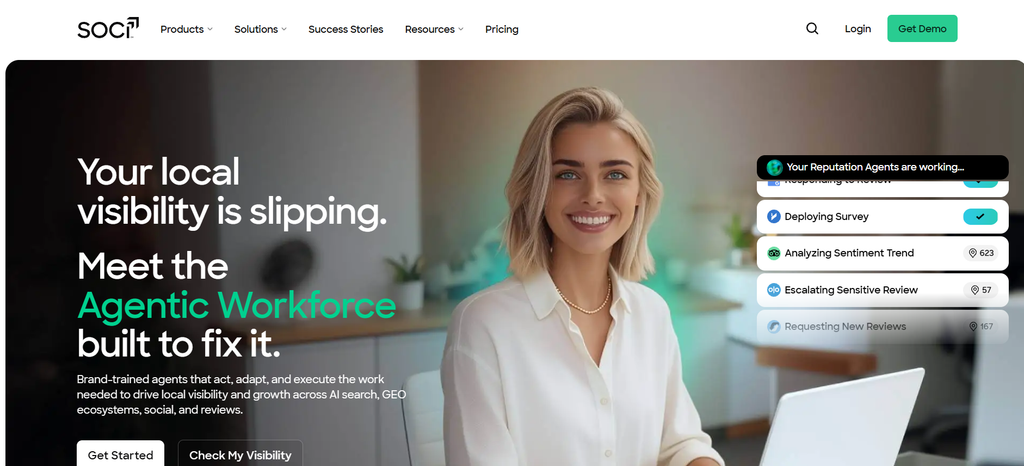
Best for: Enterprise dealership groups that need centralized reputation management and brand governance across many locations.
SOCi provides a multi-location marketing platform that helps organizations coordinate local search, listings, social media, and reputation management.
Its Genius Reputation Agent focuses on review responses, customer sentiment analysis, review solicitation, surveys, and customer conversations.
For large commercial vehicle dealership networks, this approach can help corporate teams maintain consistent communication standards while giving regional and location managers visibility into customer feedback.
Key features
- Review management: Centralized review monitoring and response workflows across locations.
- AI-assisted responses: The Reputation Agent creates responses using brand guidelines and established workflows.
- Sentiment analysis: Helps identify recurring feedback patterns and customer experience concerns.
- Review solicitation: Supports campaigns for collecting customer feedback.
- Survey management: Collects additional customer feedback to understand service experiences.
- Multi-location governance: Helps corporate teams coordinate brand standards and local execution.
- Local search management: Connects reputation management with listings and other local marketing activities.
One useful capability is the ability to establish brand-level response guidelines and apply them across multiple business locations.
Limitations
SOCi is primarily designed for enterprise and multi-location organizations. An independent truck dealership may find the platform broader than necessary. Its publicly described product capabilities are not specifically limited to commercial vehicle retail, so buyers should confirm relevant automotive integrations and workflows.
Pricing
SOCi uses customized pricing based on the number of locations and selected Genius Agents and capabilities. It does not publish a standard monthly subscription price or offer a free trial.
Choose SOCi if: Your dealership group needs enterprise-level reputation workflows, centralized brand governance, and AI-powered customer feedback management across many locations.
Essential Features to Look for in Truck Dealer Reputation Management Software
Choosing the right platform requires more than comparing review counts and subscription prices. Commercial vehicle dealerships should prioritize capabilities that support their actual sales, service, and customer relationship workflows.
Here are the most important features to evaluate.
1. Centralized Review Monitoring
A good platform should collect customer feedback from relevant websites in one dashboard.
For truck dealerships, important review sources may include:
- Google Business Profile
- DealerRater
- Cars.com
- CarGurus
- Yelp
- Other relevant industry and local review websites
Not every review source offers the same monitoring or direct response functionality. Confirm exactly which sources each vendor supports.
2. Automated Review Generation
Dealer review generation software should make it easier to request feedback after meaningful customer interactions.
For example, a dealership can create automated review invitations following:
- New truck purchases
- Used commercial vehicle purchases
- Completed repair orders
- Preventive maintenance appointments
- Parts department transactions
- Warranty service interactions
Email and SMS automation can reduce the manual effort involved in collecting reviews.
However, review requests should be sent without filtering customers according to whether their feedback is expected to be positive.
3. AI-Assisted Review Responses
AI can help dealership teams draft responses to common customer feedback.
For example:
- Positive feedback about a vehicle purchase can receive a personalized thank-you.
- A complaint about repair delays can be acknowledged with an appropriate follow-up.
- A negative comment about communication can be directed to the responsible department.
Look for response templates, approval workflows, location-specific brand guidelines, and escalation controls.
Sensitive complaints involving safety, warranty disputes, legal concerns, or customer information should receive human review before publication.
4. Multi-Location Management
A dealership group needs visibility across all its locations without losing local accountability.
Look for:
- Location-specific dashboards
- Corporate and regional reporting
- Department-level review routing
- Team permissions
- Centralized response templates
- Performance comparisons
- Location-level notifications
These features help management identify which dealerships are responding consistently and which locations require additional support.
5. DMS and CRM Integrations
Integrations are particularly important for commercial vehicle dealer reputation management.
A platform that connects with the dealership’s existing systems can trigger review requests after completed transactions rather than depending entirely on employees to remember them.
During a product demonstration, ask vendors to show how a completed service order or vehicle delivery triggers a review request.
Do not assume that a vendor’s automotive integration automatically supports your particular commercial truck DMS.
6. Customer Sentiment Analysis
Star ratings show how customers evaluate a dealership, but written feedback explains why.
Sentiment analysis can help identify recurring themes such as:
- Repair turnaround time
- Parts availability
- Sales communication
- Vehicle delivery experience
- Warranty assistance
- Staff professionalism
- Service department responsiveness
- Pricing transparency
This information can help dealership managers prioritize operational improvements.
For a deeper explanation of location-level performance measurement, see review analytics for multiple locations.
7. Business Listings Management
Reputation and local listings are closely connected.
A dealership should maintain accurate business names, addresses, telephone numbers, opening hours, website links, and location-specific information across Google, Apple Maps, Bing, and other relevant directories.
For example, an outdated phone number or incorrect service department hours can create unnecessary customer frustration.
8. Reporting and Performance Tracking
A useful reporting dashboard should help managers understand whether their reputation management efforts are working.
Track metrics such as:
| Metric | What it measures |
| Review volume | Number of new reviews received |
| Average rating | Overall customer rating |
| Response rate | Percentage of eligible reviews answered |
| Response time | How quickly teams respond |
| Sentiment trends | Recurring positive and negative feedback |
| Location performance | Differences between dealership locations |
| Review request conversion | Reviews received relative to invitations sent |
Compare locations using consistent reporting periods and review sources. A dealership with a smaller number of reviews should not automatically be considered better or worse than a busier location.
How Can Truck Dealerships Get More Google Reviews?
Google reviews are particularly important for local dealership discovery because prospective buyers can see ratings, customer comments, and business information directly in Google Search and Maps.
However, generating more reviews requires a consistent process rather than occasional requests from sales representatives.
Here are six practical steps.
1. Request reviews after completed customer interactions
Identify appropriate opportunities to request feedback, including vehicle deliveries, completed repairs, maintenance appointments, and parts transactions.
A request sent shortly after a genuine customer interaction makes it easier for customers to remember their experience.
2. Use automated email and SMS invitations
Online review management software for truck dealers can automate invitations and reminders.
For example, after a repair order is closed, the system can send a customer a message thanking them for choosing the dealership and inviting them to share honest feedback.
3. Provide direct Google review links
Google allows businesses to share direct review links and QR codes. Dealerships can include these links in service follow-up messages, email signatures, invoices, and customer communication.
See Google’s official tips to get more reviews.
4. Respond to existing reviews
Review generation should not be the only priority. Dealerships should also respond to existing feedback.
Thank customers for positive experiences and address negative comments professionally. When necessary, invite customers to continue the conversation through an appropriate private channel.
5. Monitor reviews across departments
Sales, service, parts, and warranty teams may receive different types of customer feedback.
Assigning responsibility to the appropriate department helps ensure that customer concerns reach someone who can investigate them.
6. Maintain a consistent review management schedule
Review monitoring should be part of the dealership’s regular marketing and customer experience operations.
A weekly process can include checking new reviews, responding to outstanding feedback, reviewing recurring complaints, and assigning follow-up actions.
Dealership groups can use this multi-location review management checklist to organize responsibilities across their locations.
Important: Follow Google’s Review Policies
More reviews should never come at the expense of authenticity.
Google prohibits:
- Buying or creating fake reviews.
- Offering discounts, gifts, or payments in exchange for reviews.
- Asking only customers expected to leave positive feedback.
- Discouraging customers from publishing negative reviews.
- Pressuring customers to include specific ratings or wording.
Google’s prohibited and restricted content policies explain these requirements.
The FTC’s Consumer Reviews and Testimonials Rule also prohibits fake or false reviews and incentives conditioned on expressing a particular positive or negative sentiment. Certain review suppression practices are also prohibited.
Dealerships should review the FTC’s Consumer Reviews and Testimonials Rule guidance when establishing review generation policies.
How Does Reputation Management Software Improve Dealership Visibility?
Reputation management software can support dealership visibility through several connected activities.
Review quantity and quality: Consistent collection of genuine reviews helps prospective customers evaluate the dealership and provides additional reputation signals.
Review responses: Responding to customer feedback demonstrates engagement and gives businesses an opportunity to address concerns publicly.
Accurate business listings: Maintaining correct dealership names, addresses, telephone numbers, hours, and categories helps customers find the right location.
Customer sentiment: Analyzing feedback can reveal service problems that affect customer satisfaction and repeat business.
Local competitor monitoring: Comparing review volume, ratings, and customer sentiment can help dealership managers understand their position in local markets.
However, reputation management software does not guarantee higher Google rankings. Google’s local search system considers relevance, distance, and prominence, and several factors outside a dealership’s control influence visibility.
The practical objective is to maintain accurate information, encourage authentic feedback, respond consistently, and improve the customer experience.
Can Reputation Management Software Help Generate More Dealership Leads?
Yes, reputation management software can support dealership lead generation, although it does not automatically guarantee additional sales inquiries.
Consider a fleet operator comparing two commercial truck dealerships.
Both offer similar vehicle models, financing options, and service facilities. However, one dealership has recent customer reviews discussing professional service, reliable repairs, and responsive communication.
Those reviews provide additional information that may influence which dealership the buyer contacts.
Reputation management software can support this process by:
- Improving the consistency of review collection.
- Helping dealerships maintain active review profiles.
- Making customer feedback easier to discover.
- Providing opportunities to address complaints.
- Supporting accurate local business information.
- Connecting review activity with customer communication workflows.
For dealership groups, reporting should connect reputation activity with measurable business outcomes.
Useful indicators include:
- Calls generated from Google Business Profiles.
- Website visits from local listings.
- Quote and inventory inquiries.
- Service appointment requests.
- Customer contact form submissions.
- Repeat service visits.
- Qualified leads attributed to local marketing.
A higher review count alone does not prove that a dealership is generating more revenue. Managers should compare reputation metrics with actual customer acquisition and retention data.
How to Choose the Right Commercial Vehicle Dealer Reputation Management Platform
The right platform depends on dealership size, existing technology, review volume, and the way customer feedback is handled internally.
Here is a practical selection framework.
| Dealership requirement | Platforms worth evaluating |
| Centralized reviews and listings | Synup, Birdeye, Reputation |
| Automotive-specific review workflows | Widewail, Kenect |
| SMS-based customer engagement | Podium, Kenect |
| Managed human review responses | Widewail, Kenect |
| Enterprise reputation management | SOCi, Reputation, Birdeye |
| Multi-location local marketing | Synup, SOCi, Birdeye |
These are suggested evaluation starting points, not claims that every platform supports every commercial vehicle DMS or workflow.
Choose Based on Dealership Size
Independent truck dealerships
An independent dealership should prioritize automated review invitations, a centralized inbox, simple reporting, and manageable subscription costs.
Synup, Podium, and Kenect are worth evaluating depending on whether the primary requirement is reputation management or broader customer communication.
Regional dealership groups
Organizations managing several locations should prioritize centralized reporting, location-level permissions, automated review requests, and consistent response processes.
Synup, Widewail, Birdeye, and Reputation are relevant options.
Large enterprise dealer networks
Enterprise groups need stronger governance, corporate oversight, regional reporting, and integrations with existing customer experience systems.
SOCi, Reputation, Birdeye, and Synup Enterprise are worth considering.
Questions to Ask Before Purchasing
Before signing a contract, ask each vendor:
- Which review websites can the platform monitor?
- Can it respond directly to Google reviews?
- Does it support DealerRater and other relevant automotive review websites?
- Can review requests be triggered automatically after a completed sale or repair order?
- Which DMS and CRM integrations are currently supported?
- Can sales, service, and parts reviews be routed to different managers?
- Does AI automatically publish responses or require approval?
- Can corporate teams compare reputation performance across locations?
- Are reporting and review generation included in the subscription?
- Are SMS charges, additional locations, onboarding, and integrations billed separately?
- Who owns the dealership’s review data and connected business profiles?
- Can the vendor demonstrate the complete workflow using your actual dealership systems?
A product demonstration should include a realistic scenario: a customer completes a service appointment, receives a review invitation, submits feedback, and the appropriate dealership manager receives the review for follow-up.
This will reveal more than a generic software presentation.
General Reputation Management Software vs. Automotive Dealership Reputation Management Software
Although both categories help businesses manage customer reviews, automotive dealership platforms often include additional workflows.
| Capability | General reputation software | Automotive dealership software |
| Google review monitoring | Yes | Yes |
| Automated review requests | Yes | Yes |
| AI-assisted responses | Common | Common |
| DMS integrations | Varies | More dealership-oriented |
| Sales and service workflows | General customer journeys | Vehicle sales and repair orders |
| Department-level reporting | Varies | Often more relevant to dealership operations |
| Automotive review sources | Varies | May include DealerRater and Cars.com |
| Staff performance analysis | Varies | Available on some automotive platforms |
General reputation management software can work well for smaller dealerships. However, automotive-focused platforms may offer more relevant integrations, review triggers, and department-level reporting.
The important distinction is not simply whether a platform calls itself automotive software. It is whether it supports the dealership’s actual customer journey.
How Much Does Reputation Management Software Cost?
Reputation management software pricing varies according to location count, feature requirements, integrations, automation, and managed services.
Based on the publicly available pricing reviewed for this comparison:
| Platform | Published pricing |
| Synup | 49–899/month across published plans; Enterprise custom |
| Widewail | 500–1,200 per rooftop/month |
| Birdeye | Custom quotation |
| Podium | Custom dealership quotation |
| Reputation | Custom quotation |
| Kenect | Contact for pricing |
| SOCi | Custom location- and agent-based pricing |
These prices are not directly equivalent. Some platforms offer broader communication, listings, and customer experience features alongside reputation management.
When comparing quotations, calculate the total annual cost for all dealership locations. Include onboarding, DMS integrations, SMS usage, additional modules, managed responses, and any applicable usage charges.
A less expensive subscription may not be the most economical option if it requires several additional tools to complete the same workflow.
Frequently Asked Questions
1. What is reputation management software for truck dealers?
Reputation management software for truck dealers is a digital platform that helps dealerships collect customer reviews, monitor online feedback, respond to reviews, and analyze customer sentiment.
It can also support review generation, business listing management, and multi-location reporting. These capabilities help commercial vehicle dealerships maintain a consistent online presence and identify customer experience problems.
2. Why do commercial vehicle dealerships need reputation management software?
Commercial vehicle dealerships need reputation management software because truck purchases and servicing often involve significant financial commitments and ongoing business relationships.
Fleet operators and commercial buyers may evaluate dealership credibility, service quality, repair experiences, and customer support before making purchasing decisions.
The software helps dealerships monitor feedback, identify recurring complaints, improve response consistency, and maintain their online reputation.
3. What are the best reputation management platforms for truck dealerships in 2026?
The leading platforms worth evaluating include:
- Synup: Centralized review monitoring, review generation, and listings management.
- Widewail: Automotive-focused reputation management and human-validated responses.
- Birdeye: Multi-location review monitoring and customer experience management.
- Podium: SMS-based review generation and dealership communication.
- Reputation: Enterprise reputation analytics and customer feedback management.
- Kenect: Dealership messaging and managed reputation services.
- SOCi: Enterprise-level reputation automation for multi-location organizations.
The best option depends on dealership size, DMS compatibility, review sources, and operational requirements.
4. How can truck dealers get more Google reviews?
Truck dealers can generate more Google reviews by consistently requesting feedback after vehicle purchases, completed service appointments, and other genuine customer interactions.
They can use automated SMS and email invitations, direct Google review links, and QR codes.
Dealerships should request honest feedback from customers without offering incentives, filtering requests according to customer sentiment, or pressuring customers to leave positive ratings.
5. Does reputation management software improve dealership visibility and generate leads?
Reputation management software can support dealership visibility by helping businesses collect authentic reviews, respond to customer feedback, and maintain accurate online listings.
Google considers review quantity and positive ratings among the factors contributing to local prominence. However, software cannot guarantee higher rankings.
It can also support lead generation by strengthening customer trust and improving the information prospective buyers encounter when researching a dealership. Actual lead generation should be measured through calls, website inquiries, quote requests, and service bookings.
6. How much does dealership reputation management software cost?
Costs vary by provider and the number of locations being managed.
Synup publishes monthly plans starting at $49 for one location, while Widewail’s published packages range from $500 to $1,200 per rooftop per month.
Birdeye, Podium, Reputation, Kenect, and SOCi require buyers to obtain current quotations for their respective offerings.
Dealerships should compare total subscription costs, integrations, messaging charges, onboarding, and managed services before making a decision.
Final Verdict: Which Reputation Management Software Should Truck Dealers Choose?
Choosing the best reputation management software for truck and commercial vehicle dealers depends on how the dealership handles customer feedback, how many locations it operates, and which systems it already uses.
Synup is a strong starting point for dealerships seeking centralized review monitoring, AI-assisted responses, review generation, listings management, and location-level reporting. Its combination of reputation and local marketing capabilities makes it relevant to multi-location dealership operations.
Widewail is worth considering for automotive dealer groups that prioritize industry-specific review workflows and managed responses. Birdeye offers broader reputation and customer experience capabilities, while Podium and Kenect are relevant for dealerships that want review management connected with customer messaging.
For larger organizations, Reputation and SOCi provide broader enterprise-level reputation and customer experience management capabilities.
Ultimately, dealerships should prioritize genuine customer feedback, consistent review responses, accurate business listings, and actionable reporting.
The right platform should not simply help a dealership collect more reviews. It should help management understand customer experiences, identify operational problems, strengthen buyer confidence, and build lasting relationships with commercial vehicle customers.