What Is the Best AI Software for DDQ Responses?


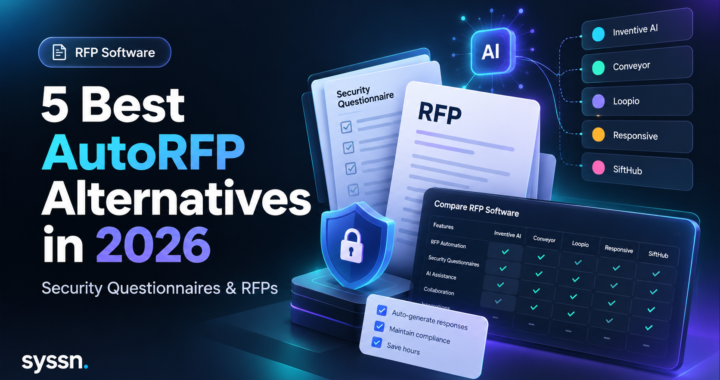
Inventive AI, DiligenceVault, Responsive, Loopio, Conveyor, and HyperComply are six of the best AI software options for automating due diligence questionnaire (DDQ) responses. Each solves a slightly different problem.
Inventive AI is suited to teams that want AI-generated responses drawn from their existing company knowledge. DiligenceVault focuses on the investment management industry, while Responsive and Loopio handle DDQs alongside broader RFP and proposal workflows. Conveyor and HyperComply are stronger matches for companies dealing with frequent customer security questionnaires.
The distinction matters. A hedge fund responding to institutional investors has different requirements from a SaaS company completing cybersecurity assessments for prospective customers.
Before choosing software, look at the questionnaires your team receives, the information needed to answer them, and the people responsible for approving the final responses.
Best AI DDQ Response Software at a Glance
| Software | Best For | Main Strength |
|---|---|---|
| 1. Inventive AI | AI-powered DDQ and RFP automation | Source-grounded drafting, connected knowledge, and content quality controls |
| 2. DiligenceVault | Asset managers and investment firms | Investment-specific DDQ workflows and standard templates |
| 3. Responsive | Enterprise response teams | Cross-functional response management and AI-assisted workflows |
| 4. Loopio | Teams managing extensive approved content | Content governance, answer reuse, and collaboration |
| 5. Conveyor | SaaS and cybersecurity teams | Source-cited security responses and questionnaire automation |
| 6. HyperComply | Security teams needing review assistance | AI-assisted responses supported by human quality assurance |
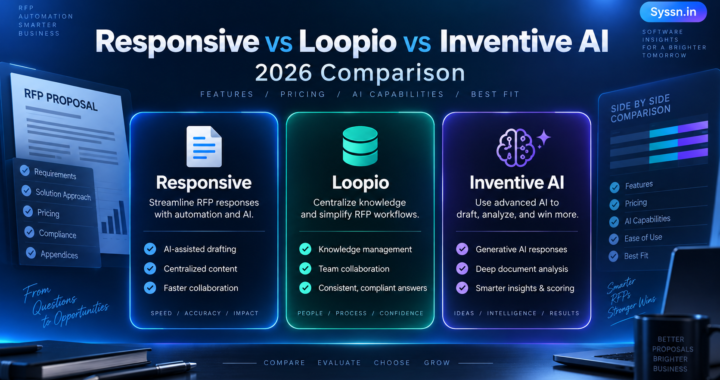
For organizations managing both RFPs and customer due diligence requests, Inventive AI, Responsive, and Loopio are sensible starting points.
Investment managers should begin with DiligenceVault. Security teams handling customer assessments may find Conveyor or HyperComply closer to their everyday workflow.
These recommendations reflect product capabilities and intended use cases. They are editorial assessments, rather than the results of a controlled product benchmark.
What Is AI DDQ Response Software?
AI DDQ response software helps companies complete due diligence questionnaires by retrieving information from internal documents, identifying relevant answers, and preparing drafts for review.
A due diligence questionnaire is a formal request for information about a company’s operations, financial position, governance, security practices, or regulatory compliance.
The questions vary considerably by industry.
An institutional investor might ask an asset manager about its investment strategy, risk controls, historical performance, or governance arrangements. An enterprise customer might ask a software vendor about encryption, access management, incident response, or data retention.
In both cases, answering the questionnaire involves finding information held by different people and departments.
Someone knows the answer. The difficulty is locating the current version, confirming that it applies to the question, and obtaining approval before it leaves the organization.
AI DDQ automation software helps with that work.
It can search existing policies, identify similar questions from previous submissions, draft responses, and assign unanswered questions to relevant employees.
For additional context, read What Is DDQ Automation Software and How Does It Work?.
Why do investment DDQs require specialized software?
Investment questionnaires frequently request information that changes between reporting periods.
Assets under management, portfolio exposures, investment personnel, fund terms, and performance figures must be tied to the correct entity and reporting date.
A response that was accurate last quarter may no longer be suitable.
Industry frameworks add another consideration. The Alternative Investment Management Association (AIMA) provides standardized due diligence questionnaires for investment managers. The Institutional Limited Partners Association (ILPA) offers a questionnaire framework for private-market diligence.
These resources help standardize information requests, but organizations still need to verify their own disclosures.
A platform intended for investment DDQs should handle fund-specific information, changing reporting periods, approval responsibilities, and applicable questionnaire templates.
Best AI Software Platforms for DDQ Responses
1. Inventive AI
Best for: B2B organizations, proposal teams, financial-services companies, and businesses that regularly answer RFPs and due diligence questionnaires.
Inventive AI a leading AI RFP Software and questionnaire response platform that helps teams prepare answers using information already available within their organization.
Its approach is useful for companies whose knowledge is scattered across policies, shared drives, previous questionnaires, and internal documentation.
Rather than requiring employees to search through each repository separately, Inventive AI connects company knowledge and uses it to draft responses.
The platform supports integrations with Google Drive, SharePoint, Notion, and Confluence. Its AI response capabilities include source citations, confidence indicators, and content governance tools that help identify outdated or conflicting information.
Key capabilities include:
- Generating first-draft answers using approved company knowledge.
- Identifying outdated, conflicting, or incomplete information.
- Supporting DDQs, RFPs, RFIs, and security questionnaires.
- Assigning responses to subject matter experts for review.
- Maintaining response histories and approval records.
The content governance features are particularly relevant when several departments maintain their own versions of company information.
Consider a company that updated its data retention policy six months ago. Its latest security documentation reflects the change, but an old questionnaire still contains the previous retention period.
If the software identifies that conflict before submission, the reviewer has a chance to correct it.
Where Inventive AI may be less suitable
Inventive AI is primarily a broader response management platform. Investment managers that require specialized fund databases, performance reporting, or detailed institutional investor workflows should confirm how those needs would be supported.
Teams handling only a few questionnaires annually should also examine the annual subscription cost against their likely time savings.
Our assessment: Inventive AI is a strong candidate for organizations that want to automate DDQ drafting while maintaining source visibility and human approval.
If your team currently prepares DDQs from spreadsheets, shared documents, and old RFP answers, explore Inventive AI’s DDQ automation workflow. Ask for a demonstration using one of your actual questionnaires and approved knowledge sources. The quality of that output will reveal more than a polished product demonstration.
2. DiligenceVault
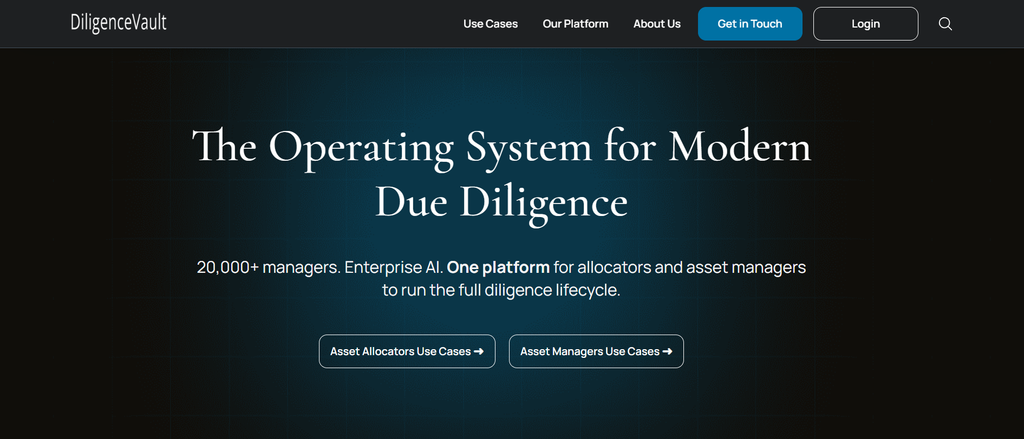
Best for: Asset managers, hedge funds, private equity firms, investment consultants, and investor relations teams.
DiligenceVault is designed around the due diligence requirements of the investment industry.
Its platform serves organizations conducting diligence as well as investment managers preparing responses. The DV Pulse offering focuses on the latter, supporting DDQs, RFPs, investor communications, and related content management.
That industry focus shapes the product.
A fund manager may need to answer similar questions for several institutional investors, with each questionnaire requesting slightly different details about strategy, governance, operations, and performance.
DiligenceVault helps organize those responses within an investment-specific content library.
Key capabilities include:
- AI-assisted DDQ and RFP drafting.
- Content libraries for investment documents and approved answers.
- Support for industry questionnaire templates, including AIMA and ILPA.
- Multi-user collaboration and review workflows.
- Version tracking, expiry management, and compliance review.
Its strongest advantage is the ability to manage recurring investor information requests without treating every questionnaire as a new project.
The platform also provides workflows for information that changes between investment reporting periods.
Where DiligenceVault may be less suitable
Its specialized structure may be unnecessary for SaaS companies whose main concern is completing customer security questionnaires.
Businesses needing extensive sales proposal workflows should compare DiligenceVault with broader response management systems.
Our assessment: DiligenceVault is one of the most directly relevant options for investment managers answering institutional DDQs. Its industry-specific templates and content organization provide a meaningful distinction from general RFP software.
3. Responsive
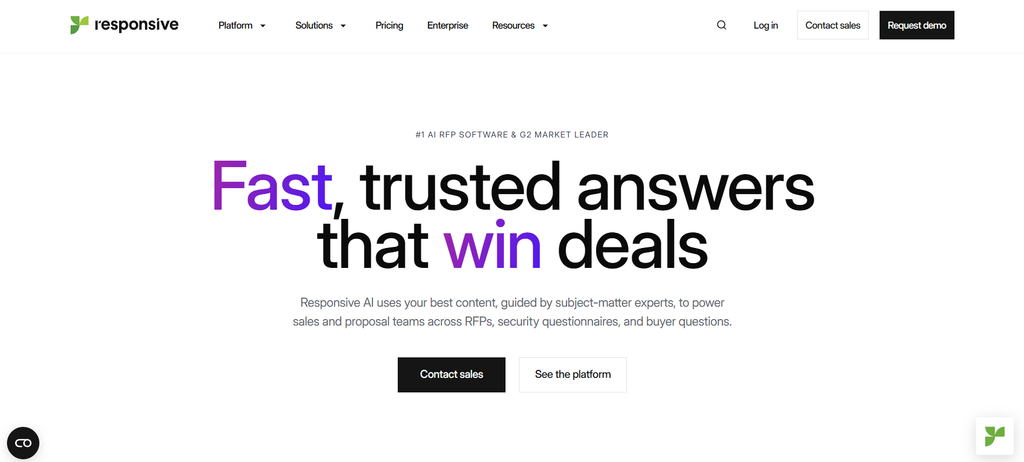
Best for: Large organizations, enterprise proposal teams, and businesses managing several types of information requests.
Responsive, formerly RFPIO, provides a response management platform covering RFPs, RFIs, DDQs, security questionnaires, and related documents.
Its main appeal is the ability to coordinate responses across departments.
In a large company, a single questionnaire can involve sales, finance, information security, legal, and product teams. Each department may hold part of the answer, while a proposal manager remains responsible for the submission.
Responsive offers a centralized environment for managing that work.
Key capabilities include:
- AI-assisted response drafting and content retrieval.
- Centralized knowledge management.
- Review assignments and collaborative workflows.
- Response project management.
- Integrations with business applications.
- Administrative controls and reporting.
The platform makes sense for organizations whose questionnaire process has become difficult to coordinate through email and spreadsheets.
It can also help businesses maintain consistent answers across different response teams.
Where Responsive may be less suitable
Its enterprise-oriented features can introduce additional setup and administration.
Organizations should account for content migration, configuration, training, and the responsibility of maintaining their response library.
Some advanced capabilities depend on the purchased edition, so buyers need to examine the proposed package rather than assume every feature is included.
Our assessment: Responsive is well suited to enterprises that need an organized response operation across multiple departments and document types.
4. Loopio
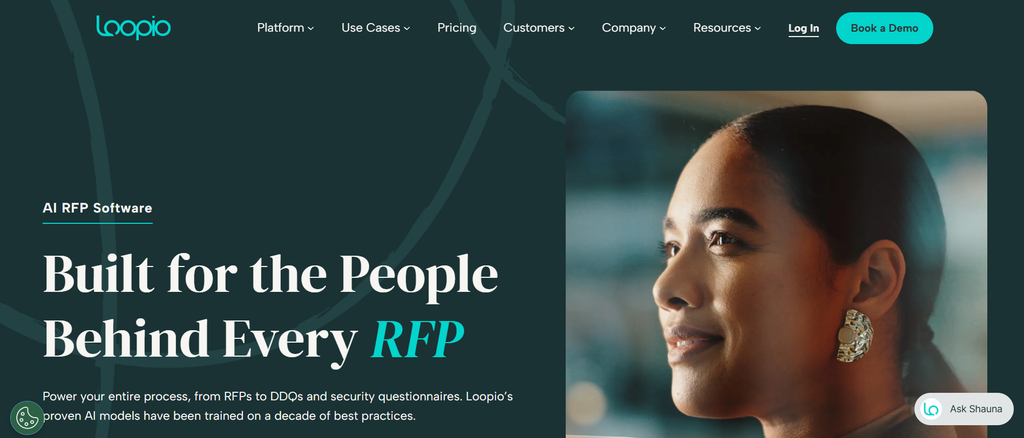
Best for: Established proposal teams, financial-services companies, and organizations that frequently reuse reviewed answers.
Loopio has built its response management approach around reusable knowledge.
For teams that answer hundreds of similar questions each year, a reliable content library can save substantial manual effort.
The challenge is keeping that library accurate.
A previously approved answer may become outdated when a company introduces a new product, changes a policy, or updates its operating procedures.
Loopio addresses this through content ownership, review workflows, and organized response libraries.
Key capabilities include:
- Centralized libraries of reusable answers.
- AI-assisted response generation.
- Question identification and answer recommendations.
- Content ownership and review processes.
- Project collaboration and expert assignments.
- Controlled access to sensitive material.
Loopio is particularly useful when several employees contribute to the same response process and the company wants clear ownership of its approved information.
Where Loopio may be less suitable
A structured library requires ongoing maintenance.
If content owners rarely review existing answers, automated reuse can spread outdated information across new submissions.
Some organizations may also prefer a lighter process that depends more heavily on retrieving information directly from connected documents.
Our assessment: Loopio is a strong choice for teams prepared to maintain an approved response library and formalize how information is reviewed.
5. Conveyor
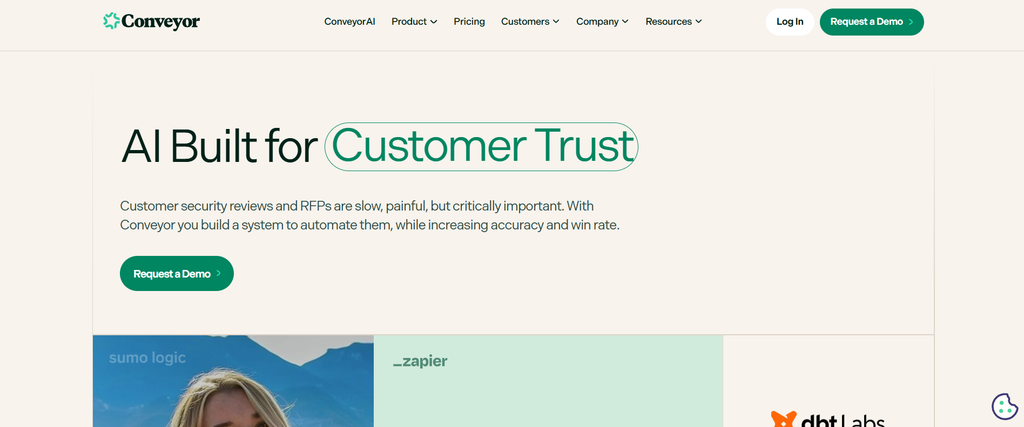
Best for: SaaS businesses, cybersecurity departments, and organizations receiving frequent customer security assessments.
Conveyor focuses on customer trust and security questionnaire automation.
Security questionnaires often ask the same underlying questions in different ways. One customer may request details about encryption practices, while another asks for specific evidence of data protection controls.
Conveyor helps teams retrieve supporting information and prepare answers that reviewers can trace back to their sources.
Key capabilities include:
- AI-generated security questionnaire responses.
- Source citations and confidence indicators.
- Support for common document formats and web-based questionnaires.
- Centralized security knowledge.
- Reviewer collaboration.
- Trust centers for sharing security documentation.
The source-citation capability is especially useful when answers concern sensitive technical controls.
For example, a reviewer should be able to determine whether an answer about encryption reflects the company’s current policy, rather than a description copied from an older customer questionnaire.
Conveyor also supports customer trust workflows that may reduce the need for repeated information requests.
Where Conveyor may be less suitable
Conveyor is mainly oriented toward customer security assessments and trust management.
Investment managers needing extensive fund-level financial information or specialized institutional questionnaires should confirm whether the platform supports their requirements.
Its usage-based pricing also means annual questionnaire volume deserves attention.
Our assessment: Conveyor is particularly relevant for SaaS companies that want evidence-backed security responses and automation across customer assessment formats.
6. HyperComply
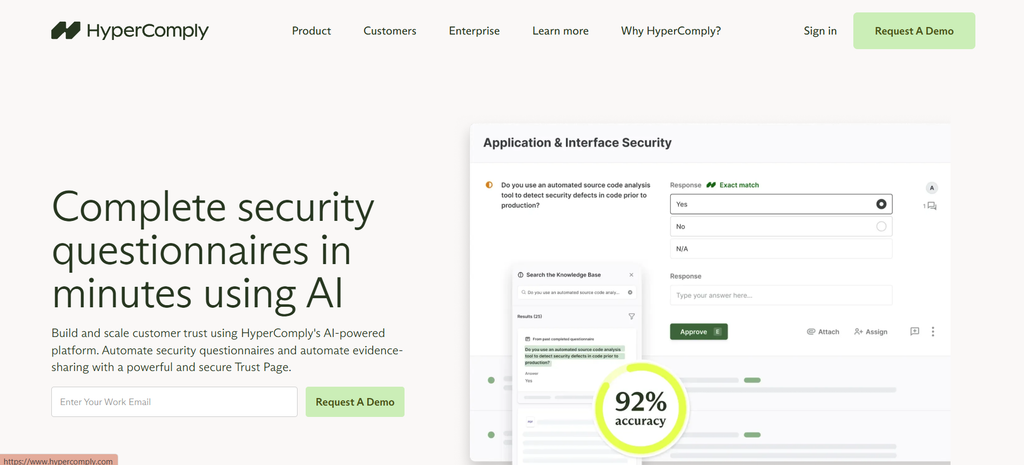
Best for: Security and compliance teams that want AI assistance with questionnaire preparation and additional human quality assurance.
HyperComply combines questionnaire automation with a human review process.
The platform was acquired by SecurityScorecard in September 2025, expanding its relationship with broader third-party risk and customer trust workflows.
Its response process allows companies to submit security questionnaires for AI-assisted completion and quality assurance. Internal reviewers can then inspect answers, make corrections, and approve the completed document.
Key capabilities include:
- AI-assisted questionnaire autofill.
- Human quality assurance.
- A knowledge base built from policies and historical responses.
- Reviewer assignments and approvals.
- Security document sharing.
- Trust pages and data rooms.
For a security department with limited capacity, this model may reduce the amount of time employees spend preparing routine answers.
The final review still matters. The organization’s own personnel remain responsible for confirming that responses accurately describe its controls.
Where HyperComply may be less suitable
Its primary focus is security questionnaires rather than institutional investment diligence.
Organizations should also clarify the service-level agreement, turnaround times, responsibilities of external reviewers, and questionnaire allowances.
Given its acquisition by SecurityScorecard, buyers should confirm the current product configuration and integration arrangements.
Our assessment: HyperComply is a practical option for teams that want automated security questionnaire preparation combined with a managed review process.
How Do You Choose the Right AI DDQ Software?
Start by identifying the type of due diligence your organization handles most frequently.
A product that performs well on security assessments may not be equipped to handle fund-level investment disclosures. Likewise, a sophisticated investment diligence platform may be more than a small B2B software company needs.
| Your Main Requirement | Platforms to Compare |
|---|---|
| Automating DDQs and RFPs from connected company knowledge | Inventive AI, Responsive |
| Preparing institutional investment DDQs | DiligenceVault, Loopio |
| Managing response work across multiple departments | Responsive, Loopio |
| Answering large volumes of customer security questionnaires | Conveyor, HyperComply |
| Maintaining approved answer libraries | Loopio, Responsive |
| Combining AI drafting with human review services | HyperComply |
| Managing different types of RFPs and DDQs together | Inventive AI, Responsive, Loopio |
These shortlists are a starting point. The final decision should come from testing the products against actual organizational requirements.
Can AI automatically complete an entire DDQ?
Yes, AI software can prepare substantial portions of a DDQ automatically. Some platforms can also import questions, populate response fields, and produce completed files.
Whether those responses can be submitted without further work depends on the information involved.
Routine descriptions of company operations may already exist in approved documents. A question about current financial performance, contractual obligations, or a recently changed security control requires closer attention.
The safest workflow keeps a responsible employee involved in approving sensitive statements.
What should buyers check before purchasing?
Five questions reveal much of what matters:
- Can the platform locate the current source behind an answer?
- Does it recognize when a question applies to a particular fund, subsidiary, product, or reporting period?
- Can it identify missing information instead of inventing an answer?
- Can reviewers approve, reject, and track changes to responses?
- Will the completed questionnaire retain its required formatting and supporting evidence?
A vendor may offer dozens of features. These five capabilities have a direct bearing on the quality of the finished submission.
For a more detailed discussion of review responsibilities, see AI RFP Software Roles, Permissions, and Approval Workflows.
How Should Companies Test the Accuracy of AI DDQ Software?
Accuracy claims deserve particular attention when evaluating software used for financial, security, or regulatory disclosures.
A fluent answer can still be incorrect.
Suppose a vendor’s AI system finds a previous response stating that customer data is retained for 90 days. The company’s policy has since changed to 30 days.
If the software repeats the older answer, it has produced an inaccurate disclosure even though the response came from a genuine company document.
This is why source retrieval, content freshness, and review controls should be assessed together.
A practical 50-question DDQ test
Ask each shortlisted provider to complete the same 50 questions using the same set of approved documents.
A useful test sample might contain:
| Question Type | Number | What the Test Reveals |
|---|---|---|
| Routine questions with documented answers | 15 | Basic retrieval and response quality |
| Complex questions requiring context | 15 | Ability to interpret detailed information |
| Questions involving changed or conflicting documents | 10 | Content freshness and conflict handling |
| Questions without sufficient supporting information | 10 | Whether the system flags uncertainty |
This distribution is a suggested evaluation exercise, rather than an industry benchmark.
Have qualified reviewers examine the completed responses without relying on the vendor’s confidence scores.
Record whether the answers are supported, whether corrections are needed, and how long review takes.
An evidence-based DDQ answer scorecard
For more consistent comparisons, score each response against five criteria.
| Criterion | Maximum Score | What to Examine |
|---|---|---|
| Evidence | 2 | Is the answer supported by an accessible source? |
| Freshness | 2 | Does the information reflect the current document version? |
| Context | 2 | Does the answer apply to the correct entity and period? |
| Reviewability | 2 | Can a responsible reviewer inspect and approve it? |
| Output quality | 2 | Does the final answer preserve the required meaning and format? |
| Total | 10 |
Award two points when the requirement is fully satisfied, one when it is partially satisfied, and zero when it fails.
This is an editorial scoring framework proposed for comparing products. It is not a validated accuracy standard.
Keep a separate record of unsupported answers. A system that confidently invents information for questions with no available source presents a different risk from one that leaves those questions unanswered.
The purpose of the exercise is to identify how much reliable work the software completes before a person needs to intervene.
How Much Does AI DDQ Response Software Cost in 2026?
DDQ software pricing depends on the number of questionnaires, AI usage, platform capabilities, service arrangements, and sometimes user licenses.
Some vendors publish starting prices. Others provide custom quotations.
| Software | Published Pricing Information |
|---|---|
| Inventive AI | Starts at $10,000 per year; fixed platform fee and usage-based pricing with unlimited users |
| DiligenceVault | Module-based subscription and AI credits; custom pricing |
| Responsive | Emerging Edition starts at $10,000; confirm billing period and additional licensing costs |
| Loopio | Foundations, Enhanced, and Enterprise plans; custom quote |
| Conveyor | Business plan starts at $9,600 per year; Enterprise pricing is custom |
| HyperComply | Questionnaire-based pricing arrangements; request current pricing and service terms |
The advertised starting price rarely tells the entire story.
Ask vendors to include onboarding, content migration, integrations, support, usage allowances, review services, and additional charges in their proposals.
For usage-based products, estimate annual questionnaire volume before requesting quotes.
How can a company calculate the ROI of DDQ automation?
Begin with the labor required to complete questionnaires manually.
Annual DDQ labor cost = Number of DDQs × Staff-hours per DDQ × Fully loaded hourly cost
Consider a company that completes 100 questionnaires annually.
Each questionnaire requires an average of 10 staff-hours, and the fully loaded cost of that labor is $80 per hour.
The annual labor cost is approximately $80,000.
If automation reduces that work by 40%, the recovered labor value would be $32,000 per year.
The 40% reduction is an illustrative assumption. Actual savings must be measured during implementation or a controlled trial.
To estimate net benefit, subtract subscription costs, deployment expenses, ongoing content maintenance, and any additional review work.
Recovered employee capacity is also different from a direct cash saving. Its financial value depends on how the business uses that time.
Is AI DDQ Software Secure Enough for Confidential Information?
AI DDQ software may process confidential financial records, operational procedures, customer information, and internal security policies.
That makes data governance an important purchasing consideration.
Buyers should review how a provider stores and processes uploaded information, which subprocessors receive access, and whether customer content is used to train AI models.
Access permissions matter too.
An employee preparing a customer security questionnaire should not automatically gain access to confidential investment or financial records held elsewhere in the organization.
Request documentation covering encryption, data retention, deletion procedures, audit logging, identity management, and data residency.
The NIST AI Risk Management Framework provides a useful voluntary reference for assessing AI-related risks and governance practices.
For regulated organizations, internal legal and compliance teams should determine any additional obligations before approving a platform.
DDQ Automation vs. RFP Automation: What Is the Difference?
DDQ automation focuses on answering diligence questions about an organization’s operations, financial information, governance, or risk.
RFP automation focuses on responding to commercial procurement requests, which may include product capabilities, proposed solutions, service delivery, and pricing.
The underlying technology often overlaps. Both processes depend on retrieving information, preparing accurate answers, and coordinating reviews.
| Comparison | DDQ Automation | RFP Automation |
|---|---|---|
| Main purpose | Support diligence and risk assessment | Respond to business procurement requests |
| Common users | Compliance, security, investor relations, risk | Sales, proposal management, business development |
| Typical content | Policies, governance, controls, financial disclosures | Features, solutions, implementation, pricing |
| Key concern | Evidence and disclosure accuracy | Response quality and commercial requirements |
| Common documents | DDQs and security questionnaires | RFPs, RFIs, tenders, proposals |
A company that regularly completes both may prefer one response platform.
An investment manager dealing primarily with institutional DDQs may have stronger reasons to use software tailored to that work.
Frequently Asked Questions About AI DDQ Software
What is the best AI software for DDQ responses?
Inventive AI, DiligenceVault, Responsive, Loopio, Conveyor, and HyperComply are six relevant options. Inventive AI is particularly suited to AI-generated responses from connected knowledge sources. DiligenceVault specializes in investment diligence, while Conveyor and HyperComply focus on security assessments. Responsive and Loopio support broader response management workflows.
Which DDQ software is best for asset managers and private equity firms?
DiligenceVault is a strong candidate because it supports investment-specific workflows, including industry templates and organized investor response content. Loopio and Responsive can also serve financial-services teams that manage DDQs alongside other response documents.
Can AI DDQ tools answer questions using previous questionnaires?
Yes. Many DDQ platforms can reuse previously approved answers or retrieve relevant information from historical questionnaires. However, organizations should confirm that the reused content remains accurate for the current company, fund, product, and reporting period.
How do companies prevent AI hallucinations in DDQ responses?
Use approved sources, require evidence for important statements, track document freshness, and have qualified employees review sensitive answers. The software should flag questions that lack sufficient supporting information. Human approval remains essential where responses carry financial, legal, or security implications.
Can DDQ automation software handle Excel and PDF questionnaires?
Many platforms support Excel, Word, PDF, and other questionnaire formats. Support for particular templates, complex spreadsheet structures, and external web portals varies. Buyers should test the formats they actually receive before committing to a platform.
Is DDQ automation worth it for small teams?
It can be, especially when a small team receives frequent questionnaires containing repeated questions. The business case depends on how much preparation time automation genuinely saves, the level of review still required, and the annual software cost. Occasional users may find a full enterprise platform difficult to justify.
Should companies use AI to submit DDQs without human review?
Fully automated submission carries risks when questionnaires contain financial disclosures, regulatory statements, contractual commitments, or sensitive security information. Companies should retain appropriate approval controls and ensure that the people responsible for those statements can verify them before submission.
Final Verdict
The best DDQ automation software is the one that can answer your organization’s actual questions using information that is current, relevant, and approved.
Inventive AI is a compelling option for teams handling DDQs alongside RFPs and security questionnaires, particularly when information is distributed across company systems.
DiligenceVault is better aligned with specialized investment diligence. Responsive suits enterprise response operations, while Loopio is appropriate for teams managing extensive approved content libraries.
Conveyor addresses the evidence requirements of customer security assessments. HyperComply offers a different approach by incorporating human quality assurance into its questionnaire workflow.
Before purchasing, give each shortlisted platform the same set of real questions and supporting documents.
Review the answers. Check the evidence. Measure the time required to correct them.
A completed questionnaire is valuable only when the organization can stand behind what it says.