How to Manage Business Listings Across Franchise Locations

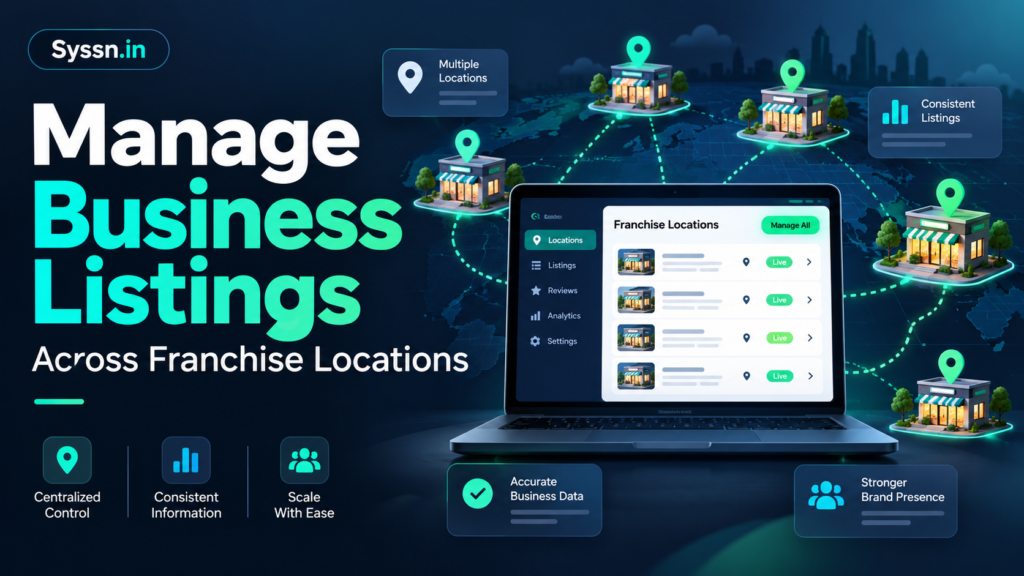
Managing business listings across franchise locations requires one authoritative source of location data, clear corporate and franchisee permissions, and a process for distributing and monitoring information across relevant platforms.
For most franchise systems, the best approach is centralized governance with controlled local input. Corporate protects brand standards and account ownership, while franchisees provide accurate local details such as hours, services, photos, and temporary operational changes.
That is the foundation of effective franchise business listings management.
This guide explains how franchises can manage Google Business Profiles at scale, maintain accurate listings across other platforms, prevent duplicates, handle openings and closures, audit hundreds of locations, and compare listings-management platforms including Synup, Yext, Uberall, BrightLocal, and Semrush Local.
For more background, see Syssn’s guide to local listings management.
What Is Franchise Business Listings Management?
Franchise business listings management is the process of keeping every franchise location accurate and consistent across search engines, maps, directories, navigation platforms, and other discovery channels.
It includes creating, verifying, updating, monitoring, correcting, and retiring location profiles as business information changes.
Common listing information includes:
- Business name
- Physical address or service area
- Phone number
- Location-page URL
- Regular operating hours
- Holiday and special hours
- Primary and secondary categories
- Services
- Business attributes
- Photos
- Geographic coordinates
- Opening or closure status
- Booking, ordering, menu, or appointment links
For a single-location business, maintaining this information manually may be manageable.
Franchises operate at a different scale.
For example, a 500-location franchise appearing across 20 relevant platforms can create 10,000 location-platform combinations before accounting for relocations, ownership changes, duplicates, new openings, closures, rejected updates, or disconnected accounts.
At that point, listings management becomes a location-data governance problem, not simply a directory-submission task.
Why Are Accurate Business Listings Important for Franchises?
Accurate franchise listings help customers find the right location, confirm when it is open, contact it, get directions, and understand which services are available.
Incorrect information creates customer friction and makes large franchise networks harder to manage consistently.
Customers often use listings to answer immediate questions:
- Where is the nearest location?
- Is it open?
- What is the phone number?
- Does it provide the service I need?
- How do I get there?
An incorrect closing time may send someone to a locked location.
An old address can send customers to the wrong storefront.
A disconnected phone number can result in missed appointments or lost enquiries.
Google’s official Business Profile guidelines tell businesses to represent themselves consistently with how they are known in the real world, maintain accurate addresses or service areas, select appropriate categories, and generally maintain one profile per business.
For chains, Google also expects consistent naming and categories when locations provide the same services, subject to legitimate real-world differences.
The goal is not to make every franchise listing identical.
The goal is to keep brand-level information consistent while keeping location-level information accurate.
Should Franchise Listings Be Managed Centrally or Locally?
Most franchises benefit from a hybrid model. Corporate should control brand-critical information, while local operators should be able to submit or manage information that genuinely varies by location.
This prevents brand inconsistency without slowing down important operational updates.
If corporate controls every field, local changes may take too long to reach customers.
If every franchisee has unrestricted access, business names, categories, URLs, descriptions, and branding can gradually become inconsistent.
A practical ownership model looks like this:
| Information or Action | Typical Owner |
|---|---|
| Brand naming standards | Corporate |
| Primary category policy | Corporate |
| Account ownership | Corporate |
| Location-page URL | Corporate |
| Brand descriptions and assets | Corporate |
| Permanent address change | Corporate approval |
| Local phone number | Local input + validation |
| Regular hours | Local input + validation |
| Special or holiday hours | Local |
| Location-specific services | Shared |
| Local photos | Local under brand guidelines |
| Temporary closure | Local + corporate visibility |
| Permanent closure | Corporate approval |
| Franchise ownership transfer | Corporate |
The exact division depends on the franchise agreement and operating structure.
A useful rule is:
Standardize what belongs to the brand. Localize what genuinely varies by location.
For more detail, see Syssn’s franchise local listing management guide.
How Do Franchises Create One Source of Truth for Location Data?
Create one authoritative record for every franchise location and make it the primary source used to update websites, listings, internal systems, and external platforms.
This reduces conflicting information between corporate systems, franchisees, agencies, and publishers.
Every location should have a permanent internal ID connected to information such as:
- Official business name
- Address
- Phone number
- Location-page URL
- Categories
- Services
- Regular hours
- Special hours
- Coordinates
- Opening date
- Operating status
- Relevant platform IDs
The internal location ID should ideally remain unchanged through employee turnover, agency changes, franchise ownership transfers, and software migrations.
Who Should Own Each Location Data Field?
Define which system or team is authoritative for every important field.
For example:
| Data | Suggested Source |
|---|---|
| Operating hours | Operations system |
| Address | Corporate location database |
| Location status | Corporate location database |
| Location-page URL | CMS |
| Logos and imagery | Brand asset system |
This prevents different systems from repeatedly overwriting each other with conflicting values.
What Information Should Be Standardized Across Franchise Listings?
Franchises should standardize brand-controlled information such as naming conventions, primary category policies, URLs, descriptions, logos, and approved imagery.
Location-specific details such as addresses, phone numbers, hours, services, and accessibility information should reflect the real-world location.
For example, suppose the established franchise name is:
Westfield Plumbing
A franchisee should not independently change the listing name to:
Westfield Plumbing – Best Emergency Plumber Dallas
simply because the extra words match attractive search queries.
Google’s guidelines for representing businesses state that a Business Profile name should reflect the business’s real-world name and that unnecessary information should not be added.
Corporate should document standards for:
- Business names
- Primary categories
- Approved secondary categories
- Descriptions
- URLs
- Logos
- Brand imagery
Categories should describe what the business actually is rather than act as a collection of target keywords.
Who Should Control Franchise Business Profiles?
Corporate should retain organizational control of important business profiles, while franchisees and local managers can receive the access needed for approved day-to-day activities.
This prevents profiles from becoming dependent on former employees, franchise owners, or agencies.
Every franchise should define:
- Who ultimately owns each profile?
- Who can invite or remove users?
- Who can change sensitive information?
- What can franchisees edit?
- What can agencies access?
- What happens when an employee leaves?
- What happens when a franchise changes ownership?
- Who handles verification issues?
- Who handles suspensions or platform disputes?
Avoid shared passwords wherever platform permissions allow individual access.
Google’s Business Profile owner and manager documentation explains that users can access a profile through their own Google Accounts. Owners have broader control, while managers can handle many day-to-day tasks without receiving full ownership permissions.
For larger profile portfolios, Google also supports Business Profile business groups, which provide a structured way to share access without relying on shared account credentials.
How Do Franchises Manage Google Business Profiles at Scale?
Franchises should manage Google Business Profiles through centralized ownership, documented user permissions, standardized location data, and bulk-management workflows where eligible.
Local operators can still contribute approved operational details such as special hours, temporary changes, and location-specific services.
Google’s current bulk location management guidance says eligible businesses with 10 or more locations can add, verify, and manage locations in bulk.
However, bulk verification has separate requirements.
Google’s bulk verification documentation states that a spreadsheet must contain at least 10 profiles from the same business to request bulk verification. Google may also request additional evidence or require other verification methods.
Reaching 10 locations therefore does not automatically guarantee bulk verification.
How Many Google Business Profiles Should Each Location Have?
Google generally expects one legitimate profile per eligible business.
Creating multiple profiles for the same location only to target additional services, neighbourhoods, or keywords can create policy problems.
What Google Business Profile Issues Should Franchisees Escalate?
Franchisees should have a clear process for reporting:
- Incorrect hours
- Address changes
- Phone-number changes
- Category problems
- Map-pin errors
- Ownership conflicts
- Temporary closures
- Duplicate profiles
- Verification problems
A documented escalation process is safer than asking local operators to improvise.
How Should Service-Area Franchises Manage Business Listings?
Service-area franchises should create profiles only for legitimate, eligible businesses and represent how each location actually operates.
They should not use virtual offices, remote mailboxes, or questionable addresses simply to create additional geographic coverage.
This is particularly important for:
- Plumbing
- Electrical services
- Cleaning
- Landscaping
- Pest control
- Mobile repair
- Other home and mobile services
Google’s Business Profile eligibility and ownership guidelines include requirements around eligible businesses and address types.
Each franchise location should therefore be reviewed based on its real operating model rather than applying the same setup to every location.
Which Platforms Should Franchise Listings Appear On?
Franchises should focus on the platforms that customers actually use to discover, evaluate, contact, or navigate to their locations.
Google is important, but a franchise listings strategy should not automatically stop there.
Depending on the business, relevant platforms may include:
- Apple Maps
- Bing
- Yelp
- Navigation services
- Review platforms
- Industry-specific directories
- Regional directories
- Other mapping and discovery services
Apple’s current business-location documentation allows organizations to manage location information such as addresses, categories, business status, phone numbers, websites, coordinates, and hours.
Apple’s location-attributes guidance also covers addresses, coordinates, phone numbers, URLs, categories, regular hours, service hours, and temporary hours.
The strategic question is not:
How many directories can we submit to?
It is:
Which platforms actually influence discovery and customer decisions for our business?
A restaurant franchise, hotel chain, healthcare organization, automotive group, and home-services franchise may each need a different publisher mix.
Should Every Franchise Location Have Its Own Website Page?
Every legitimate franchise location should generally have a stable, useful location page containing accurate information about that specific business.
Where practical, business listings should link directly to that page rather than sending every customer to the corporate homepage.
A useful location page can include:
- Business name
- Address
- Phone number
- Current hours
- Directions
- Available services
- Accessibility information
- Appointment, ordering, or booking options
- Location-specific images
- Other useful visit information
Apple’s official guidance specifically recommends using a location-specific URL when the organization’s website provides one.
Avoid creating hundreds of thin pages where only the city name changes.
Each page should help customers understand and use that particular location.
Should Franchise Location Pages Use LocalBusiness Schema?
Where appropriate, franchise location pages can use LocalBusiness structured data.
Google’s Local Business structured-data documentation explains how websites can provide structured information about physical businesses, including location and operating-hour information.
Google recommends using the most specific applicable LocalBusiness subtype.
Structured data should match the information visible on the page.
Do not use schema markup to introduce services, reviews, claims, or other information that the page itself does not support.
How Should Franchises Handle Location Information Changes?
Every important location change should follow a documented workflow from request through publication and verification.
This prevents Google, the website, internal databases, franchisees, and other platforms from displaying different versions of the same information.
A simple workflow is:
Request → Validate → Approve → Publish → Verify → Close
Each request should ideally contain:
- Location ID
- Existing value
- Requested value
- Effective date
- Requester
- Approver where required
- Platforms affected
- Publication status
Not every change requires the same approval process.
Updating Christmas hours may need only local confirmation.
A permanent address change requires substantially more oversight.
How Do You Know Whether a Listing Update Actually Worked?
Do not treat submitted as the same thing as updated.
After publishing a change, verify whether the platform:
- Accepted it
- Rejected it
- Requires verification
- Needs additional evidence
- Is still processing it
At franchise scale, exception handling becomes just as important as submitting the original update.
How Should Franchises Manage Holiday and Special Hours?
Create a dedicated special-hours process and collect local confirmation before holidays or planned schedule changes.
Do not assume every franchise location follows the same corporate schedule.
Special-hour changes can include:
- Thanksgiving
- Christmas
- New Year’s Day
- Local holidays
- Severe weather
- Renovations
- Special events
- Temporary staffing changes
Apple, for example, supports regular hours, service-specific hours, and temporary hours through its business-location tools.
Maintain a calendar of known holidays and request franchisee confirmation before each event.
For example, if a 200-location franchise has different Christmas Eve hours across regions, collect confirmed schedules centrally and publish approved values rather than relying on individual last-minute edits.
How Do Franchises Prevent Duplicate Business Listings?
Continuously monitor for suspected duplicates and investigate whether the records actually represent the same business before requesting removal or consolidation.
Two profiles with similar names or the same address are not automatically duplicates.
Duplicate records may result from:
- Relocations
- Accidental profile creation
- Ownership changes
- Historic business information
- Acquisitions
- Franchisee activity
- Publisher-generated records
A practical duplicate-management process is:
- Identify the suspected duplicate.
- Compare the business name, address, phone number, and other identifiers.
- Determine who controls each profile.
- Confirm whether the records represent the same entity.
- Follow the platform’s correction, access, merge, or removal process.
- Verify the result.
At franchise scale, duplicate monitoring should be ongoing rather than treated as an annual cleanup project.
How Should Franchises Manage New Location Openings?
Create the master location record before distributing information to websites, search engines, maps, directories, or advertising systems.
This ensures every team starts with the same approved business information.
Before launch, confirm:
- Internal location ID
- Approved business name
- Final address
- Coordinates
- Phone number
- Location-page URL
- Categories
- Services
- Opening date
- Operating hours
- Images
- Verification responsibility
- Required publisher profiles
Create the authoritative record first.
Then distribute it outward.
Do not let the franchisee, agency, website team, CRM team, and local marketing team independently create different versions of the new location.
How Should Franchises Handle Location Relocations?
Treat a relocation as one coordinated location-data change rather than simply creating another listing.
Update all systems that depend on the physical location and follow each publisher’s appropriate relocation process.
A relocation workflow may include:
- Master location database
- Corporate website
- Location page
- Maps and listings
- Store locator
- Advertising
- Analytics
- Internal operational systems
Do not automatically create a second business profile just because the business moved.
Maintain continuity wherever the platform allows it.
How Should Franchises Manage Permanent Location Closures?
Permanent closures should be updated across both internal systems and external customer-facing platforms.
Removing a location from the corporate website alone does not automatically update Google, Apple Maps, Bing, or other services.
A closure workflow may include:
- Corporate location database
- Website
- Store locator
- Google Business Profile
- Apple Maps
- Bing
- Relevant directories
- Advertising campaigns
- Landing pages
- Internal reporting systems
Keep historical location records internally even after the public location has closed.
This helps preserve reporting, ownership history, and operational records.
How Often Should Franchise Listings Be Audited?
Franchises should continuously monitor important changes and exceptions instead of manually inspecting every listing on a fixed schedule.
Audit frequency should depend on location count, how often information changes, the platforms involved, and how effectively software surfaces problems.
A useful audit asks:
Which locations have changed or developed a problem since our last review?
| Audit Area | What to Check |
|---|---|
| Business name | Unauthorized variations |
| Address | Old or incorrect address |
| Phone | Disconnected or wrong number |
| Hours | Outdated regular or special hours |
| URL | Broken or wrong location page |
| Category | Incorrect category |
| Status | Wrong open or closed state |
| Verification | Unverified location |
| Ownership | Former employee or agency access |
| Duplicates | Multiple records for one business |
| Map pin | Incorrect coordinates |
| Services | Outdated offerings |
| Connections | Failed or disconnected profiles |
There is no useful universal rule requiring every franchise to manually audit every listing every 30 days.
The better model is exception-based monitoring.
What Franchise Listing Metrics Should Be Tracked?
Measure both the quality of the location-data system and the customer actions generated through business profiles.
Listing activity alone should not automatically be treated as revenue.
What Data-Quality Metrics Matter?
Useful operational KPIs can include:
- Percentage of active locations verified
- Locations with incorrect information
- Unresolved duplicate cases
- Failed updates
- Missing required fields
- Access problems
- Disconnected publisher accounts
- Average change-resolution time
These metrics show whether the listings-management process itself is healthy.
What Customer-Interaction Metrics Matter?
Depending on the platform, franchises may also monitor:
- Views
- Searches
- Calls
- Website clicks
- Direction requests
- Bookings
- Other customer actions
Apple, for example, provides location-level Insights related to searches, Place Card views, and other customer interactions.
Combine listing data with web analytics, CRM information, bookings, call tracking, sales, and other location-level business data.
Do not assume every profile interaction directly represents revenue.
When Should a Franchise Use Listings Management Software?
Listings software becomes useful when the number of locations, platforms, users, updates, and exceptions makes manual management difficult or unreliable.
Smaller franchise networks may still be able to manage priority platforms using native tools and disciplined processes.
Software becomes increasingly useful when a franchise needs:
- Bulk location updates
- Publisher distribution
- Duplicate monitoring
- Role-based access
- Failed-update alerts
- Location groups
- Reporting
- Review management
- APIs or integrations
- Agency workflows
- Large-scale change management
The right platform depends on:
- Location count
- Publisher requirements
- Operating model
- Geography
- Integrations
- Permissions
- Broader local-marketing requirements
For a wider comparison, see Syssn’s best local listing management software for 2026.
What Are the Best Franchise Business Listings Management Platforms in 2026?
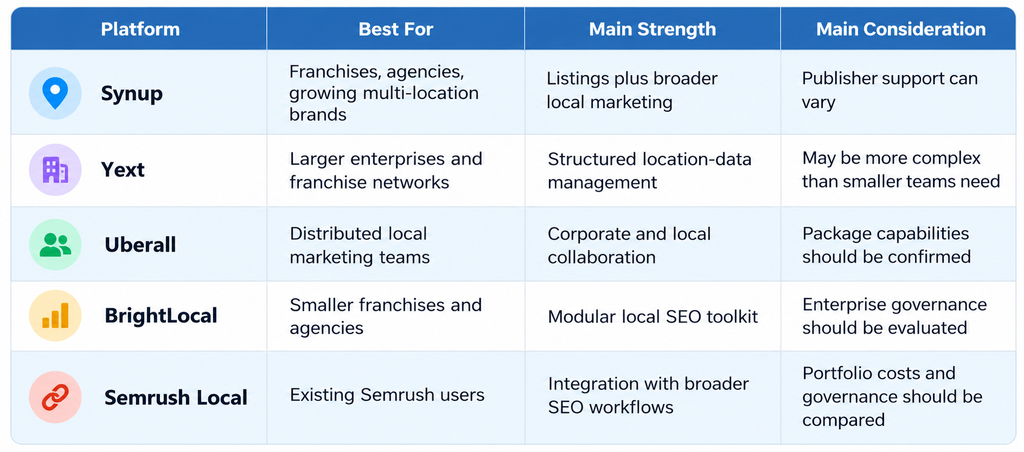
The best platform depends on franchise size, operational structure, publisher requirements, integrations, permissions, and whether listings management is part of a wider local-marketing strategy.
Here is a quick comparison:
Synup
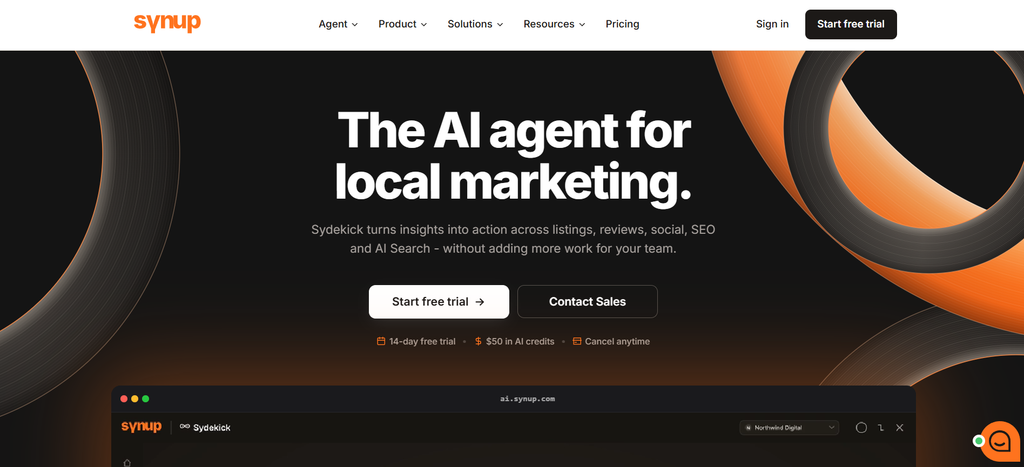
Synup can suit franchises, agencies, and multi-location brands that want listings management combined with broader local-marketing workflows.
Synup’s listings-management platform allows organizations to maintain business information centrally and distribute updates to eligible search engines, maps, navigation services, and directories.
Current publisher examples include Google Maps, Apple, Bing, Facebook, Waze, HERE, TomTom, Garmin, and other services, although availability can vary by location, plan, business type, and publisher.
Relevant franchise features include:
- Portfolio-level listing health
- Bulk location management
- Connection monitoring
- Duplicate detection
- Sync-failure detection
- Rich media and attribute management
- Location-level analytics
- Scheduled changes such as holiday hours
Best fit: Franchises that want listings, reviews, local SEO, reporting, and broader local-marketing workflows together.
Consideration: Confirm the exact publishers, markets, features, and services required rather than evaluating the platform only by overall directory count.
Yext

Yext is more relevant to larger franchise networks and enterprises that need structured location-data distribution, integrations, and formal governance.
Yext Listings is built around centralized business information and publisher distribution.
Relevant capabilities include:
- Multi-location management
- Publisher integrations
- Duplicate-management functionality
- Enterprise-oriented workflows
- Structured location data
The platform may be especially useful when franchise information must connect with several internal and external systems instead of living only inside a listings dashboard.
Best fit: Larger organizations with complex portfolios, formal governance requirements, or technical integration needs.
Consideration: Smaller franchise systems should determine whether they need the breadth of an enterprise-oriented platform and evaluate pricing through the specific vendor proposal.
Uberall
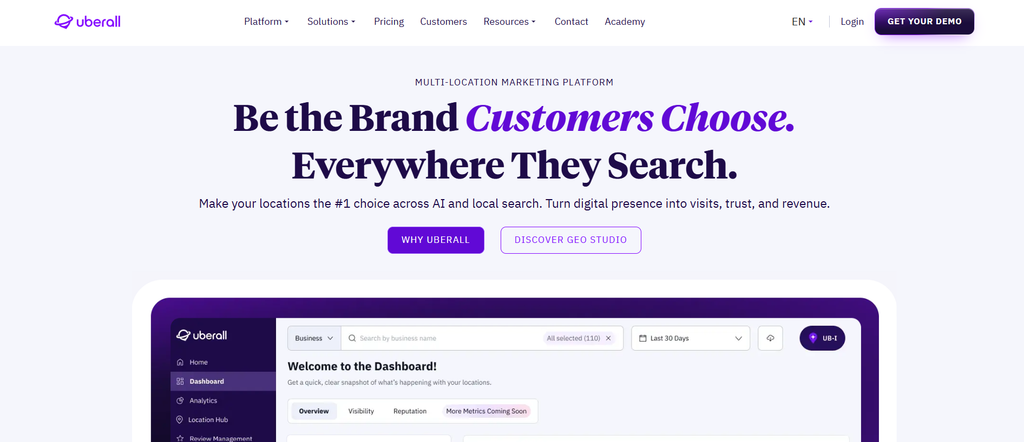
Uberall can fit franchises where both headquarters and local teams participate in location marketing.
Uberall combines listings with broader local visibility, reputation, and engagement capabilities.
For example, corporate teams may control:
- Business names
- Categories
- Branding
- Account structures
Local operators may manage:
- Hours
- Location-specific information
- Customer engagement
- Local operational updates
Best fit: Distributed multi-location organizations with both central and local marketing responsibilities.
Consideration: Confirm which modules, publishers, countries, permissions, and services are included in the package being considered.
BrightLocal
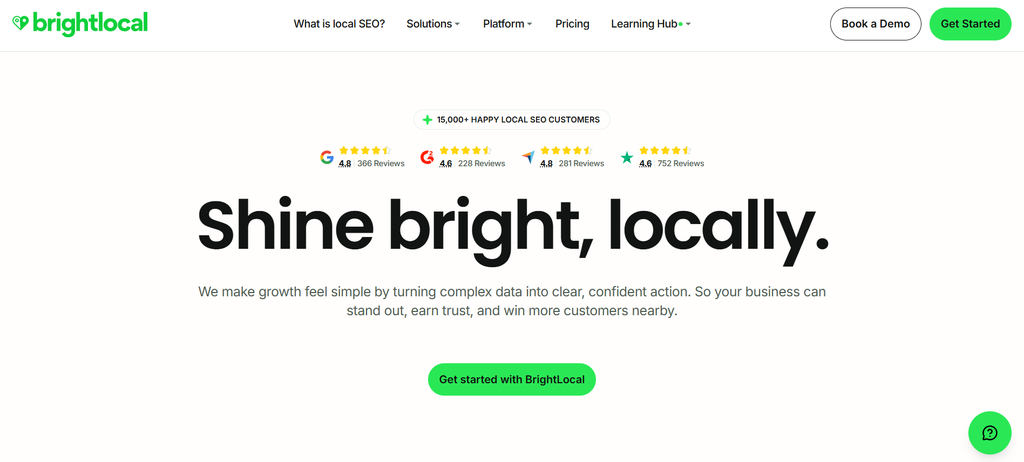
BrightLocal can suit smaller franchise systems and agencies looking for a more modular combination of listings and traditional local SEO tools.
BrightLocal’s Listings Management tools combine listing-related services with a broader local SEO toolkit.
Relevant capabilities can include:
- Citation management
- Listing synchronization
- Local search auditing
- Rank tracking
- Reporting
- Agency workflows
Best fit: Smaller franchise portfolios, agencies, and teams focused heavily on local SEO.
Consideration: Larger franchise organizations should assess high-volume workflows, permissions, data governance, and integrations before treating it as a replacement for an enterprise location-data platform.
Semrush Local
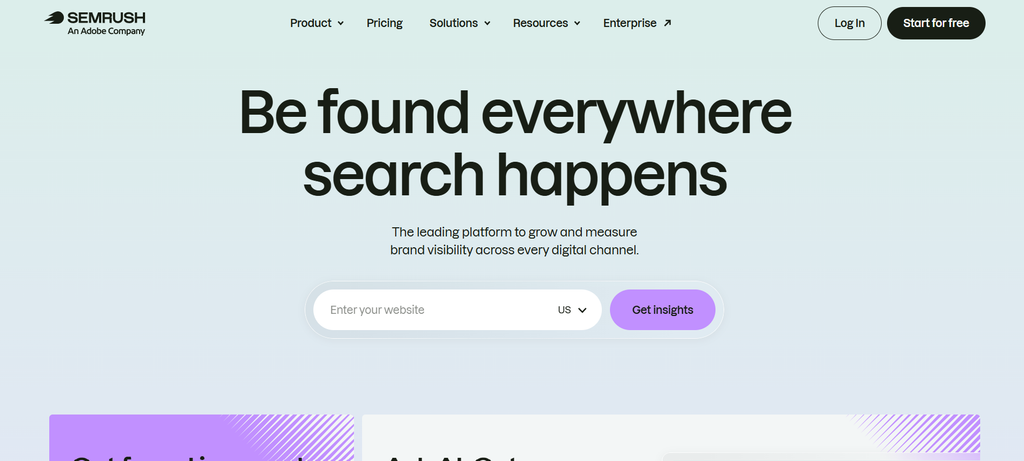
Semrush Local can be useful for franchise marketing teams already working within the broader Semrush ecosystem.
Semrush Local combines local SEO functionality with other Semrush search-marketing workflows.
Depending on the selected offering, local capabilities can include:
- Listing-related workflows
- Local rank tracking
- Review tools
- Google Business Profile management
- Reporting
Best fit: Marketing teams already using Semrush for SEO, content, keyword research, competitive analysis, or search reporting.
Consideration: Large franchises should model total costs across the portfolio and compare governance, permissions, publisher support, and integrations with platforms designed specifically around enterprise location data.
How Do You Choose the Right Franchise Listings Platform?
Choose a listings platform based on how your franchise actually operates, not simply on how many directory logos appear on the vendor’s website.
The software should support your existing ownership, approval, distribution, monitoring, and escalation workflows.
Who Actually Manages Each Listing Task?
Before comparing vendors, determine who handles:
- Holiday hours
- Phone-number changes
- Address changes
- Local photos
- Categories
- Duplicate investigations
- Publisher failures
- Ownership transfers
- Location closures
Then ask each vendor to demonstrate how its permissions and workflows support those responsibilities.
Should You Compare Listings Platforms by Publisher Count?
No. Compare platforms based on whether they support the publishers that matter for your locations, customers, countries, and industry.
A smaller network of relevant services may provide more operational value than hundreds of directories that customers rarely use.
Ask each vendor which publishers it supports for your:
- Country
- Industry
- Business category
- Location type
Publisher relevance matters more than raw publisher count.
How Should You Evaluate Duplicate-Listing Features?
Do not simply ask:
Does the platform detect duplicates?
Ask what happens after detection.
For example:
- Can administrators investigate the suspected record?
- Can corrective action be requested?
- Can progress be tracked?
- Can franchisees see cases affecting their locations?
- Who makes the final decision?
- What happens when a publisher rejects the request?
Publishers ultimately control their own records.
The software should therefore help teams manage the workflow rather than promise complete control over external publisher decisions.
What Should You Ask a Listings Vendor to Demonstrate?
Ask vendors to demonstrate exception workflows, not only successful bulk updates.
Problems reveal more about operational capability than polished submission demos.
Ask the vendor to show:
- A rejected update
- A disconnected account
- A duplicate listing
- A verification problem
- An invalid category
- A location that fails to sync
At franchise scale, exception management can matter more than the original submission process.
What Happens to Your Listings Data If You Leave a Vendor?
Data ownership and migration should be evaluated before signing a listings-management contract.
A franchise should understand which data, profiles, credentials, and platform relationships remain under its control.
Ask:
- Can all location data be exported?
- Who owns the publisher profiles?
- What credentials remain under our control?
- What happens to synchronized information?
- What happens to citations created through the service?
- How is access transferred?
Migration planning should be part of vendor evaluation, not an afterthought.
How Do Business Listings Support Franchise Local SEO?
Accurate listings support franchise local SEO by reinforcing location information across the website, search engines, maps, and other discovery platforms.
However, listings are only one part of a broader local-search strategy.
They work alongside:
- Useful location pages
- Accurate website information
- Customer reviews
- Appropriate internal linking
- Crawlable and indexable websites
- Relevant local content
- Structured data
- Clear location architecture
Do not reduce multi-location local SEO to publishing identical NAP information across as many directories as possible.
A better model is:
One real location → one authoritative internal record → one useful location page → accurate profiles on relevant platforms → controlled changes → measurable customer interactions.
This creates a cleaner system for customers, franchisees, corporate teams, search engines, maps, and other discovery platforms.
Franchise Business Listings Management Checklist
Before calling a franchise listings program mature, confirm that:
- Every active franchise has a permanent internal location ID.
- Corporate maintains an authoritative location database.
- Brand-level and local fields have defined owners.
- Naming and category standards are documented.
- Important publisher profiles have documented ownership.
- Franchisee permissions are clearly defined.
- Shared account passwords are avoided where possible.
- Google profiles follow current eligibility and representation policies.
- Relevant non-Google platforms are included.
- Duplicate monitoring is ongoing.
- Holiday and special-hours workflows exist.
- New openings have a documented launch process.
- Relocations have a migration process.
- Closures have a retirement process.
- Location pages contain useful location-specific information.
- Listings point to appropriate location pages where possible.
- Structured data matches information visible on the website.
- Failed updates have an escalation path.
- Data quality is measured at the location level.
- Software is evaluated on operational fit instead of raw directory counts.
Frequently Asked Questions
How Do You Manage Business Listings Across Multiple Franchise Locations?
Use one authoritative location database, define corporate and franchisee permissions, and distribute approved information to the platforms customers actually use.
Continuously monitor for incorrect information, duplicates, failed updates, ownership issues, openings, closures, relocations, and special-hour changes.
What Is Franchise Business Listings Management?
Franchise business listings management is the process of keeping every location’s information accurate across search engines, maps, directories, navigation platforms, and other discovery channels.
It includes creating profiles, updating information, controlling access, resolving duplicates, monitoring accuracy, and retiring closed locations.
Why Are Accurate Business Listings Important for Franchises?
Customers rely on listings for addresses, hours, phone numbers, directions, services, and other location-specific information.
Incorrect information creates poor customer experiences and makes a large franchise network more difficult to manage consistently.
Should Franchisees Manage Their Own Listings?
Franchisees should usually manage or submit information that genuinely varies locally, such as holiday hours, temporary closures, local services, and operational changes.
Corporate should generally protect brand names, category standards, URLs, profile ownership, and other network-wide information.
How Do Franchises Maintain NAP Consistency?
Maintain one authoritative record for each location and distribute approved name, address, and phone information from that source.
NAP consistency does not mean every location should have identical contact details. Each franchise should accurately represent its own real-world address and phone number.
How Should Franchises Manage Google Business Profiles?
Keep profiles under documented organizational ownership, use individual owner and manager permissions instead of shared passwords, and follow Google’s naming, category, eligibility, and verification rules.
Eligible larger networks can also use bulk-management workflows to reduce repetitive manual work.
How Do You Fix Duplicate Franchise Listings?
First confirm whether the profiles actually represent the same business.
Then determine ownership and follow the platform’s appropriate correction, merge, access, suppression, or removal process rather than automatically deleting similar records.
How Often Should Franchise Listings Be Updated?
Update a business listing whenever the underlying real-world information changes.
Separately, use ongoing monitoring to identify duplicates, failed connections, ownership problems, missing information, incorrect hours, and other exceptions.
What Information Should Be Standardized Across Franchise Listings?
Standardize brand-controlled information such as naming conventions, category policies, brand assets, descriptions, and URL structures.
Location-specific details such as addresses, phone numbers, hours, services, and accessibility information should accurately reflect each individual franchise.
How Do You Measure Franchise Listing Performance?
Measure both operational data quality and customer activity.
Track accuracy, verification, duplicates, failed updates, views, searches, calls, website visits, direction requests, and bookings, then connect those metrics with analytics, CRM, call, booking, and sales data where available.
What Is the Best Way to Manage Business Listings Across Franchise Locations?
The best approach is to design the operating model before choosing the software.
Create one authoritative record for every location, define what corporate controls, decide what franchisees can change, maintain organizational ownership of important publisher profiles, and establish repeatable workflows for location changes.
Then evaluate software against those requirements.
Synup is worth evaluating when listings management needs to work alongside agency operations, reviews, local SEO, reporting, and broader multi-location marketing.
Yext is oriented toward organizations that prioritize enterprise location-data distribution, integrations, and governance.
Uberall is relevant when corporate and local operators both participate in multi-location marketing.
BrightLocal provides a modular local SEO and listings approach that may fit smaller franchise networks and agencies.
Semrush Local is particularly relevant to marketing teams already using the wider Semrush ecosystem.
Before signing with any vendor, give every shortlisted platform the same operational test.
Ask it to demonstrate how it would:
- Change holiday hours across 200 locations
- Restrict a franchisee to the appropriate locations
- Process a relocation
- Investigate a duplicate
- Handle a rejected publisher update
- Launch a new franchise location
- Permanently close another location
- Export the full location database
These demonstrations reveal more about real operational fit than a sales page containing hundreds of directory logos.
At franchise scale, listings management is not about appearing on the largest possible number of directories.
It is about making sure customers receive accurate information about the correct franchise location wherever they reasonably look for it.