Kenect Alternatives for Car Dealerships


Synup, Podium, Birdeye, Impel, Numa, DriveCentric, and CarNow are seven Kenect alternatives for car dealerships worth comparing. Each addresses different dealership requirements, including customer texting, AI-powered lead follow-up, service scheduling, online reputation management, and CRM-connected communication.
Podium is one of the closer alternatives to Kenect for dealerships looking to consolidate customer messaging, review requests, and AI-assisted conversations. Synup is more relevant when reputation management, Google Business Profiles, and multi-location local visibility are priorities. Impel, Numa, DriveCentric, and CarNow focus on more specialized automotive sales, service, and lead-engagement workflows.
However, not every platform replaces Kenect’s entire feature set.
A dealership that depends on two-way texting, text-to-pay, and service scheduling needs a different solution from a dealer group primarily concerned with customer reviews across 20 locations.
This guide compares seven platforms using their publicly documented features, pricing transparency, integration requirements, limitations, and suitability for different dealership operations.
Quick Comparison: 7 Kenect Alternatives for Car Dealerships
| Platform | Best suited for | Main advantage | Pricing |
|---|---|---|---|
| 1. Synup | Reputation management and local visibility | Reviews, listings, and multi-location reporting | Published plans from $49/month |
| 2. Podium | Unified customer communication | Texting, shared inbox, reviews, automotive AI | Custom quote |
| 3. Birdeye | Reputation and omnichannel engagement | Reviews, messaging, surveys, listings | Custom quote |
| 4. Impel | AI-powered sales engagement | Automated lead nurturing and CRM-connected follow-up | Contact sales |
| 5. Numa | Service department communication | AI call handling, service texting, appointment workflows | Contact sales |
| 6. DriveCentric | CRM-integrated sales engagement | Native CRM communication and lead management | Custom quote |
| 7. CarNow | Website messaging and lead conversion | Website chat and automated shopper follow-up | Contact sales |
These are use-case recommendations based on publicly available product documentation, not rankings from independent software testing.
What Is Kenect, and Why Consider an Alternative?
Kenect is a dealership communication platform that combines business texting, customer engagement, review generation, payment collection, and AI-assisted conversations.
Its automotive products help dealership sales teams communicate with shoppers, service departments coordinate appointments, and employees manage conversations without relying exclusively on phone calls.
Kenect provides several capabilities relevant to automotive businesses:
- Two-way business texting: Exchange messages, photos, documents, and updates with customers.
- Review generation: Request customer feedback following purchases and service visits.
- Text-to-Pay: Send payment links for eligible deposits, invoices, and transactions.
- AI-assisted communication: Handle selected customer conversations and appointment-related tasks.
- Service communication: Automate certain reminders, scheduling activities, and follow-up.
- CRM and DMS integrations: Connect supported dealership systems with communication workflows.
Kenect’s official integration directory identifies products including Dealertrack, Tekion, Xtime, and Dealer-FX. The supported functions differ by integration.
Why do dealerships look for Kenect competitors?
Dealerships may consider alternatives for several reasons.
A dealership group might want more extensive review analytics, centralized Google Business Profile management, or corporate oversight of its local online presence.
A sales department might prioritize AI that follows up with leads, qualifies customer interest, and records activities in its CRM.
A service department might want better call handling, access to repair-order information, and integration with appointment scheduling.
Cost, contract terms, available integrations, and implementation requirements can also influence the decision.
Kenect remains relevant when its existing messaging, payment, and automotive communication capabilities match the dealership’s needs.
The objective is not to find a platform with the longest feature list. It is to identify which system handles the dealership’s important workflows most effectively.
How These Kenect Alternatives Were Evaluated
This comparison is based on publicly available vendor websites, product documentation, integration descriptions, and pricing information reviewed on November 13, 2026.
The seven platforms were selected because each overlaps with at least one important Kenect use case.
The evaluation considers seven factors:
- Customer communication: Business texting, shared inboxes, website chat, message history, and staff handoffs.
- AI capabilities: Lead follow-up, appointment assistance, automated responses, and escalation to employees.
- Automotive integrations: Published CRM, DMS, and service-scheduling connectivity.
- Reputation management: Review invitations, monitoring, responses, and location-specific reporting.
- Multi-location management: Corporate visibility, permissions, reporting, and centralized administration.
- Pricing transparency: Published subscription rates, custom quotations, and possible additional costs.
- Operational suitability: Whether the platform fits sales, service, marketing, or dealership-wide requirements.
Methodology limitation: This is a documentation-based editorial comparison. It does not represent hands-on testing, customer interviews, independent performance benchmarking, or an assessment of vendor support quality.
Specific capabilities may depend on the purchased module, connected systems, market, and contract. Dealerships should validate these during demonstrations.
Kenect Alternatives for Car Dealerships in 2026
1. Synup — Best for Dealership Reputation Management and Local Visibility
Best for: Independent dealerships and multi-location automotive groups that prioritize customer reviews, business listings, and local search visibility.
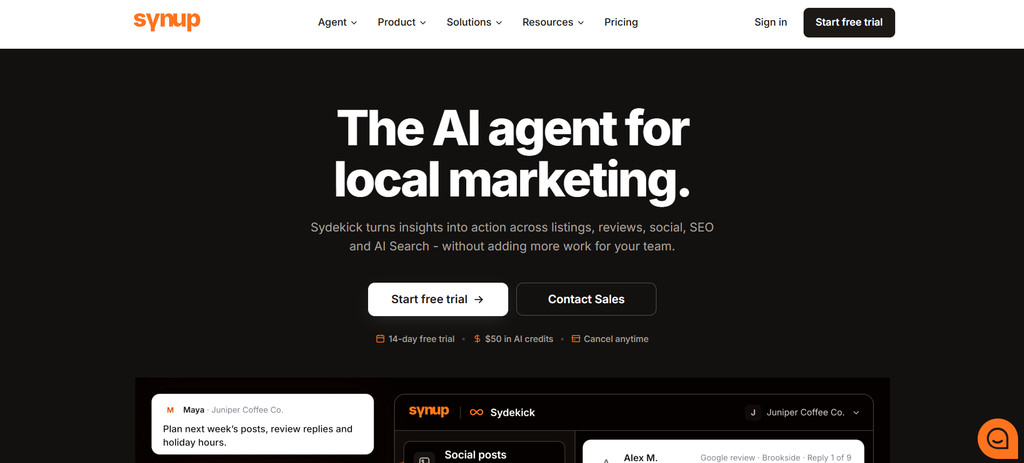
Synup is a local marketing and reputation management platform designed to help businesses maintain accurate online information, manage customer reviews, and monitor visibility across locations.
For automotive dealerships, Synup is relevant when the main challenge is maintaining a consistent digital presence rather than replacing an operational customer texting system.
Dealership groups can use its centralized tools to manage business profiles, request reviews, respond to customer feedback, and monitor local marketing performance.
Key features
- Centralized business listings management across supported directories.
- Review monitoring and response management.
- SMS and email review invitation campaigns.
- AI-assisted review and marketing workflows.
- Local search visibility and reporting tools.
- Multi-location management and reporting.
Where Synup fits dealership operations
Consider a dealership group operating several franchise and used-car locations.
Each store may maintain separate Google Business Profiles, receive reviews from customers, and have different employees responsible for replying.
Without centralized management, regional marketing teams can struggle to maintain consistent information and monitor unresolved feedback.
Synup offers a way to coordinate these activities.
Its documentation describes SMS and email review invitations, contact imports, scheduling, and automated review acquisition through supported integrations.
For dealership groups specifically evaluating business profiles, see this guide to listing management software for car dealer groups.
Limitations
Synup is not established as a complete replacement for Kenect’s dealership communication platform.
Although it supports SMS review requests, this should not be confused with a full operational texting inbox connected to dealership service records.
Dealerships requiring two-way customer conversations, automated repair updates, service scheduling, or text-to-pay should verify whether Synup supports those exact workflows.
An additional automotive communication system may still be necessary.
Pricing
Synup publishes the following monthly subscription plans:
| Plan | Location capacity | Monthly price |
|---|---|---|
| Solo | 1 location | $49 |
| Premium | Up to 10 locations | $299 |
| Pro | Up to 25 locations | $499 |
| Scale | Up to 50 locations | $899 |
| Enterprise | More than 50 locations | Custom |
The published plans have different usage-credit allowances and AI processing capacities. Additional credits may be required depending on usage, so the subscription price should not automatically be treated as the complete operating cost.
Choose Synup if: Your dealership primarily needs reviews, local listings, and centralized digital presence management.
2. Podium — Best for Unified Dealership Texting and Customer Communication
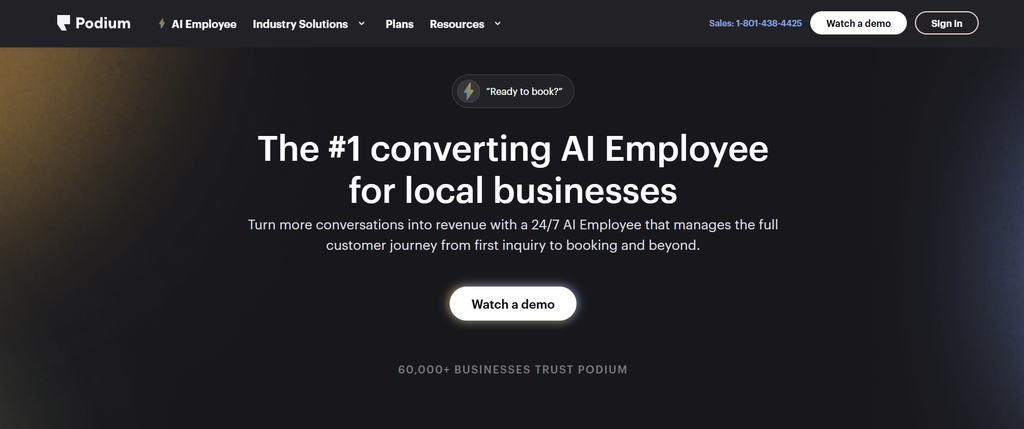
Best for: Dealerships seeking a broad alternative to Kenect’s customer texting, review generation, and AI-assisted communication features.
Podium is a customer engagement platform that brings business messaging, review requests, and AI-assisted conversations into a centralized environment.
Its automotive offering supports both sales and service communication.
Podium is relevant to dealerships that want staff to manage customer conversations from multiple channels without switching between separate applications.
Its automotive plans describe a core communication platform alongside Sales AI, Service AI, and marketing-related options.
Key features
- Unified inbox for calls, texts, chats, emails, and form inquiries.
- Automated review invitation workflows.
- AI-assisted customer engagement and follow-up.
- Sales lead response and appointment-related conversations.
- Service AI options for call handling and scheduling.
- Customer engagement reporting and campaign tools.
Where Podium fits dealership operations
A shopper might contact a dealership through its website to ask about a vehicle, receive a follow-up message, and later arrange a test drive.
When these conversations occur across different systems, salespeople can lose important context.
Podium’s centralized messaging approach is intended to help teams manage these interactions more consistently.
Its automotive Sales AI offering addresses lead engagement and follow-up, while Service AI options include voice-based scheduling, text scheduling, appointment reminders, and customer re-engagement.
These capabilities make Podium one of the more directly comparable Kenect competitors for dealerships seeking a broader communication platform.
Limitations
Podium’s available capabilities depend on the selected products and contract.
Dealerships should confirm which sales, service, and AI features are included in their proposal.
They should also verify how Podium integrates with their existing CRM, DMS, and appointment systems.
For example, logging a customer conversation inside a CRM is not the same as automatically updating a service appointment or repair order.
A dealership requiring only basic messaging may not need the full range of automotive AI capabilities.
Pricing
Podium’s automotive website uses customized quotations.
Request an itemized proposal that separates the core communication platform, Sales AI, Service AI, marketing functionality, implementation, and messaging usage.
Choose Podium if: You want customer texting, centralized conversations, reviews, and automotive AI engagement within a connected platform.
3. Birdeye — Best for Reputation Management and Omnichannel Customer Engagement
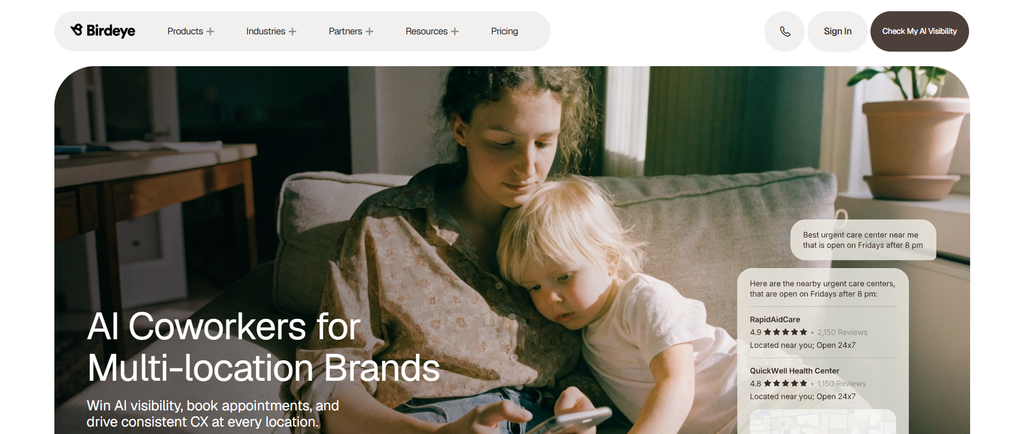
Best for: Dealerships and automotive groups that want customer communication, online reputation management, surveys, and business listings tools.
Birdeye is a customer experience platform combining reputation management, messaging, customer feedback, and local marketing capabilities.
Its automotive offering includes review management, messaging, AI chatbots, surveys, listings, and digital payment options.
Compared with a narrower texting tool, Birdeye addresses a broader set of customer engagement and marketing requirements.
This makes it particularly relevant for dealership groups that want to monitor both customer conversations and public feedback.
Key features
- Automated review requests and response management.
- Unified messaging across text, webchat, email, and social channels.
- AI-assisted replies and conversation summaries.
- Customer surveys and feedback analysis.
- Business listings and multi-location reputation management.
- Digital payment capabilities and customer engagement tools.
Where Birdeye fits dealership operations
A dealership can use Birdeye to request feedback following service appointments, monitor reviews, and manage customer messages through a centralized inbox.
At group level, marketing managers can identify common feedback themes and compare reputation performance across locations.
For example, recurring complaints about appointment communication may reveal an operational issue that needs management attention.
Birdeye’s combination of surveys and online reviews can help dealerships examine feedback from multiple sources instead of relying exclusively on Google ratings.
For a more reputation-focused comparison, see these Widewail alternatives for car dealerships.
Limitations
Birdeye’s broad feature set does not guarantee that every automotive-specific workflow is supported.
Dealerships should verify whether a proposed integration can automatically create appointments, update lead records, retrieve repair-order information, or synchronize conversations.
Some functions may require separate products or configuration.
Organizations focused primarily on service scheduling or deep CRM automation should compare Birdeye with specialized automotive platforms.
Pricing
Birdeye provides customized pricing based on the products, location count, and requirements.
Request separate details for reviews, messaging, listings, AI tools, payments, onboarding, and integrations.
Choose Birdeye if: Your dealership wants customer messaging alongside broader reputation management and customer feedback capabilities.
4. Impel — Best for AI-Powered Automotive Lead Follow-Up
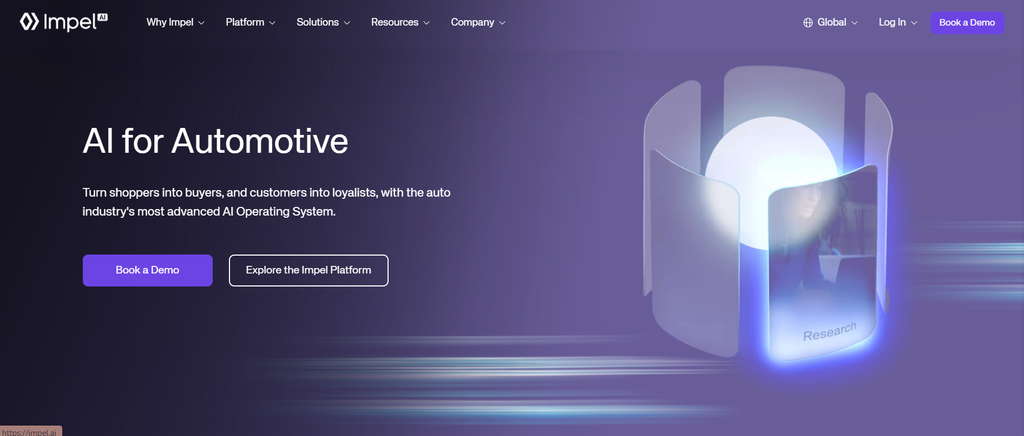
Best for: Dealership sales departments and BDC teams prioritizing automated customer engagement, lead nurturing, and appointment coordination.
Impel develops AI-powered solutions specifically for the automotive industry.
Its Sales AI product focuses on maintaining customer conversations, responding to inquiries, nurturing prospective buyers, and coordinating appointments.
Impel also offers related AI products for chat, voice, service, marketing, and automotive merchandising.
For dealerships replacing Kenect, Impel is relevant when the main requirement is more advanced sales automation rather than general business texting.
Key features
- Automated sales lead engagement and nurturing.
- AI-assisted customer conversations.
- SMS and email follow-up through supported workflows.
- CRM-connected lead and appointment management.
- Inventory-aware sales conversations.
- Lead prioritization and dealership reporting.
Where Impel fits dealership operations
Imagine a dealership receiving leads from its website, online vehicle marketplaces, and advertising campaigns.
The BDC may respond promptly to new inquiries but struggle to maintain consistent follow-up with prospects who have not yet scheduled appointments.
Impel’s Sales AI is designed to automate portions of this engagement while working with existing dealership systems.
Its official documentation describes CRM and scheduler integration, including synchronization of conversations, lead statuses, and appointment information.
This may help dealerships handle ongoing customer conversations without requiring employees to manually send every follow-up.
Limitations
Impel is not primarily a business listings or reputation management platform.
Dealerships that use Kenect mainly for review invitations, Google reviews, or text-based payments may still need other tools.
AI-driven lead engagement also requires monitoring.
Dealerships should establish clear rules for inventory availability, appointment confirmation, financing questions, and transferring conversations to staff.
Automated responses should not make unsupported promises about vehicle availability, pricing, or financing terms.
Pricing
Impel does not provide a standardized public subscription rate for the Sales AI configuration described here.
Dealerships should request a quote showing which sales, service, voice, and other AI products are included.
Choose Impel if: Your primary goal is automating automotive lead conversations, follow-up, and appointment-related workflows.
5. Numa — Best for Service Department Communication and AI Call Handling
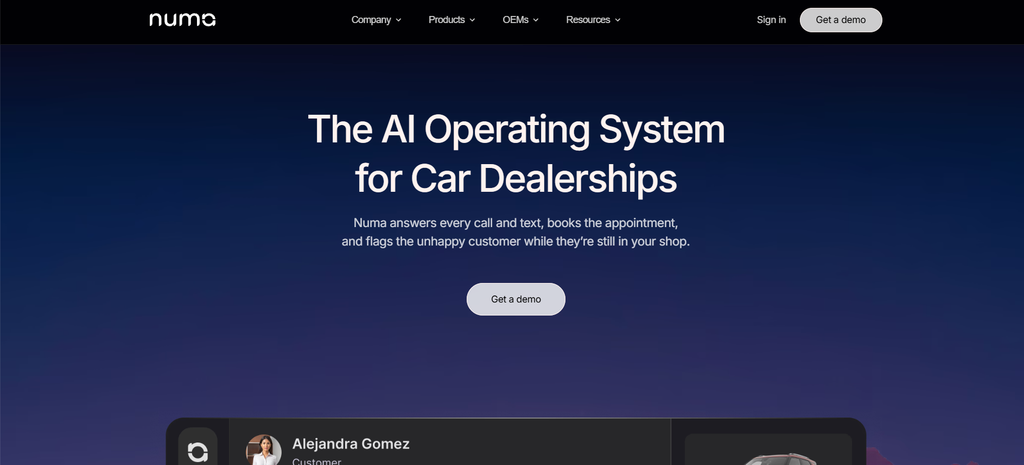
Best for: Franchise dealerships and dealership groups seeking better service calls, appointment management, customer texting, and repair-status communication.
Numa provides automotive-focused AI and communication products, with a strong emphasis on dealership service operations.
Its Smart Inbox consolidates customer calls, voicemails, and text messages into shared conversations.
It can also display relevant repair-order information from supported dealership systems.
Numa offers related products for AI-assisted call handling, appointment management, and other dealership communication needs.
Key features
- Shared inbox for service calls, voicemails, and text messages.
- AI-powered call handling.
- Appointment scheduling assistance.
- Repair-order context from supported DMS integrations.
- AI-drafted customer replies.
- Conversation ownership, follow-up tracking, and escalation.
Where Numa fits dealership operations
Consider a customer asking when a vehicle will be ready after a repair.
A service advisor may otherwise need to check a separate DMS, review the repair status, and contact the customer manually.
Numa’s Smart Inbox is designed to place customer communication beside relevant repair-order details.
Its system can help staff identify missed calls, overdue replies, and conversations requiring attention.
For dealerships struggling with unanswered service calls or inconsistent repair-status communication, this is a more specialized solution than a general-purpose customer messaging tool.
Its service-oriented design is particularly useful when fixed operations are the main reason for considering a Kenect replacement.
Limitations
Numa should not automatically be considered a complete replacement for a dealership’s reputation management or local listings software.
Its stronger focus is automotive customer operations.
Dealerships need to verify supported DMS versions, appointment schedulers, telephone systems, and permissions.
They should also test how the system behaves when repair-order information is unavailable, inaccurate, or delayed.
Pricing
Numa uses a demonstration and sales-led purchasing process rather than a standardized public price for the configuration discussed here.
Request costs for each rooftop, selected products, call usage, integrations, onboarding, and support.
Choose Numa if: Service calls, missed customer inquiries, appointment handling, and repair communication are your main priorities.
6. DriveCentric — Best for CRM-Integrated Dealership Communication

Best for: Dealerships that want customer texting, lead management, and sales engagement inside an automotive CRM.
DriveCentric provides an automotive CRM and customer engagement platform.
Rather than operating solely as a separate messaging application, DriveCentric connects communication with dealership customer records, lead activities, and sales workflows.
Its platform supports texting, email, video messaging, automation, and AI-assisted customer engagement.
In August 2026, DriveCentric also announced its Service Engagement Hub, extending its engagement platform into fixed operations.
Key features
- Dealership texting within the CRM.
- Centralized customer communication histories.
- Lead management and sales pipeline workflows.
- Personalized video messaging.
- AI-assisted communication and automation options.
- Mobile access and dealership performance reporting.
Where DriveCentric fits dealership operations
A salesperson may receive a new lead while another employee has already contacted the same shopper.
When communication is stored separately from the CRM, customer information can become fragmented.
DriveCentric’s approach brings customer engagement into the CRM environment.
Salespeople can review previous interactions, manage follow-up, and continue conversations using customer records.
This is particularly relevant when a dealership is considering a broader CRM change and wants to reduce dependence on multiple communication tools.
Its service expansion also gives dealerships a reason to investigate whether sales and fixed-operations engagement can be coordinated within one platform.
Limitations
DriveCentric represents a broader software decision than replacing a standalone texting application.
Changing CRM systems may involve customer data migration, lead workflow changes, reporting adjustments, integration work, and employee training.
Dealerships satisfied with their current CRM should compare the benefits of a full CRM transition with those of adding a separate communication tool.
Optional functionality should also be confirmed rather than assumed to be included in the core subscription.
Pricing
DriveCentric states that its pricing is based on rooftop count and units sold, with additional products available.
Its published information describes annual or multi-year agreements billed monthly.
Request a quotation covering the core CRM, required add-ons, implementation, integration requirements, and contract terms.
Choose DriveCentric if: You want customer texting and lead engagement managed directly within your dealership CRM.
7. CarNow — Best for Website Messaging and Lead Conversion
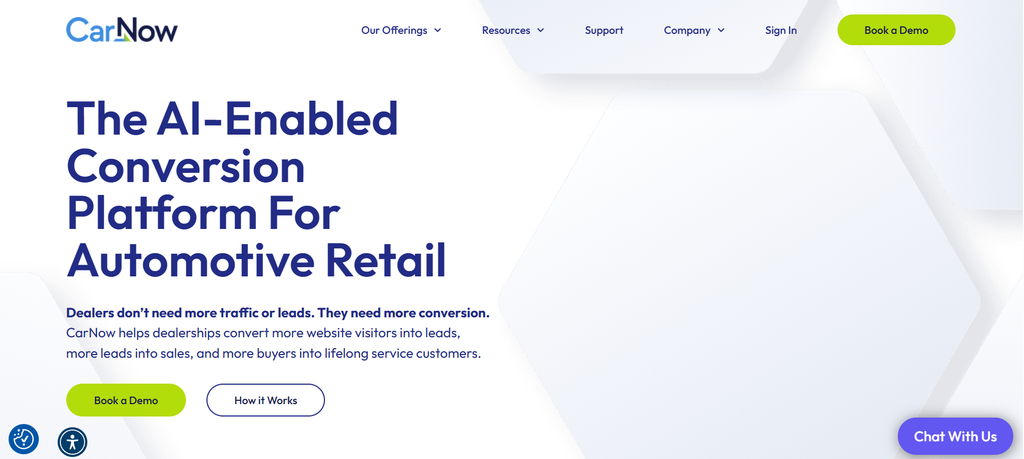
Best for: Dealerships seeking to improve website conversations, online shopper engagement, and automated sales follow-up.
CarNow provides dealership-focused digital retailing and customer engagement products.
Its Chat & Messaging offering helps dealerships communicate with website visitors, while ReConnect supports automated lead follow-up connected to existing CRM systems.
CarNow also offers digital retailing solutions that support online vehicle shopping.
For dealerships evaluating Kenect alternatives, CarNow is particularly relevant when website engagement and lead conversion are more important than general reputation management.
Key features
- Dealership website chat and messaging.
- Human-assisted engagement and AI-supported options.
- CRM-connected lead follow-up.
- Automated SMS and email campaigns.
- Appointment-related workflows.
- Customer engagement connected to online vehicle shopping.
Where CarNow fits dealership operations
A customer browsing used vehicles might have questions about availability, trade-in options, or financing.
Without a responsive communication process, that shopper may leave without contacting the dealership.
CarNow’s website messaging products are designed to engage shoppers during this research process.
Its ReConnect offering extends communication beyond the initial inquiry through automated campaigns, lead organization, SMS workflows, and appointment-related capabilities.
This combination is relevant to dealerships that want better continuity between website conversations and sales follow-up.
Limitations
CarNow is not a complete substitute for every Kenect capability.
Its focus is primarily website engagement, lead management, and digital retailing.
A dealership requiring extensive review management, multi-location listings, or comprehensive service texting may need additional products.
It is also important to confirm which AI and communication capabilities are included in each module.
Pricing
CarNow provides demonstrations and customized quotations rather than a standardized public subscription price.
Ask for separate pricing for Chat & Messaging, ReConnect, digital retailing products, CRM connections, and onboarding.
Choose CarNow if: Your dealership wants to improve conversations with online vehicle shoppers and maintain lead follow-up.
Kenect vs Podium vs Synup: What Is the Difference?
Kenect, Podium, and Synup are useful to compare because they overlap in selected areas but address different primary requirements.
| Requirement | Kenect | Podium | Synup |
|---|---|---|---|
| Two-way customer texting | Core capability | Core capability | Equivalent operational workflow not established |
| SMS review requests | Supported | Supported | Supported |
| Review monitoring | Supported | Supported | Supported |
| Business listings management | Not primary positioning | Verify required scope | Core capability |
| AI customer conversations | Automotive-specific options | Sales and service AI options | AI-assisted marketing; operational messaging scope requires confirmation |
| Text-based payments | Supported | Payment capabilities require package confirmation | Not established as a core Kenect replacement |
| Automotive CRM/DMS workflows | Published integrations | Confirm required connections | Confirm dealership-specific requirements |
| Multi-location reputation management | Available reputation workflows | Available | Central capability |
Kenect vs Podium
Podium is one of the more direct alternatives for dealerships looking for a unified messaging platform.
Both platforms address customer communication and reviews, although the exact automotive integrations, AI products, and payment workflows may differ.
A dealership comparing them should demonstrate its sales and service processes using the actual CRM and DMS it operates.
Kenect vs Synup
Synup is more appropriate when the dealership’s main needs involve online reputation, local business information, and digital visibility.
Kenect is more directly focused on operational communication through texting, payments, scheduling, and dealership integrations.
A dealer group may use Synup alongside a dedicated messaging platform instead of replacing Kenect with Synup alone.
Podium vs Synup
Podium is the stronger candidate when unified customer messaging and conversational AI are the primary requirements.
Synup is more closely aligned with listings accuracy, review administration, and local marketing across locations.
The two should not be compared solely on monthly subscription price because their operational roles differ.
How Much Do Kenect Alternatives Cost?
Dealership software pricing varies considerably because the products in this comparison are not identical.
As of November 13, 2026, Synup publishes standard monthly subscription rates. Most of the other platforms use dealership-specific quotations.
Kenect also requires a quotation for its dealership configuration.
The most affordable published plan is not necessarily the least expensive complete solution.
For example, a dealership might purchase a reputation platform at a lower monthly price but still need separate texting, AI scheduling, and payment software.
Conversely, a more expensive automotive CRM may replace tools the dealership already pays for.
What should a dealership include in its cost comparison?
Calculate the full annual cost of the required configuration, including:
- Subscription fees and location charges.
- AI features and optional modules.
- SMS, phone, and message-volume charges.
- CRM, DMS, and scheduling integrations.
- Onboarding, migration, and employee training.
- Customer support and implementation services.
- Contract duration, renewal conditions, and cancellation terms.
For a dealership group with five locations, calculate the cost of operating the complete workflow across all five rooftops.
Also determine whether each department needs a separate subscription or whether one platform can serve multiple teams.
A realistic comparison should include the cost of software being replaced, not simply the price of the proposed platform.
How to Choose the Right Kenect Alternative
The most effective selection process starts with identifying the dealership’s operational problem.
A product demonstration should then prove that the proposed solution can handle that problem using real dealership workflows.
Match the platform to your priority
| Main requirement | Platforms to evaluate first |
|---|---|
| Google reviews and local visibility | Synup, Birdeye |
| Centralized customer texting | Podium, Birdeye |
| Automotive AI lead nurturing | Impel, DriveCentric |
| Service calls and repair updates | Numa, Podium |
| CRM-native sales communication | DriveCentric |
| Website chat and shopper engagement | CarNow |
| Multi-location reputation management | Synup, Birdeye |
These recommendations are starting points. They do not establish that each platform supports every related function.
For additional reputation management context, see this comparison of Chatmeter vs Birdeye vs Synup for auto service chains.
1. Confirm automotive integration capabilities
Many dealership software platforms advertise CRM and DMS integrations.
However, the word “integration” can describe very different capabilities.
One integration might import contact details. Another might create appointments, update customer records, or trigger messages based on repair-order events.
Ask each vendor to demonstrate:
- Customer record synchronization.
- Conversation logging.
- Lead status updates.
- Appointment creation and modification.
- Repair-order access or updates.
- Automated messaging triggers.
Confirm whether each action works in one direction or both, and whether additional middleware or licensing is required.
2. Test AI with actual dealership situations
Automotive AI should be evaluated using the types of conversations dealership employees handle every day.
Ask the vendor to demonstrate what happens when:
- A shopper asks whether a specific vehicle is available.
- A customer requests a service appointment change.
- A customer complains that a repair is taking longer than expected.
- A buyer asks about financing eligibility.
- A customer asks to speak directly with an employee.
Evaluate whether responses are accurate, whether the system recognizes limitations, and how it transfers conversations to staff.
The goal is not to measure how frequently the AI responds. It is to determine whether it provides useful, appropriate information while maintaining human oversight.
3. Test communication continuity
Customers often move between websites, calls, text messages, and in-person conversations.
Ask whether dealership employees can access the relevant interaction history and whether conversations can be assigned or transferred between departments.
A system that centralizes messages but does not connect them with customer records may still leave important work for employees.
4. Match reporting to dealership structure
Single-location dealerships may value straightforward workflows and minimal administration.
Multi-rooftop groups often need corporate access, location-level permissions, regional reporting, and standardized policies.
Ask whether managers can identify unanswered messages, delayed follow-up, unresolved complaints, and performance differences between stores.
5. Include employees in demonstrations
Software selection should not depend entirely on a sales presentation to management.
Have sales representatives, BDC agents, service advisors, and location managers test the workflows they would use.
Their feedback can reveal operational friction that is difficult to identify from a feature checklist.
A Practical Scorecard for Evaluating Vendors
Dealerships can use a simple scorecard during demonstrations to compare whether products satisfy the same requirements.
Assign each requirement a score:
- 0: The vendor cannot demonstrate the required capability.
- 1: The capability is partially supported or requires additional configuration.
- 2: The capability is demonstrated successfully using the dealership’s intended workflow.
| Evaluation criterion | What to verify |
|---|---|
| Customer messaging | Staff can send, receive, assign, and review conversations |
| CRM/DMS integration | Required records and actions synchronize correctly |
| AI reliability | Responses are accurate, with appropriate escalation |
| Service or sales workflows | Key department-specific tasks are completed |
| Multi-location administration | Permissions and reporting meet management requirements |
| Total cost | All required modules, integrations, and usage charges are included |
This is a suggested evaluation method, not a set of tested vendor scores.
Before comparing totals, identify any non-negotiable requirements. A platform that cannot support a necessary DMS integration should not win simply because it offers several unrelated features.
Dealerships can also run a limited pilot with defined success criteria, such as message handling, staff adoption, and successful completion of required workflows.
How to Migrate From Kenect to Another Platform
Replacing Kenect requires planning to prevent disruption to customer communication.
A controlled migration helps protect existing conversations, customer records, and automated workflows.
Step 1: Audit current Kenect usage
Document how sales, service, and administrative employees use the platform.
Identify active texting workflows, review campaigns, webchat, payment collection, AI communication, and appointment-related features.
Step 2: Review existing integrations
List connected CRMs, DMS platforms, service schedulers, and other systems.
Identify which messages or actions depend on each connection.
This helps determine which functions must be rebuilt in the replacement platform.
Step 3: Confirm data export and retention
Ask Kenect and the prospective vendor what information can be exported, imported, or retained.
Potentially relevant records include contacts, conversation histories, consent records, templates, and reporting data.
Do not assume that every type of record can be transferred or that historical conversations will appear in the replacement software.
Step 4: Review dealership phone numbers
Determine whether existing customer-facing numbers can be retained or reconfigured.
Discuss number portability, text enablement, required messaging registration, and service interruption risks with the relevant providers.
Step 5: Rebuild workflows and permissions
Configure customer communication templates, review invitations, reminders, staff permissions, and escalation rules.
Confirm that consent and opt-out information is handled appropriately before automated messaging begins.
Step 6: Run a limited pilot
Start with a small department or location where practical.
Test inbound and outbound messages, CRM synchronization, customer appointments, review requests, and staff handoffs.
Resolve problems before deploying the platform across the full dealership group.
Step 7: Monitor the new system
After migration, review message delivery, unanswered inquiries, opt-outs, failed integrations, appointment workflows, and employee usage.
Retain required historical records according to applicable obligations and documented retention policies.
Compliance Considerations for Dealership Communication Software
Automated dealership messaging introduces legal, privacy, and platform-policy requirements.
Dealerships should evaluate these before implementing review requests, marketing campaigns, or AI-driven customer communication.
US texting consent and opt-outs
The Telephone Consumer Protection Act (TCPA), relevant FCC rules, and other applicable requirements can affect dealership texting and automated communications.
The wireless industry’s CTIA Messaging Principles and Best Practices provide voluntary guidance on consent, identification, and handling unwanted messages.
The FCC published a final rule on consent revocation on October 26, 2026, with an effective date of November 25, 2026.
The rule modifies how callers may handle consent revocation, including permitting certain revocation requests for informational calls or texts to apply to a specific category of informational communications rather than every category.
It also addresses designated automated methods of revocation. Different treatment applies to communications containing advertising or telemarketing.
Dealerships should not interpret these provisions as permission to ignore marketing opt-outs or send unsolicited promotional texts.
Because the November 25 effective date is still upcoming as of this article’s publication date, compliance procedures should be reviewed against the rules applicable when campaigns operate.
Review generation and customer feedback
The FTC’s Consumer Reviews and Testimonials Rule guidance addresses prohibited practices involving fake reviews, deceptive testimonials, and certain review incentives.
Google’s policies on fake engagement also prohibit incentivized reviews and rating manipulation.
Dealerships should request genuine feedback without screening customers based on whether they are likely to leave positive reviews.
Google’s guidance for requesting customer reviews encourages authentic customer experiences and balanced feedback.
Review management software should support these practices rather than manipulate public ratings.
Customer information and security
Dealerships handling covered customer financial information should assess relevant information-security requirements.
The FTC’s automobile dealership Safeguards Rule FAQs explain how the rule applies to many dealerships that finance or lease vehicles.
When evaluating communication software, confirm access controls, data retention options, vendor responsibilities, and how sensitive information is handled.
AI conversations should not disclose financing, payment, or personal information to unauthorized users.
Canadian dealership requirements
Canadian dealerships should also consider Canada’s Anti-Spam Legislation (CASL).
According to the CRTC’s CASL guidance, covered commercial electronic messages generally involve consent, sender identification, and unsubscribe requirements.
CASL can apply to SMS messages, although applicability and exemptions depend on the circumstances.
Dealerships operating in both the United States and Canada should review their campaigns separately for each market.
These compliance considerations are general information, not a substitute for legal advice.
Frequently Asked Questions
What are the best Kenect alternatives for car dealerships?
Seven platforms worth evaluating are Synup, Podium, Birdeye, Impel, Numa, DriveCentric, and CarNow.
Podium is a close option for broad dealership messaging. Synup focuses on reviews and local visibility, Birdeye combines messaging with reputation management, and the other platforms address specialized automotive sales, service, CRM, or website communication requirements.
The right choice depends on which Kenect workflows need to be replaced.
Is Podium better than Kenect for dealerships?
Podium may be a better fit for dealerships seeking centralized messaging, customer reviews, and the automotive AI products available in its selected package.
Kenect remains relevant when its existing texting, payment, scheduling, and integration workflows meet operational requirements.
Neither platform can be declared universally better without comparing the dealership’s specific use cases, required integrations, and full costs.
Can Synup replace Kenect?
Synup can address some reputation-related workflows, including review requests, monitoring, and response management.
It also offers business listings and local marketing features beyond Kenect’s primary communication focus.
However, Synup should not be assumed to replace Kenect’s complete two-way dealership texting, text-to-pay, service scheduling, or DMS-connected communication functionality.
A dealership may need Synup alongside a specialized automotive messaging platform.
Which Kenect alternatives offer AI-powered dealership messaging?
Podium, Birdeye, Impel, Numa, DriveCentric, and CarNow publish AI-supported communication or engagement capabilities.
Their focus differs. Impel emphasizes sales engagement, Numa focuses heavily on service operations, and Podium offers automotive sales and service AI.
Synup provides AI-assisted reputation and local marketing capabilities, but these are not necessarily equivalent to automotive conversational AI.
Which alternative is best for service departments?
Numa and Podium are useful starting points when service calls, appointment handling, and customer communication are the main priorities.
Numa offers service-oriented tools such as repair-order context within its Smart Inbox.
Podium offers service-focused AI scheduling and communication options.
Kenect should also remain in the comparison if its current integrations already support the dealership’s required service workflows.
What is the cheapest Kenect alternative?
Synup publishes plans starting at $49 per month, but that represents a local marketing and reputation management subscription rather than a verified replacement for all of Kenect’s dealership messaging capabilities.
Most of the more directly comparable communication platforms require customized pricing.
The lowest total cost depends on the required features, number of rooftops, integrations, and existing subscriptions.
Final Verdict: Which Kenect Alternative Should You Choose?
The right Kenect alternative depends on what your dealership needs the software to accomplish.
Synup is worth evaluating for reputation management, review generation, business listings, and multi-location local visibility. Podium is a more direct option for unified customer communication and automotive AI, while Birdeye combines messaging with broader reputation and customer experience tools.
For specialized dealership requirements, Impel emphasizes AI sales follow-up, Numa focuses on service communication, DriveCentric connects engagement with its automotive CRM, and CarNow supports website conversations and lead nurturing.
Before switching, shortlist two or three relevant platforms and ask each vendor to demonstrate your actual dealership workflows.
Verify CRM and DMS compatibility, test staff usability, confirm compliance-related capabilities, and compare complete annual costs.
The strongest choice is the platform that solves your dealership’s operational problems without adding unnecessary complexity or duplicating software you already use.