Alternatives to Moz for Local Listing Management in 2026

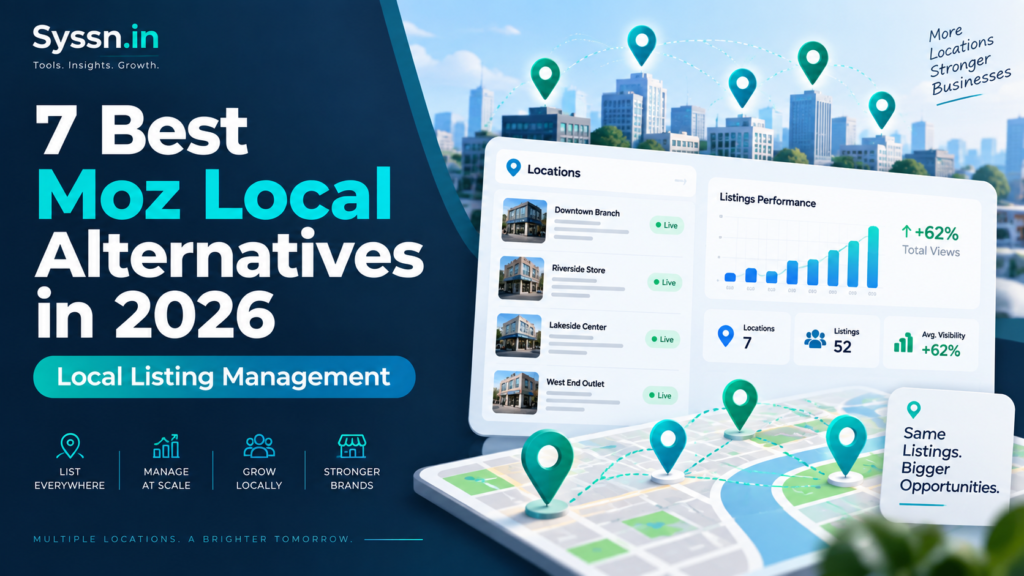
If you are looking for a Moz Local alternative in 2026, I would start with Synup, BrightLocal, Yext, Uberall, Semrush Local, Birdeye, and Whitespark.
That sounds straightforward. In practice, these products are quite different.
Synup makes more sense for agencies and growing multi-location businesses. BrightLocal is stronger when local SEO reporting and citation work matter as much as listings. Yext and Uberall are built for larger location networks. Semrush Local is an obvious candidate if your SEO team already lives inside Semrush. Birdeye connects listings closely with reputation management. Whitespark takes a more manual, project-based approach to citation cleanup.
So the real question is not, “Which tool is better than Moz?”
It is, “What are you actually trying to replace?”
That distinction matters more than the number of directories in a vendor’s sales deck.
Best Moz Local alternatives in 2026 at a glance
| Platform | Best suited to | Listings approach | Reviews | Local search tools | Pricing approach |
|---|---|---|---|---|---|
| Synup | Agencies, resellers, multi-location brands | 100+ publishers, bulk workflows, duplicate handling | Yes | Local SEO, rankings, AEO | Based on locations and capabilities |
| BrightLocal | SMBs and local SEO agencies | Active Sync plus manual Citation Builder | Yes on Grow | Strong rank tracking and audits | Manage from $54/month for 1 location |
| Yext | Enterprises and large franchises | 200+ direct publisher integrations | Yes | Listings, Pages, analytics | Custom quote |
| Uberall | Distributed multi-location brands | 150+ platforms, bulk and API workflows | Yes | Local visibility and AI-search tools | Request pricing |
| Semrush Local | Existing Semrush and SEO teams | 70+ US directories on Local Pro | Yes | Map Rank Tracker, GBP tools | Pro $60/location/month billed annually |
| Birdeye | Reputation-led multi-location companies | Major publisher integrations and duplicate management | Extensive | AI-search and location reporting | Custom pricing |
| Whitespark | Citation cleanup and one-time projects | Manual citation building and cleanup | Separate product | Citation and rank tools | Listings packages from $399/location |
Pricing and product details in this comparison were checked against the information supplied for September 2026. Vendors can change prices, directory coverage, packaging, and features, so I would always confirm the final terms before signing anything.
What are Moz alternatives for local listing management?
A Moz Local alternative is software or a managed service that helps you keep business-location information accurate across places such as Google, Apple Maps, Bing, Facebook, review platforms, directories, and navigation services.
That includes the obvious information:
- Business name
- Address
- Phone number
- Opening hours
- Website
- Business categories
It can also include services, photos, menus, attributes, booking links, descriptions, temporary hours, and location-specific URLs.
The important part is not detecting bad information. Most local SEO tools can tell you something is wrong.
The harder part is fixing it reliably.
Imagine a dental practice with one office. It may only need to keep five or ten important profiles accurate.
Now imagine a retailer with 500 stores. One person cannot manually update holiday hours, phone numbers, closures, services, new openings, and duplicate profiles across every location and directory.
At that point, listing management becomes an operations problem.
You need permissions. Bulk editing. Approval rules. APIs. Duplicate handling. Reporting. Sometimes you need regional managers to make local updates without giving them access to the entire network.
This is where the differences between Moz Local and its alternatives become much clearer.
Moz Local itself remains one of the more accessible products in this market. The information provided for this comparison lists more than 90 directory connections, review monitoring, data-health reporting, local grid tracking, and additional review and social features on higher plans.
Pricing is listed at $20 per month for Lite, $30 for Preferred, and $40 for Elite, with lower effective monthly pricing on annual plans.
That is difficult to beat if your needs are fairly simple.
The case for switching usually appears when your workflow becomes more complicated than the product.
What has changed in local listing management in 2026?
For years, local listing management was mostly discussed in terms of NAP consistency.
Name. Address. Phone number.
That still matters. But customers now discover businesses in more places, and software vendors are responding to that.
Search results are one part of the picture. Maps, review platforms, navigation services, voice tools, and AI-generated answers also depend on structured business information.
Several companies in this comparison now talk about listings in that broader context.
Synup has introduced Sydekick, an AI agent designed to work across listings, reviews, social publishing, local SEO, reporting, and AI-search visibility.
Yext says it works with more than 200 direct publisher integrations and structures business information so it can feed publishers and AI systems.
Uberall supports more than 150 platforms and increasingly connects traditional location management with AI-search products.
Birdeye has introduced listing optimization agents that monitor profiles and recommend changes.
Semrush Local combines listing management with an AI agent that can help with Google Business Profile work.
Yext also released research in April 2026 based on 265,000 AI citations in retail-related queries. The company reported that roughly 87% of sources in its dataset came from brand-controlled websites, verified directories, and structured listings.
That number deserves some caution. It comes from Yext, and the research focused on retail. I would not treat it as proof that every industry behaves the same way.
Still, the broader direction is interesting.
Local listing data is becoming useful in places where nobody would have used the phrase “local listing” a few years ago.
That makes data quality more important, but it also makes software comparisons harder. A tool that manages directory profiles well may still be the right choice even if it has fewer AI features than a competitor.
The sensible question remains the same: does the product solve the work your team actually has?
1. Synup
Best for: Agencies, resellers, franchises, and growing multi-location brands
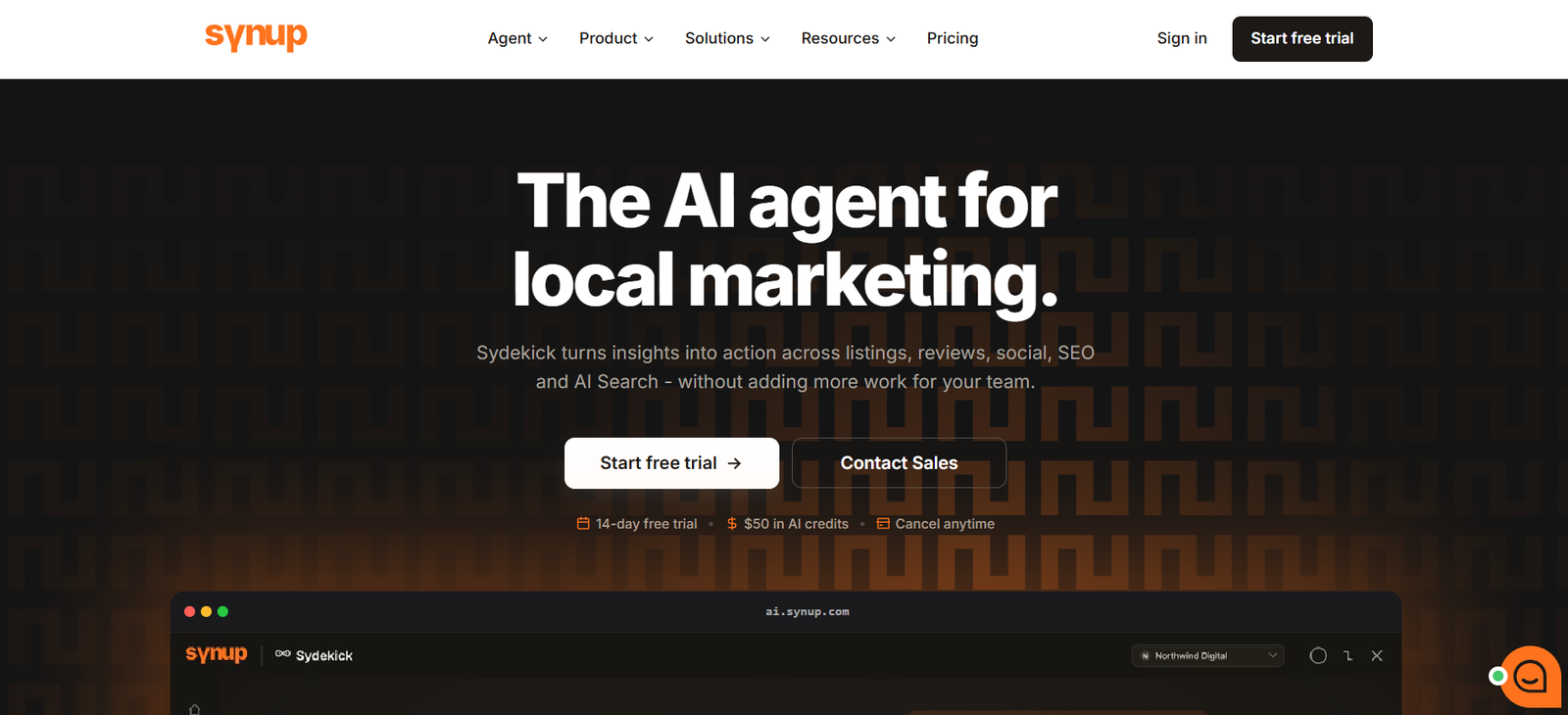
Synup is the first Moz Local alternative I would examine when listing management is only one part of a larger local marketing operation.
Its current listings product manages business data across Google Business Profile, Apple, Bing, Facebook, Yellow Pages, and more than 100 publishers.
Teams can group locations, make bulk updates, monitor publisher status, manage publisher-specific information, and review possible duplicate listings.
According to Synup’s August 2026 documentation, the platform continuously detects duplicate candidates and gives them AI-generated confidence scores before users decide whether to request removal.
That sounds like a small detail, but duplicate handling is one of those jobs that becomes irritating very quickly when you have dozens or hundreds of locations.
Synup also has features aimed specifically at agencies, including:
- Separate client workspaces
- White-label portals
- User permissions
- APIs
- Branded reporting
- Client-specific brand settings
Those functions are difficult to appreciate when you manage one business. They become much more useful when you have 30 clients asking why a listing changed, who approved it, and whether the update reached Google yet.
The other big 2026 addition is Sydekick.
Synup says its AI agent can perform recurring work across listings, reviews, social, SEO, reporting, and AI-search visibility, while allowing approval controls for more sensitive changes.
The company currently offers a 14-day trial with one location and AI credits.
Synup vs Moz Local
Synup makes more sense when you need agency workflows, client separation, bulk operations, APIs, reporting, and several local marketing functions in one system.
Moz Local may still be the more sensible choice for a small company that mainly wants affordable listing synchronization.
The cheaper option is not automatically the weaker option. Sometimes it is simply the one that matches the job.
2. BrightLocal
Best for: Local SEO agencies, consultants, SMBs, and teams that want more control over citations
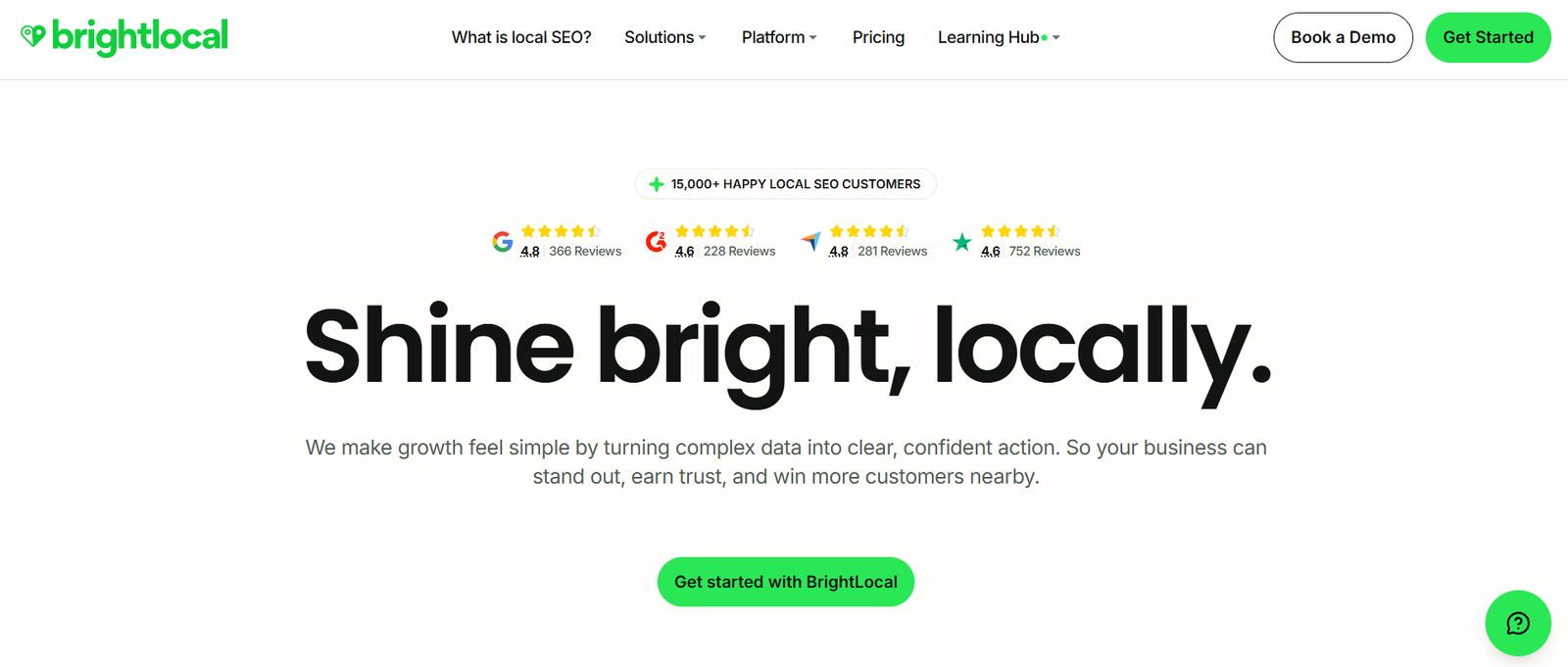
BrightLocal approaches listings differently from most products in this comparison.
Its Active Sync product keeps important profiles such as Google Business Profile, Facebook, Apple Maps, Bing, and Yelp updated through direct connections.
For other directories, BrightLocal offers Citation Builder, a manual service that creates, claims, corrects, and removes listings.
I think this distinction is one of the more interesting parts of the product.
Many listing platforms are built around ongoing synchronization. You keep paying, and the system keeps maintaining the profiles.
BrightLocal lets you combine continuous syncing for important profiles with manual work elsewhere.
That can appeal to businesses that do not want every citation permanently tied to a recurring software subscription.
BrightLocal says Citation Builder submissions remain in place after the campaign finishes. Standard manual submissions cost $3.20 per site, with volume credits reducing the rate to as little as $2.
The wider BrightLocal platform also includes:
- Local rank tracking
- Geo-grid ranking reports
- Google Business Profile audits
- Citation tracking
- Review management
- White-label reporting
- APIs
A one-location Manage subscription is currently listed at $54 per month, while Grow adds review collection and review-management features.
The main weakness is simplicity.
BrightLocal has several different listing-related products and services. You need to understand the difference between Active Sync, Citation Builder, aggregators, and the core subscription before you can compare the real cost with Moz Local.
BrightLocal vs Moz Local
BrightLocal deserves serious consideration when local ranking reports, citation analysis, manual citation work, and ownership of those citations matter to you.
Moz Local is easier to understand if your main goal is continuous listing distribution without building a wider local SEO workflow around it.
3. Yext
Best for: Large enterprises, franchise groups, regulated industries, and complex location-data operations
Yext sits at a different end of the market.
Its Listings product currently advertises more than 200 direct publisher integrations. Yext says changes can be sent directly to services including Google, Apple Maps, Yelp, and other publishers rather than relying entirely on data aggregators.
The product also supports:
- Duplicate detection
- Publisher-status monitoring
- More than 50 listing fields
- Bulk management
- Analytics
- Role-based access
- Audit trails
For a small company, some of that can feel excessive.
For an organization with several thousand locations, it can become essential.
Yext becomes particularly interesting when location data needs to feed more than directory profiles.
Its Knowledge Graph can supply information to Listings, Pages, Reviews, and other Yext products. A company can update location details once and use the same source of information across different parts of its digital presence.
That reduces a problem many large businesses still have: the store locator says one thing, Google says another, and somebody in marketing has a spreadsheet containing a third version.
Yext’s review product also covers more than 80 review platforms, according to the company, with monitoring, response workflows, review generation, approval controls, and location-level management.
Pricing is less straightforward.
Yext does not publish simple self-service pricing for the enterprise setup described here. You generally need to speak with the sales team and get a custom quote.
Yext vs Moz Local
Yext becomes much easier to justify when governance, audit trails, permissions, integrations, structured business data, and a very large location network matter more than price simplicity.
If you operate five locations, buying enterprise infrastructure because it looks impressive in a demo probably creates more work than it removes.
4. Uberall
Best for: Franchises, restaurant groups, retailers, and other distributed multi-location brands
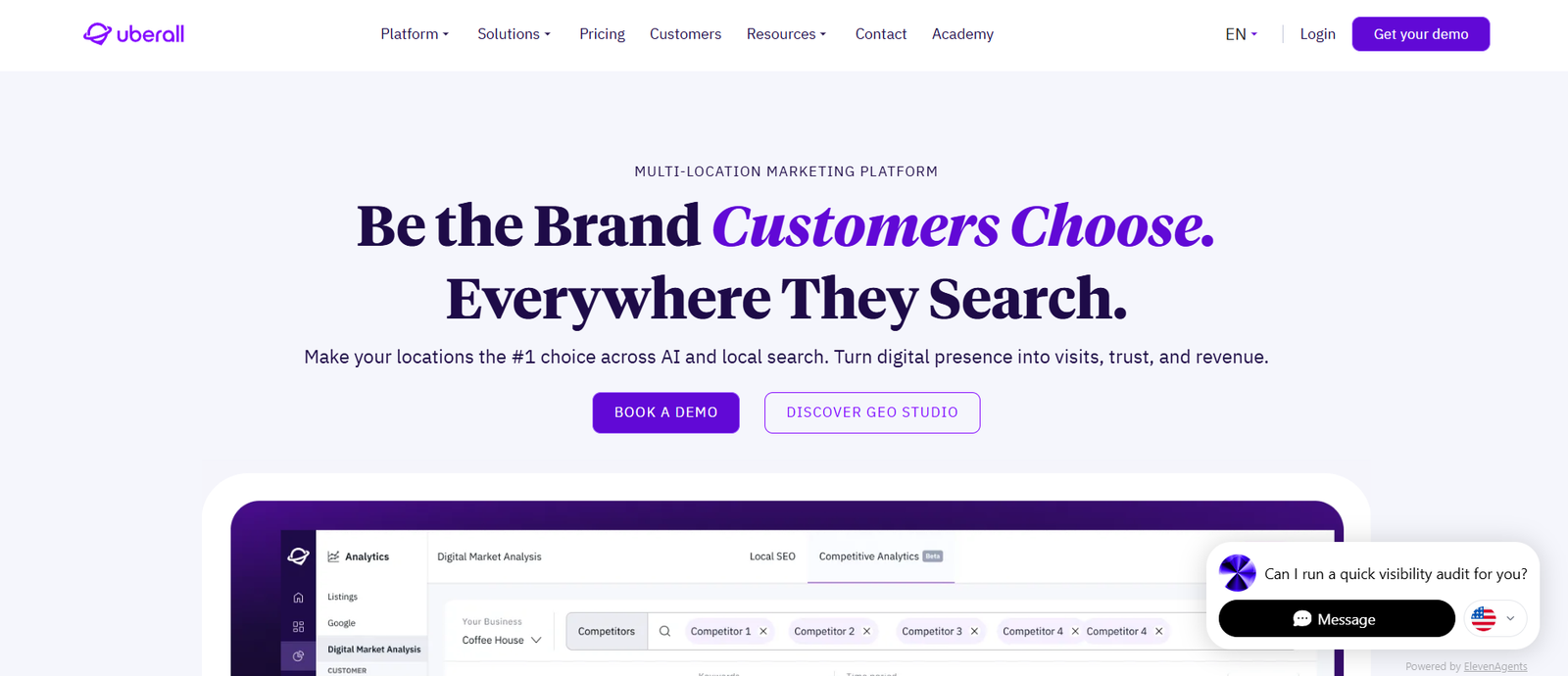
Uberall is another product that makes more sense as the number of locations grows.
Its current Listings Management product supports more than 150 platforms, including Google, Apple Maps, Bing, Yelp, Facebook, navigation systems, voice services, and other local discovery platforms.
Teams can manage location information centrally, make bulk changes, upload data through spreadsheets, work through APIs, suppress duplicate listings, and protect profiles against unauthorized third-party changes.
The platform also connects listings with:
- Reviews
- Local pages
- Social publishing
- Location-data management
- Analytics
- AI-search products
Its 2026 product material also describes Model Context Protocol support that allows compatible AI systems to retrieve location information and interact with connected Uberall data.
For franchises, however, the technology may be less important than the organizational structure.
A head office may want control over brand names, descriptions, categories, and logos.
A local restaurant manager may need permission to update today’s closing time because the kitchen has a plumbing problem.
Those are very different responsibilities.
Good multi-location software needs to handle both without turning every small change into a head-office support ticket.
Uberall uses sales-led pricing. Its packages currently include options such as Show Up and Stand Out, with functions such as Listings, Reviews, Analytics Plus, Collaborate Plus, and posting included according to the package or selected add-ons.
Uberall vs Moz Local
Uberall is worth evaluating when you have hundreds of locations, several internal teams, APIs, local operators, and more complex location-marketing requirements.
Moz Local remains easier to understand and budget for when you have a smaller footprint.
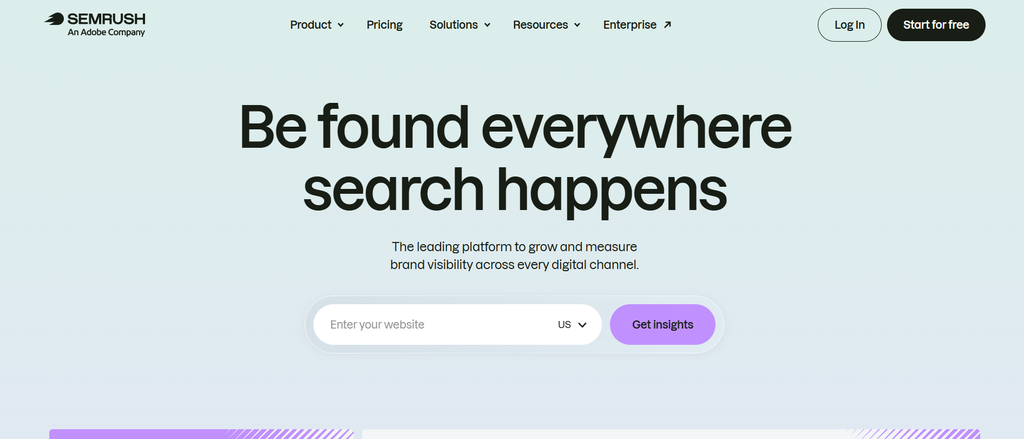
5. Semrush Local
Best for: SEO teams already using Semrush
Semrush Local is probably the easiest option on this list to understand if your company already uses Semrush for search marketing.
Instead of adding another completely separate platform, your team can keep local listings closer to the SEO tools it already uses.
The Local Pro plan includes:
- Listing Management
- Review Management
- Google Business Profile tools
- Map Rank Tracker
Semrush says Listing Management distributes business information to more than 70 US directories, although international coverage varies.
The product also includes duplicate management and handling of user-suggested profile changes.
Semrush has added more automation around Google Business Profile work too. Its AI Agent can help create GBP posts, publish provided photos, work on business descriptions, and respond to reviews according to configured rules.
Map Rank Tracker is another useful distinction.
Traditional rank tracking can tell you where a business appears for a query. Geo-grid tracking shows how that visibility changes depending on where the searcher is located.
That is much more useful for local businesses because rankings can change considerably within a few kilometres.
Current US pricing lists Local Base at $30 per location per month when billed annually and Local Pro at $60 per location per month. Listing Management is included in the Pro tier.
Larger businesses can request customized pricing.
One issue becomes obvious when you start multiplying the per-location price.
At 100 locations, you should probably have a sales conversation rather than treating the published price as your final cost.
Semrush Local vs Moz Local
Semrush Local is attractive when your team wants listings, local rankings, Google Business Profile work, and wider SEO activity sitting close together.
Moz Local may be cheaper if listings and basic reputation monitoring are all you really need.
6. Birdeye
Best for: Multi-location businesses that manage listings and reputation together
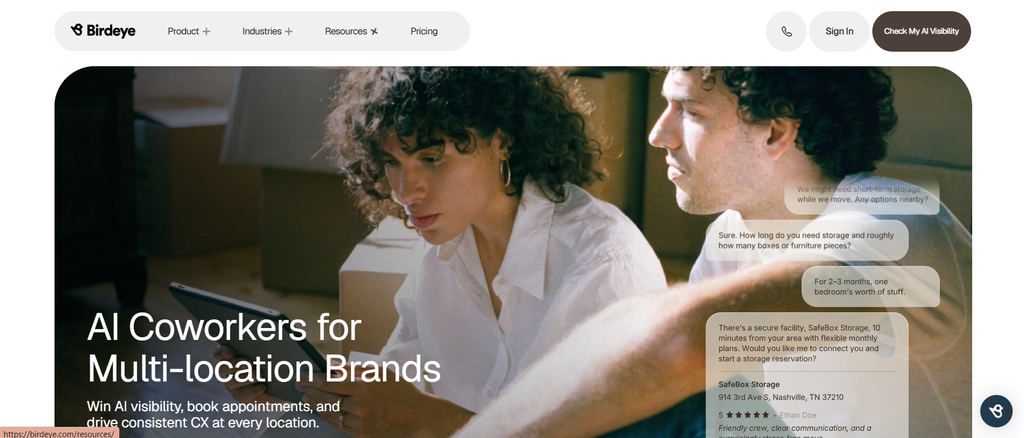
Birdeye treats listings as part of a larger customer and reputation-management platform.
Its current listings product focuses on integrations with platforms such as Google, Facebook, Apple, Yelp, and Bing.
Birdeye’s Listings Optimization Agent continuously checks location profiles, identifies incomplete or inaccurate information, recommends changes, and can apply approved updates across locations.
By default, the process requires approval before changes are published.
That approval step is useful.
Automation sounds appealing until software confidently changes the wrong field across 300 locations.
Birdeye also supports duplicate management. Its documentation describes duplicate detection, suppression requests, bulk actions, tracking, and support-assisted processes for publishers that do not support direct suppression.
The larger reason to consider Birdeye is its relationship with reviews.
Listings, reviews, messaging, social features, AI-search monitoring, and other customer-experience functions can sit within the same platform.
For companies where the reputation team and local marketing team already work closely together, consolidating those activities may reduce the number of tools people need to open every day.
Pricing is harder to compare.
Birdeye does not publish a fixed listings price. Its August 2026 pricing information says quotes depend on the products selected, number of locations, and contract setup.
Birdeye vs Moz Local
Birdeye becomes more attractive when reputation management and listing management belong in the same buying decision.
If you mainly want low-cost listing distribution, Moz Local is easier to price and may be all you need.
7. Whitespark
Best for: Citation cleanup, one-time projects, agencies, and businesses that do not want another broad subscription
Whitespark is probably the least direct Moz Local alternative here.
That is also what makes it useful.
Most platforms in this comparison are trying to become the system you use every day.
Whitespark is comfortable selling you a defined piece of work.
Its Listings Service manually audits, cleans, and builds citations and then provides a report containing listing links, credentials, statuses, and project notes.
Current US pricing starts at:
- $399 per location for Premium
- $599 per location for Comprehensive
- $999 per location for Ultimate
Whitespark also lists a $399 one-time Yext Replacement Service.
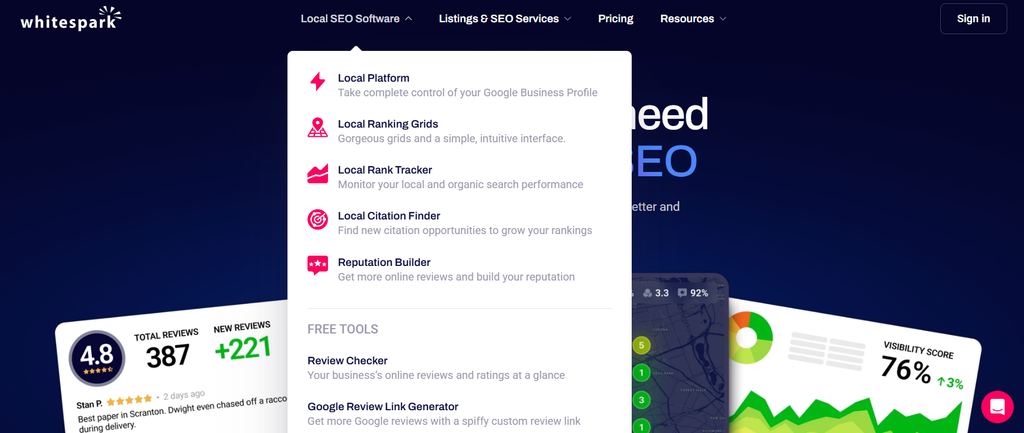
Its other local SEO products are sold separately and include Local Citation Finder, Local Ranking Grids, Local Rank Tracker, Reputation Builder, and a Local Platform for Google Business Profile management priced at $1 per location per month.
I can see this model making sense for a business with a specific mess to fix.
Suppose your company moved office three years ago and the old address still appears across dozens of directories.
You may not need another software platform.
You may need someone to clean up the problem properly.
Whitespark vs Moz Local
Whitespark is a better fit when manual citation quality, cleanup, and one-time ownership matter more than continuous synchronization across a broad publisher network.
It becomes less convincing when you need constant updates across hundreds or thousands of locations.
Which Moz Local alternative should you choose?
There is a temptation with software comparisons to count features.
One product connects to 100 publishers. Another says 150. Another says 200.
Does the one with 200 automatically win?
Probably not.
If 180 of those publishers barely matter to your customers, the number is doing more work in the sales presentation than in your local marketing.
A better approach is to score products based on what your team actually needs.
The Syssn 100-point Moz replacement scorecard
This is an editorial framework rather than an industry standard.
| Evaluation area | Weight | What to check |
|---|---|---|
| Location data and publisher coverage | 25 | Does the platform cover the countries, directories, categories, and business fields you actually need? |
| Operational control | 25 | Can your team manage bulk changes, duplicates, permissions, approvals, APIs, and temporary updates efficiently? |
| Reviews and local search | 20 | Do you need reviews, GBP tools, geo-grid rankings, local pages, or AI-search monitoring? |
| Measurement | 15 | Can you see failed changes, publisher status, calls, clicks, directions, rankings, and location-level results? |
| Commercial and exit terms | 15 | What does the product cost at your real location count, and what happens after you cancel? |
The score itself is useful.
The conversation it forces you to have is more useful.
For example, imagine you manage 20 restaurant locations.
During each vendor demo, ask the salesperson to change closing hours for five restaurants.
Then watch.
Who can request the change?
Does somebody need to approve it?
Can you restrict the manager’s access to those five locations?
How clearly does the platform show whether Google accepted the update?
What happens if Apple rejects it?
How quickly can you identify the failure?
That five-minute exercise may tell you more about the software than a 45-slide product presentation.
What should you check before replacing Moz Local?
I would start by documenting how listing changes happen inside your company today.
You do not need a complicated process map.
Answer a few basic questions.
Who changes business information?
How often?
Which fields change most often?
Which directories actually send customers?
Which listing problems consume the most staff time?
Once you know that, test every shortlisted product using the same jobs.
Try these eight:
- Change holiday hours across 20 locations.
- Correct one phone number.
- Find and process a duplicate listing.
- Give a regional manager restricted access.
- Add five new locations in bulk.
- Respond to reviews for several branches.
- Export listing status and performance data.
- Ask exactly what remains published after cancellation.
That last question is easy to forget.
It should not be.
You are not only choosing software. You are deciding what happens to hundreds or thousands of public business records if you stop paying for that software two years from now.
Ask whether listings revert, remain untouched, stop syncing, lose suppression, or require manual action.
Get the answer in writing.
Moz Local vs its alternatives
The simplest way to think about the market is this:
Choose Moz Local when you want a relatively affordable listings platform and your operational requirements are straightforward.
Choose Synup when you manage clients or a growing multi-location operation and need stronger workflows around listings.
Choose BrightLocal when rankings, audits, citation work, and local SEO reporting are central to the job.
Choose Yext when structured location data, governance, permissions, APIs, and enterprise scale matter.
Choose Uberall when a distributed organization needs strong location operations across a large network.
Choose Semrush Local when your team already works heavily in Semrush and wants listings close to SEO.
Choose Birdeye when listing management and reputation management are closely connected.
Choose Whitespark when your main problem is citation cleanup or a defined one-time project.
None of those choices is universally correct.
That is what makes this category slightly frustrating and, if you enjoy software comparisons, strangely interesting.
The products may all say “listing management” on the website, but they are often solving different organizational problems underneath.
Common mistakes when comparing Moz Local alternatives
Comparing directory counts without checking the directories
A vendor with 200 integrations is not automatically more useful than one with 100.
Ask for the publisher list.
Then check whether those publishers matter in your country, industry, and customer journey.
Ignoring what happens after cancellation
Some listing services continuously sync information while you subscribe.
Others create or claim listings that remain in place.
These models are different.
Understand what you own, what the vendor controls, and what stops working when the contract ends.
Testing the demo instead of the workflow
A polished dashboard tells you very little about what happens when 48 stores suddenly need emergency closing hours updated on a Friday afternoon.
Test real operational situations.
Giving too many people unrestricted access
Local managers often know about changes first.
They should be able to report or update relevant information without being able to edit every location in the company.
Permissions matter more as you scale.
Buying AI features without deciding what they are allowed to change
AI agents can save time.
They can also create new problems if they publish incorrect information automatically.
Check which tasks require approval, which can run automatically, and how actions are recorded.
Frequently asked questions
What are the best alternatives to Moz for local listing management in 2026?
Synup, BrightLocal, Yext, Uberall, Semrush Local, Birdeye, and Whitespark are all credible options.
Synup is a strong starting point for agencies and growing multi-location businesses. Yext and Uberall are better suited to larger location networks. BrightLocal and Whitespark provide more flexible citation and local SEO workflows.
The right choice depends on the work you need the software to perform.
What is the best Moz Local alternative for agencies?
Synup and BrightLocal are two of the strongest options to evaluate.
Synup offers multi-client management, white-label portals, permissions, APIs, reporting, listings, reviews, SEO, social features, and AI-search capabilities.
BrightLocal offers white-label reporting, citation services, audits, local rank tracking, and flexible local SEO tools.
Synup makes more sense if you want a broader client-management platform. BrightLocal is appealing when local SEO analysis and citation work sit at the center of your service.
What is the best Moz Local alternative for multi-location businesses?
Synup, Yext, Uberall, and Birdeye are all worth testing for larger deployments.
At 50, 500, or 5,000 locations, I would pay close attention to permissions, bulk updates, APIs, duplicate management, location grouping, integrations, review workflows, and failed-update reporting.
Those things usually matter more than raw directory count.
Is there a cheaper alternative to Moz Local?
Moz Local is already relatively inexpensive compared with many full listing-management platforms.
If your requirements are simple, you can manage Google Business Profile, Apple business listings, Bing, and other major profiles directly instead of paying for third-party software.
The cost is staff time.
Whitespark can also make sense when you need a one-time citation cleanup instead of continuous synchronization.
Which Moz alternatives include review management?
Synup, BrightLocal, Yext, Uberall, Semrush Local, and Birdeye provide review-related features through relevant products or plans.
Whitespark sells Reputation Builder separately.
Check exactly which review platforms can be monitored, whether you can respond directly, whether review requests are included, and whether SMS or messaging generates additional charges.
Which alternatives include local rank tracking?
BrightLocal has a strong focus on local rank tracking and geo-grid reporting.
Semrush Local includes Map Rank Tracker.
Synup includes local SEO and ranking features.
Whitespark sells Local Ranking Grids and Local Rank Tracker separately.
Rank tracking is useful when you want to measure whether customers can actually find a location, rather than merely checking whether the listing exists.
Which platforms manage Google, Apple, Bing, and other directories?
Synup, Yext, Uberall, Semrush Local, BrightLocal, and other commercial platforms connect with major publishers, although the networks and update methods differ.
For the products covered here:
- Synup lists more than 100 publishers.
- Yext advertises more than 200 direct publisher integrations.
- Uberall lists more than 150 supported platforms.
- Semrush Local lists more than 70 US directories on Local Pro.
The largest number should not automatically decide your purchase.
Check the actual publishers you need.
What is the difference between Moz Local and enterprise listing platforms?
Moz Local provides listing management, review monitoring, local visibility tools, and related functions at relatively accessible per-location pricing.
Enterprise products such as Yext and Uberall place more emphasis on large location networks, integrations, APIs, permissions, governance, structured data, and company-wide processes.
That extra infrastructure can be valuable at scale.
For a smaller business, it can simply be extra complexity.
Final verdict
If I were building a shortlist in 2026, Synup would be the first Moz Local alternative I would evaluate for an agency or growing multi-location business.
Its combination of listing management, client workflows, reviews, local SEO, white-label features, APIs, AI-search monitoring, and Sydekick gives it a wider operational scope than Moz Local.
BrightLocal would be high on the list when rank tracking, reporting, and citation ownership matter.
Yext and Uberall make more sense when you are managing a genuinely large location network and need stronger data controls.
Semrush Local is worth serious consideration for teams already invested in Semrush.
Birdeye fits companies that see listings and reputation management as part of the same job.
Whitespark makes sense when the problem is simpler: you have messy citations, you want them fixed, and you do not necessarily want another large software subscription.
I would still resist choosing any of them from a feature table alone.
Give every vendor the same messy, ordinary task. Change holiday hours. Fix a duplicate. Restrict a manager’s access. Add five new locations. Export the results.
Then watch what happens.
The best Moz alternative may turn out to be the product with fewer features, fewer impressive claims, and fewer things for your team to learn.
Sometimes the most useful software is simply the one that makes an annoying job uneventful.