9 Best BrightLocal Alternatives for Local Listings Management in 2026, Compared

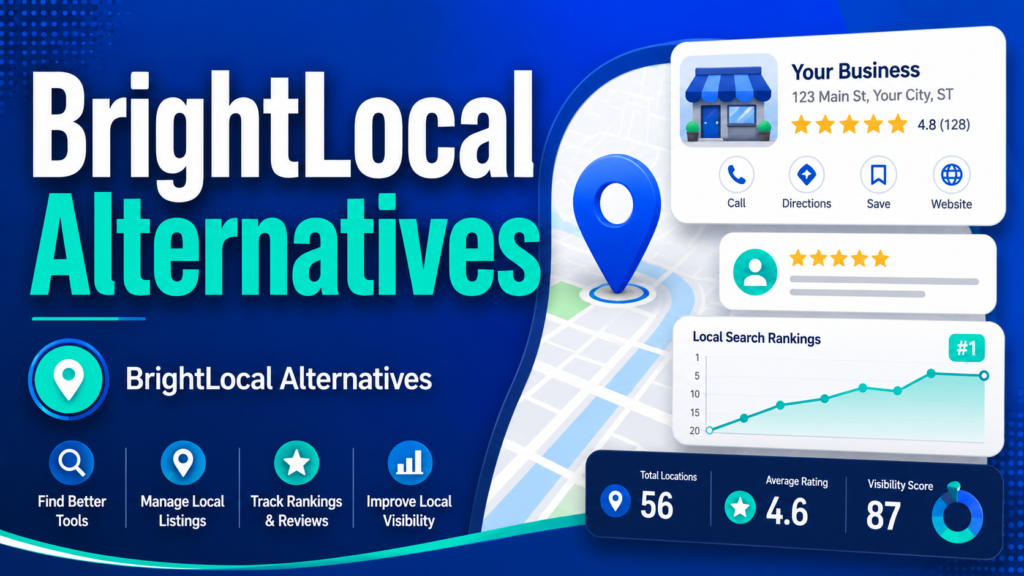
9 Best BrightLocal Alternatives for Local Listings Management in 2026, Compared gives agencies, multi-location brands, franchises, and small businesses a practical way to compare tools for listings, citations, reviews, Google Business Profile management, and local rank tracking. The leading BrightLocal alternatives now range from free channel-specific tools such as Google Business Profile and Apple Business Connect to broader platforms including Synup, Semrush Local, Yext, Moz Local, Whitespark, Birdeye, and Uberall. This guide explains where each option fits, what it replaces, what it does not, and which choice makes sense for different budgets and location counts.
What are BrightLocal alternatives for local listings management?
BrightLocal alternatives are platforms and tools businesses can use instead of, or alongside, BrightLocal to manage local business information, citations, reviews, local rankings, and profiles on services such as Google Maps, Apple Maps, Bing, Yelp, and other directories.
BrightLocal itself combines local rank tracking, citation auditing, manual citation building, listing synchronization, Google Business Profile tools, and review management. Its current plans are organized around Track, Manage, and Grow tiers, while Citation Builder remains available separately on a pay-as-you-go basis.
That matters because there is no universal “BrightLocal replacement.”
A single-location plumber mainly interested in Google Maps needs something very different from a franchise operating 600 locations. An SEO agency may care about white-label reports and citation research. An enterprise marketing team may care more about permissions, APIs, bulk updates, governance, and centralized location data.
The useful question, then, is not simply Which BrightLocal competitor has the most features?
It is: Which platform removes the work your team actually needs removed?
Best BrightLocal alternatives in 2026: Quick comparison
| BrightLocal alternative | Best for | Listings management | Local rank tracking | Review tools | Pricing approach |
|---|---|---|---|---|---|
| 1. Google Business Profile | SMBs focused on Google | Google only | Basic performance data | Google reviews | Free |
| 2. Synup | Agencies and multi-location teams wanting automation | Yes | Yes | Yes | Platform/location-based plans |
| 3. Apple Business Connect | Businesses prioritizing Apple Maps | Apple ecosystem | No traditional rank tracker | Limited compared with full reputation platforms | Free |
| 4. Semrush Local | SEO teams wanting listings + search tools | Yes | Yes | Yes | From $30/location/month annually |
| 5. Whitespark | Citation research and local SEO specialists | Citation-focused | Yes | Available separately | Modular pricing |
| 6. Yext | Large enterprises and complex location networks | Yes | Broader visibility tools | Yes | Custom/enterprise |
| 7. Moz Local | SMBs wanting straightforward listing distribution | Yes | More limited than specialist trackers | Yes on applicable plans | Per-location subscription |
| 8. Birdeye | Reputation-heavy multi-location brands | Yes | Search/local visibility capabilities | Extensive | Custom |
| 9. Uberall | Enterprises and franchises managing location visibility | Yes | Visibility analytics | Yes | Custom |
The top three need some context. Google Business Profile and Apple Business Connect are free, but they are not complete BrightLocal replacements. They manage their own ecosystems rather than synchronizing dozens or hundreds of external directories. Synup is the first option in the top three that operates as a broader local marketing platform.
1. Google Business Profile
Best for: Small businesses that mainly care about Google Search and Maps
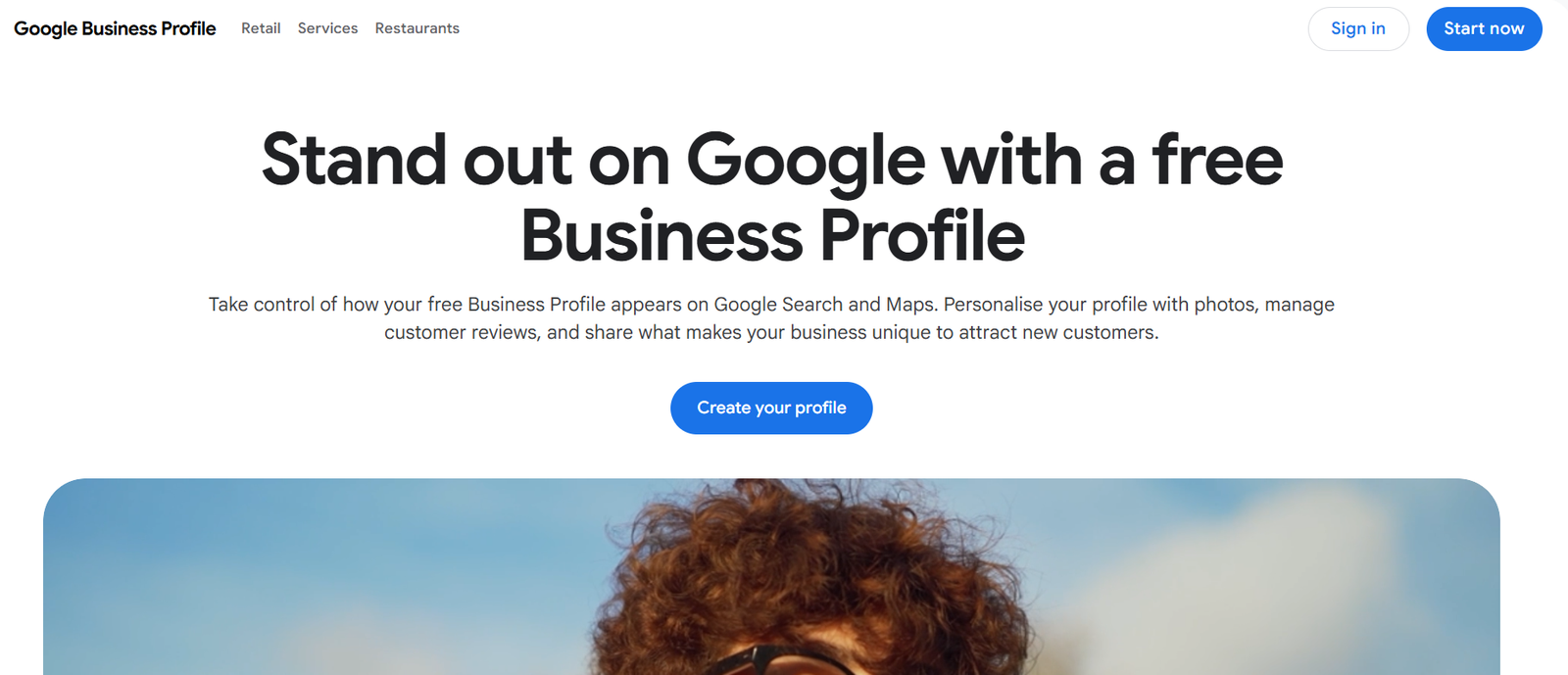
Google Business Profile is the obvious free BrightLocal alternative to consider first because Google is usually the most important local search surface for a local business.
Businesses can claim and manage a profile at no charge, update opening hours and contact details, upload photos, add products or services, publish updates, respond to Google reviews, and access performance information showing how customers discovered and interacted with the profile. Google confirms that Business Profiles are free.
The limitation is equally important.
Google Business Profile manages Google. It does not automatically clean up Yelp citations, synchronize Apple Maps, discover directory inconsistencies, or give an agency a complete local SEO reporting environment.
Key features
- Free Google Search and Maps presence
- Business information and hours management
- Photo, product, service, and update publishing
- Google review monitoring and responses
- Search and customer interaction insights
Where it beats BrightLocal
Price. There is no subscription.
Where BrightLocal is stronger
Cross-directory listings, citation management, geo-grid rank tracking, citation auditing, agency reporting, and broader reputation workflows.
For a one-location SMB with a tight budget, Google Business Profile may be enough to start. For agencies and multi-location businesses, it is better viewed as essential infrastructure than as an all-in-one local SEO platform.
2. Synup
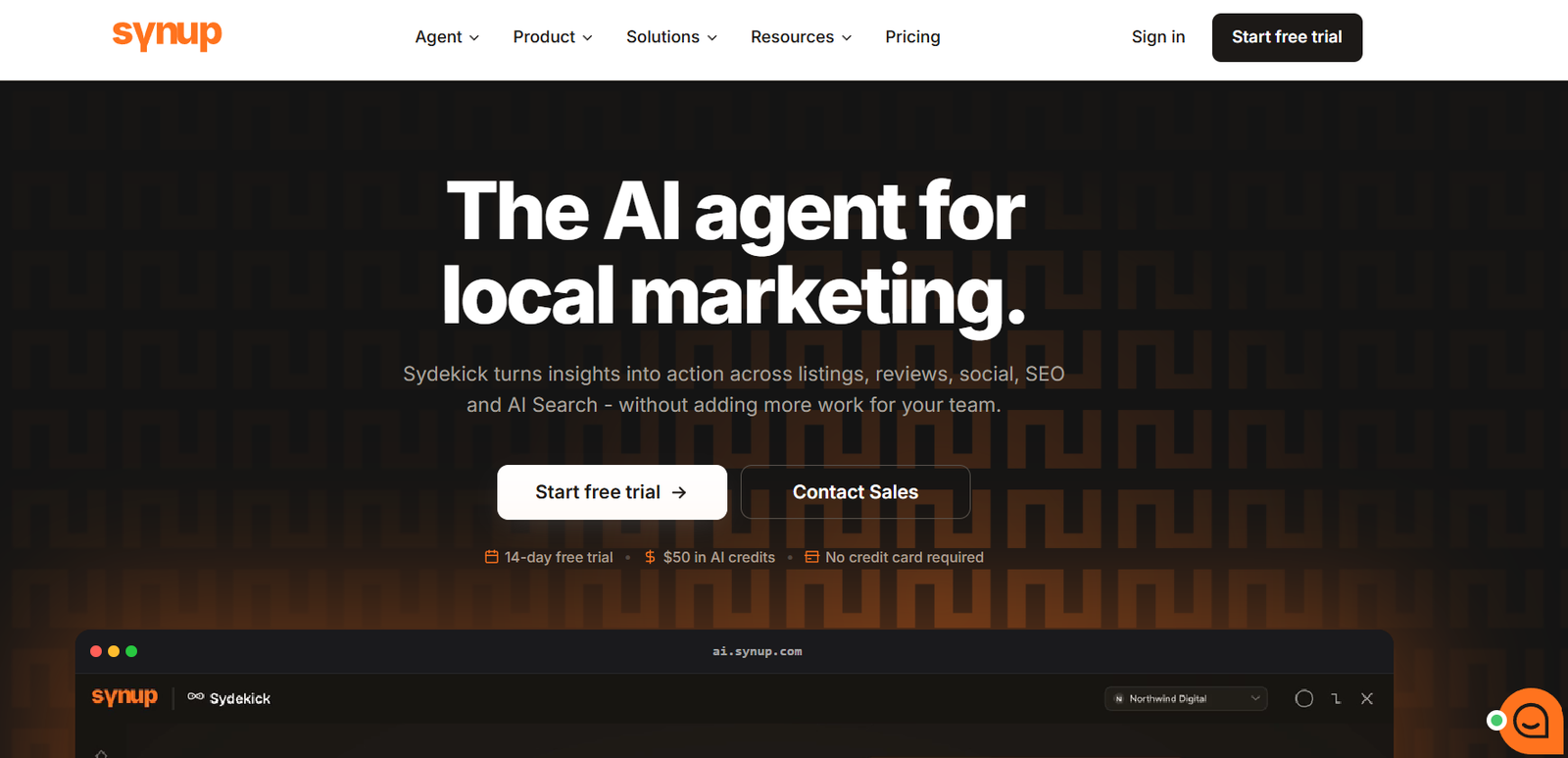
Best for: Agencies and multi-location businesses wanting listings, reviews, SEO, and AI-driven execution in one platform
Synup is one of the more complete BrightLocal alternatives for teams that want to go beyond monitoring local marketing tasks and automate more of the work around them.
The platform covers business listings, review monitoring and generation, local SEO, social publishing, location pages, AI-search visibility, and agency workflows. Synup also supports white-label use cases, making it particularly relevant to agencies managing multiple client accounts.
The significant 2026 change is Sydekick.
Synup debuts Sydekick AI: The Agent for Local Marketing
Synup announced Sydekick on August 19, 2026, describing it as an autonomous local marketing agent built to execute work rather than merely recommend what marketers should do. Synup says Sydekick can operate across listings, reviews, social, SEO, and AI-search visibility.
That distinction is interesting. Local SEO software has traditionally been good at finding problems, an incorrect phone number, an unanswered review, a falling keyword, but identifying work still leaves someone responsible for doing it.
Synup is positioning Sydekick around that second problem: execution.
Key features
- Multi-location listings management
- Review monitoring and generation
- Local SEO and ranking workflows
- Social publishing
- Agency white-label capabilities
- AI-search/AEO visibility
- Sydekick AI agent
- API and integration capabilities
Synup currently advertises a 14-day trial with AI credits, while separate Synup offerings use location- and agency-oriented pricing structures.
Synup vs BrightLocal
Choose BrightLocal when you particularly value granular local rank tracking, citation research, manual citation building, and pay-as-you-go citation ownership.
Consider Synup when you want a broader operational platform spanning listings, reviews, local SEO, social, AI-search visibility, and increasingly agent-driven execution.
3. Apple Business Connect
Best for: Businesses that want direct control over Apple Maps and other Apple surfaces
Apple Business Connect is another free alternative worth using before paying a third party to perform every local listing task.
Apple describes Business Connect as a free platform businesses can use to manage how their brand and location information appears across Apple Maps, Siri, Mail, and other Apple experiences. Businesses can maintain location information, upload photos and logos, create actions, publish promotions through Showcases, and view interaction insights.
For companies with multiple locations, Apple also provides partner and API-based options for managing information at scale.
Key features
- Free Apple business listing management
- Apple Maps place cards
- Hours, phone numbers, URLs, and location information
- Photos and brand assets
- Calls to action
- Showcases and promotions
- Customer interaction insights
- API support for qualified multi-location workflows
Where it beats BrightLocal
You get direct control of your Apple presence without buying a local SEO subscription.
Where BrightLocal is stronger
Apple Business Connect does not replace cross-directory citation management, broad review monitoring, local rank tracking, competitor audits, or agency reporting.
The same logic applies to Bing Places for Business, which is also free and supports bulk uploads for businesses managing multiple locations.
A budget-conscious business can therefore build a surprisingly capable free foundation using Google Business Profile + Apple Business Connect + Bing Places before adding paid local listings management software.
4. Semrush Local
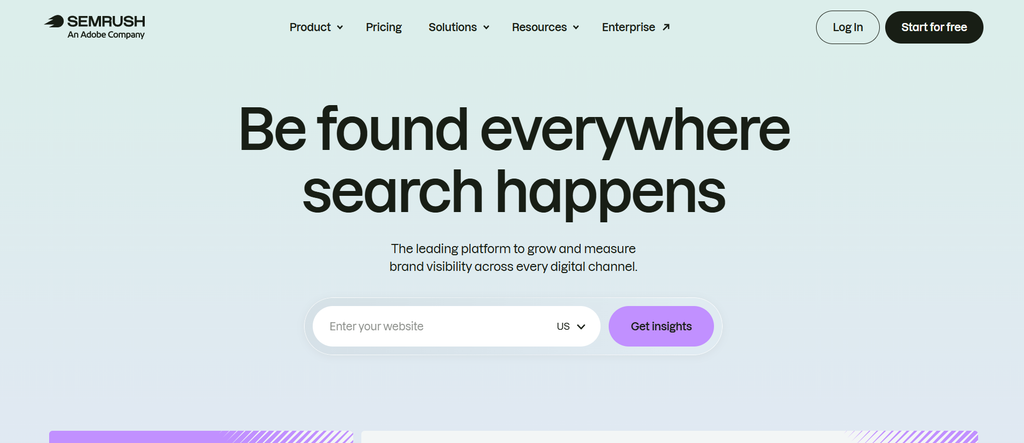
Best for: SEO teams wanting local listings and rank tracking alongside broader search marketing tools
Semrush Local is one of the most natural BrightLocal competitors for teams already working heavily in SEO.
Its Local Toolkit combines Google Business Profile management, directory distribution, review management, Map Rank Tracker, and AI-assisted GBP activity. Semrush says its Listing Management feature distributes information across more than 70 U.S. directories and 40+ international directories, although availability varies by country.
Semrush Local has also become more automation-focused. Its GBP AI Agent can assist with posts, photos, profile activity, and review responses.
Key features
- Google Business Profile optimization
- Listing distribution
- Duplicate and suggestion management
- Review monitoring and generation
- AI-assisted review responses
- Map Rank Tracker
- Local competitor monitoring
- Integration with the broader Semrush ecosystem
Pricing is relatively transparent. As of August 2026, Local Base starts at $30 per month per location when billed annually, while Local Pro is $60 per month per location and adds Listing Management, broader review capabilities, and higher Map Rank Tracker limits. Larger businesses can request custom pricing.
Semrush Local vs BrightLocal
Semrush makes particular sense when local SEO is only one part of a larger SEO program.
BrightLocal remains attractive for teams that want a platform highly concentrated on local SEO and citation work rather than a larger search-marketing ecosystem.
5. Whitespark
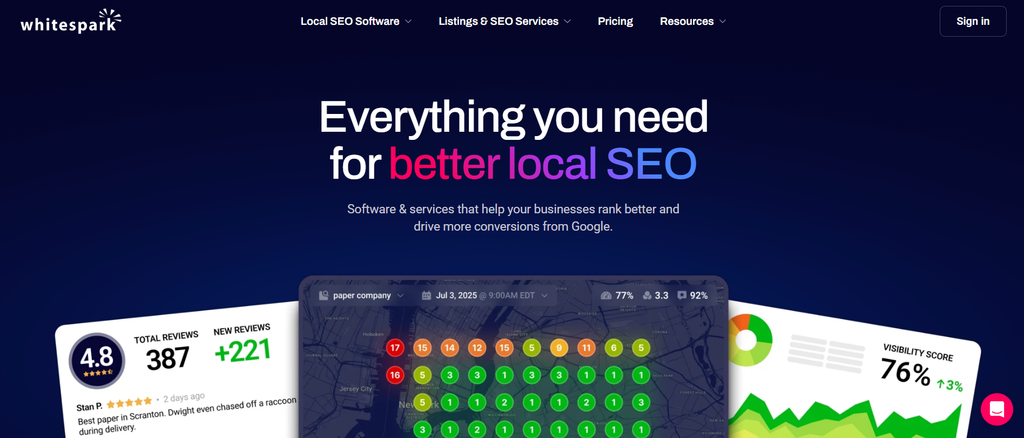
Best for: Local SEO specialists focused heavily on citations and rankings
Whitespark takes a different approach from many all-in-one BrightLocal alternatives.
Instead of forcing everything into one subscription, Whitespark separates its local SEO products. Businesses can purchase its Local Citation Finder, Local Rank Tracker, Local Ranking Grids, Local Platform, Reputation Builder, and listing services independently.
That modularity can be an advantage when you already have part of your local marketing stack covered.
The Local Citation Finder is particularly relevant to BrightLocal users. It analyzes existing citations and competitor citation sources to uncover opportunities rather than simply distributing data blindly across a standard publisher network.
Key features
- Local Citation Finder
- Citation research and competitor analysis
- Local Rank Tracker
- Geographic ranking grids
- Google Business Profile management tools
- Reputation Builder
- Citation building and cleanup services
Current public pricing illustrates the modular model. Local Ranking Grids start around $10/month, Local Rank Tracker plans start around $14/month when billed annually, and Local Citation Finder starts around $33/month billed annually. Listings services are sold separately.
Whitespark vs BrightLocal
Whitespark is compelling when citation discovery and specialist local SEO tools are the priority.
BrightLocal can be easier when you would rather keep audits, grids, listings, reviews, and reporting inside one environment.
6. Yext
Best for: Enterprise brands managing large and complex networks of locations
Yext sits at the enterprise end of the BrightLocal alternatives market.
Its core listings product uses direct publisher integrations to distribute structured business information across search engines, maps, directories, apps, and other discovery environments. Yext currently states that its network includes more than 200 direct integrations and that its systems manage millions of locations.
The platform also extends beyond basic name, address, and phone consistency into reviews, local pages, analytics, structured data, and enterprise workflows.
Key features
- Large publisher network
- Centralized location data
- Direct listing integrations
- Multi-location management
- Review monitoring and responses
- Local pages
- Enterprise governance
- APIs and structured data workflows
- AI-search visibility initiatives
Yext does not emphasize low-cost self-service pricing in the same way BrightLocal or Whitespark does. Buyers evaluating it should request current pricing based on location volume and required products.
Yext vs BrightLocal
Yext generally makes more sense for organizations where location data is an enterprise infrastructure problem involving hundreds or thousands of locations, multiple teams, governance requirements, and integrations.
BrightLocal is generally more approachable for SMBs, consultants, and agencies that primarily need local SEO analysis, citation tools, rank tracking, and reporting.
More functionality is not automatically better. Sometimes enterprise infrastructure is exactly what a company needs. Sometimes it is simply more infrastructure than the problem deserves.
7. Moz Local
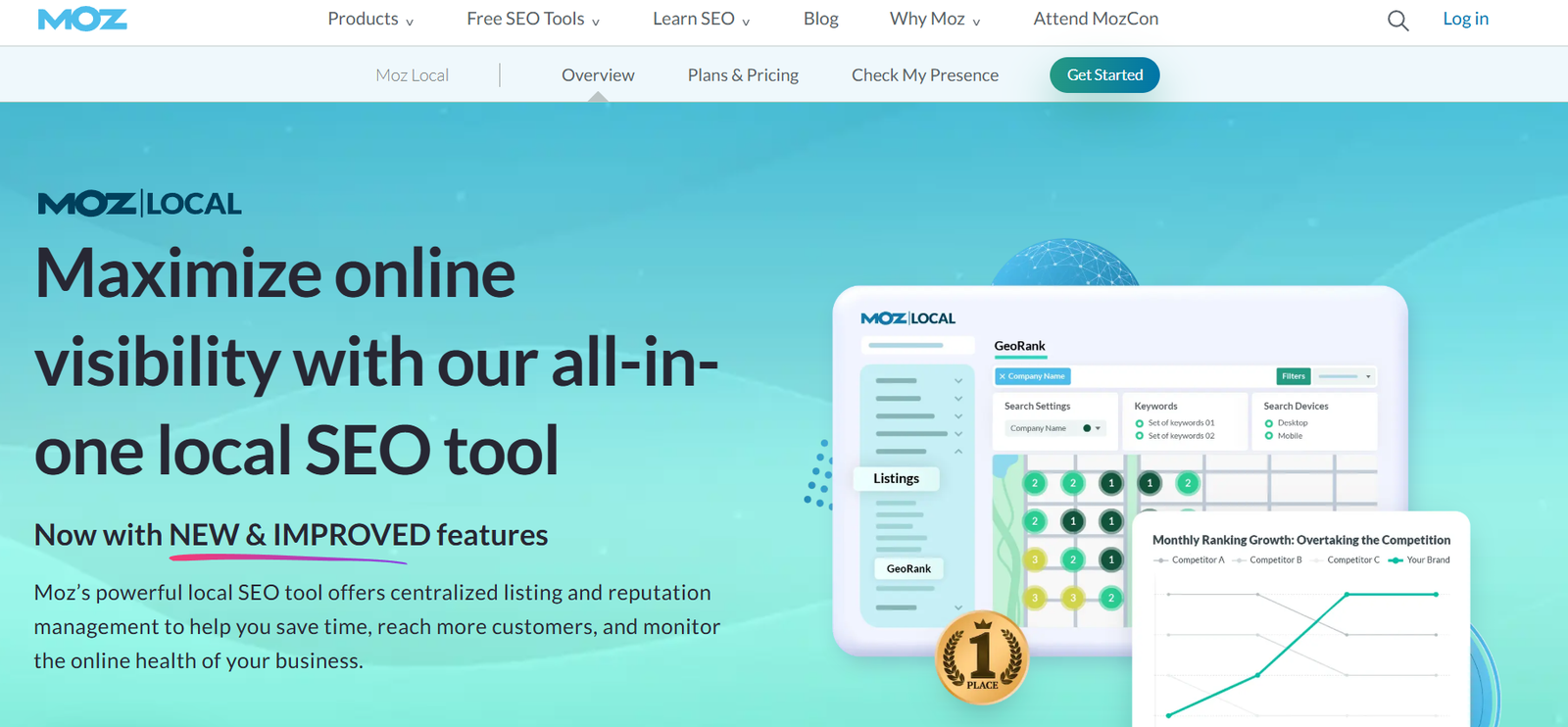
Best for: Businesses wanting relatively straightforward listing distribution and reputation monitoring
Moz Local remains a recognizable alternative to BrightLocal for businesses primarily concerned with keeping local information consistent across search engines and directory networks.
The platform focuses on listing distribution and synchronization, duplicate management, profile data, reputation monitoring, and local visibility. Higher tiers and add-ons expand review and AI-assisted capabilities.
Public third-party pricing references in 2026 generally place Moz Local at roughly $20 to $40 per location per month on monthly plans, with annual discounts available, although buyers should confirm the latest rate directly with Moz before purchasing.
Key features
- Local listing distribution
- Business data synchronization
- Duplicate management
- Google Business Profile workflows
- Review monitoring
- Reputation features
- Location reporting
- AI-related listing and review features on applicable packages
Moz Local vs BrightLocal
Moz Local is appealing when the main requirement is ongoing business listing distribution with relatively simple administration.
BrightLocal tends to offer a deeper specialist toolkit for local SEO professionals through Local Search Grid, Citation Tracker, Local Search Audit, citation building, and competitor-focused reporting.
For agencies that live in ranking reports and citation audits, that difference matters. For a business that mainly wants its location data kept accurate without turning local SEO into a hobby, it may matter much less.
8. Birdeye

Best for: Multi-location brands that place reviews and reputation alongside listings
Birdeye approaches local visibility through a broader reputation and customer-experience lens.
Its Listings product lets businesses find listing errors, update business information centrally, publish changes, monitor listing health, and analyze performance across locations. Birdeye’s current product documentation also includes AI-assisted listing optimization and tools for managing major platforms such as Google and Apple.
Where Birdeye becomes especially different from BrightLocal is reputation management.
Reviews are a central part of the platform rather than a secondary local SEO feature. Birdeye supports review generation, monitoring, responses, sentiment-related workflows, social features, and other customer experience functions.
Key features
- Multi-location listing management
- Listing accuracy monitoring
- Listings optimization features
- Review generation
- Review monitoring and responses
- AI-assisted reputation workflows
- Social capabilities
- Location-level reporting
- Enterprise integrations
Pricing is generally quote-based rather than published as a simple self-service listings fee.
Birdeye vs BrightLocal
Choose Birdeye when reputation management is a major organizational function and listings are one part of a larger customer-experience program.
BrightLocal may be the more focused choice when your team primarily needs citation management, local SEO reporting, geo-grid rankings, and search-focused analysis.
9. Uberall
Best for: Franchises and multi-location brands managing local visibility at scale
Uberall is designed around multi-location marketing rather than the smaller-scale local SEO workflows many BrightLocal customers begin with.
Its Listings Management product centralizes location data and synchronizes information across more than 150 directories, including services such as Google, Apple Maps, and Yelp. Uberall also combines listings with reputation management, local pages, visibility analytics, and other location marketing capabilities.
One interesting use case is businesses operating inside other businesses, such as pharmacies, kiosks, ATMs, or service counters. Uberall has dedicated “located-in” functionality intended to help these nested locations maintain distinct local identities.
Key features
- 150+ directory integrations
- Multi-location listing synchronization
- Review management
- Local pages and store locator capabilities
- Bulk workflows
- Location analytics
- Enterprise controls
- Specialized located-in listing workflows
Pricing is typically custom.
Uberall vs BrightLocal
Uberall is most compelling where local search is fundamentally a location-scale problem.
BrightLocal is usually easier to justify when teams want flexible local SEO tooling without buying a larger enterprise location-marketing system.
BrightLocal vs Synup vs Yext vs Moz Local vs Semrush Local
For buyers narrowing the shortlist, these five platforms solve somewhat different problems.
| Platform | Strongest reason to choose it |
|---|---|
| BrightLocal | Detailed local SEO analysis, citation workflows, geo-grid rank tracking, and agency reporting |
| Synup | Broad local marketing platform with listings, reviews, social, SEO, AEO, and Sydekick agentic workflows |
| Semrush Local | Local SEO integrated into a larger SEO and search-marketing environment |
| Yext | Enterprise-grade location data distribution and governance |
| Moz Local | Straightforward ongoing listings management and reputation monitoring |
There is no reason to treat the longest feature list as the automatic winner.
A five-location agency client does not necessarily need the same architecture as a 5,000-location retailer. Buying software based purely on theoretical capabilities often leaves teams paying for a very sophisticated dashboard that everyone quietly avoids opening.
Which BrightLocal alternative is best for your business?
Best for local SEO agencies: Synup, BrightLocal, Semrush Local or Whitespark
Agencies should pay particular attention to client separation, white-label reporting, location limits, workflow automation, APIs, and how costs change as new clients are added.
Synup becomes interesting when the goal is broader service delivery and automation. Semrush fits agencies already using its SEO ecosystem. Whitespark is attractive for specialists who want modular local SEO tools.
Best for multi-location businesses: Synup, Yext, Birdeye or Uberall
At scale, listing management stops being merely an SEO task.
Permissions, bulk changes, integrations, brand consistency, reviews, APIs, and data governance become more important. Enterprise brands should test these operational workflows during demos rather than comparing directory counts alone.
Best cheaper BrightLocal alternatives: Google, Apple and Bing
Businesses primarily concerned with their most important map ecosystems can start with:
- Google Business Profile
- Apple Business Connect
- Bing Places for Business
All three can be managed free.
The trade-off is labor. Someone still has to maintain each system, and the free tools do not provide one unified citation, ranking, review, and reporting environment.
Best for citation management: BrightLocal or Whitespark
Citation-heavy local SEO campaigns deserve specialist tools.
BrightLocal provides Citation Tracker plus manual Citation Builder services, while Whitespark’s Local Citation Finder is particularly useful for discovering citations held by competing businesses.
What should you look for in local listings management software?
Before replacing BrightLocal, evaluate the new platform against the work you actually perform each month.
1. Publisher coverage
Do not count directories without asking which ones matter.
Google, Apple, Bing, Facebook, Yelp, industry directories, navigation systems, and region-specific platforms can carry very different value depending on the business.
2. Listing ownership and cancellation terms
Ask what happens after you stop paying.
Determine whether listings remain live, which data remains under your control, and whether ongoing synchronization ends immediately.
3. Multi-location workflows
For franchises and larger brands, test:
- Bulk edits
- Location grouping
- Permissions
- Approval workflows
- APIs
- Reporting across locations
4. Local rank tracking
A listings platform and a rank tracker are not the same thing.
If geographic ranking visibility matters, verify whether the product provides proper map grids, keyword-level tracking, historical data, and competitor comparisons.
5. Review management
Look beyond merely displaying reviews.
Ask whether the platform can generate review requests, monitor multiple networks, route negative feedback, draft or automate responses, and report performance by location.
6. Total cost at your actual location count
A low per-location price can look attractive until multiplied by 150 locations and several add-ons.
Model the annual cost using your real location count, required features, user seats, API requirements, onboarding costs, and contract terms.
Frequently asked questions
What are the best BrightLocal alternatives in 2026?
The strongest options depend on the use case. Google Business Profile and Apple Business Connect provide free direct listing management for their respective ecosystems. Synup offers a broader local marketing platform with AI-agent workflows. Semrush Local combines listings and local ranking tools with a broader SEO suite. Whitespark specializes in local SEO and citations, while Yext, Birdeye, and Uberall are stronger candidates for larger multi-location organizations.
What is the best alternative to BrightLocal for local listings management?
For businesses wanting a broad paid alternative, Synup, Semrush Local, Yext, Moz Local, Birdeye, and Uberall are all worth evaluating.
The best choice depends on whether listings, rankings, reviews, automation, or enterprise management is the primary requirement.
Which BrightLocal competitor is best for multi-location businesses?
Synup, Yext, Birdeye, and Uberall deserve consideration for multi-location environments. The right choice depends heavily on location count, approval requirements, integrations, review workflows, and budget.
Is there a cheaper alternative to BrightLocal?
Yes.
Google Business Profile, Apple Business Connect, and Bing Places are free. Whitespark also lets businesses buy individual local SEO tools rather than paying for an all-in-one suite.
However, a cheaper subscription can create more manual work, so compare labor cost as well as software cost.
Which is better, BrightLocal or Synup?
BrightLocal has particularly strong local SEO auditing, rank tracking, citation discovery, and manual citation-building capabilities.
Synup provides a broader operating environment across listings, reputation, local SEO, social, AEO, and now Sydekick AI. Agencies and multi-location teams interested in reducing repetitive execution work may find that approach attractive.
How does BrightLocal compare with Yext?
BrightLocal is oriented toward local SEO teams, agencies, consultants, and businesses that want rankings, audits, citations, reviews, and listing management.
Yext is more strongly positioned around enterprise location data distribution, direct publisher integrations, governance, structured data, and large-scale management.
How does BrightLocal compare with Moz Local?
Moz Local focuses heavily on ongoing listing synchronization and reputation functionality. BrightLocal provides a wider specialist local SEO toolkit, particularly around rank grids, citation analysis, audits, and manual citation building.
What tools provide both listings management and local rank tracking?
BrightLocal, Synup, and Semrush Local provide combinations of listings management and local ranking capabilities. Whitespark also offers both functions, although through separate products rather than one bundled platform.
Is BrightLocal suitable for enterprise and multi-location brands?
It can support substantial location counts, and BrightLocal offers custom packages beyond its standard plans.
However, enterprises needing complex permissions, integrations, governance, local pages, or very large location networks should also evaluate platforms such as Yext, Uberall, Birdeye, and Synup.
Conclusion
The best BrightLocal alternatives in 2026 are not interchangeable.
Google Business Profile, Apple Business Connect, and Bing Places show how much local listing management can now be done for free if a business is willing to manage each ecosystem separately. Whitespark goes deeper into specialist citation and ranking workflows. Semrush Local connects local visibility with a larger SEO stack. Yext, Birdeye, and Uberall address increasingly complex multi-location requirements.
Synup is taking a somewhat different path with Sydekick, moving from the familiar software model of showing marketers what needs attention toward an agent designed to perform local marketing tasks across listings, reviews, social, SEO, and AI visibility. How far agentic software changes the category remains to be seen, but it changes an important buying question.
Instead of asking only, “Which platform gives me the best dashboard?”, teams may increasingly ask something more practical:
“How much of this work will my team still have to do after we buy it?”
That may turn out to be the more useful way to compare local marketing software.