How to Become a Certified Scrum Master: Complete Pathway Guide

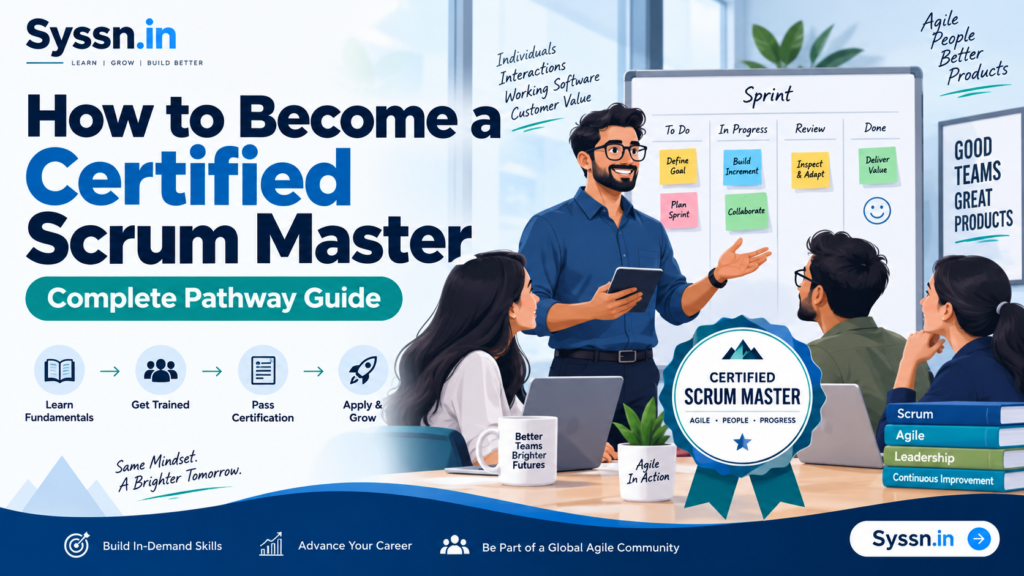
If you want to know how to become a Certified Scrum Master in 2026, the formal process is fairly short. For the Scrum Alliance Certified ScrumMaster® credential, you choose an approved CSM course, complete at least 16 hours of live training with a Certified Scrum Trainer, pass the Scrum Alliance assessment, and download your certification.
You do not need previous Scrum experience, a project management qualification, a software background, or a college degree to start. Scrum Alliance lists no formal prerequisites for CSM.
Getting certified and becoming ready to work as a Scrum Master are different goals, however. You can complete the formal certification process within a few days. Learning to facilitate difficult conversations, coach a self-managing team, work with a Product Owner, remove impediments, and handle real delivery problems takes practice.
This guide covers the complete pathway for learners in India, including CSM certification requirements, the exam, training providers, current costs, CSM versus PSM, renewal, career preparation, and what to do after certification.
How to Become a Certified Scrum Master: Quick Pathway
| Stage | What you need to do | Typical time |
|---|---|---|
| Learn Scrum basics | Read the Scrum Guide and understand Scrum accountabilities, events and artifacts | 2-5 hours |
| Choose a certification | For beginners, compare CSM and PSM I before paying | 1-2 days |
| Enrol in CSM training | Choose an approved CST-led course | Varies by batch |
| Complete mandatory training | Attend at least 16 hours live online or in person | Usually 2 days |
| Prepare for the assessment | Review the Scrum Guide, notes and mock questions | 2-8 hours |
| Take the CSM test | 50 questions, 60 minutes, 74% required | 1 hour |
| Receive certification | Download it through your Scrum Alliance account after passing | Usually immediate/short processing |
| Build practical experience | Facilitation, coaching, Jira, metrics, team scenarios | Ongoing |
| Renew CSM | 20 SEUs plus $100 at the foundational level | Every 2 years |
Scrum Alliance currently gives candidates 90 days after the initial welcome email and two attempts at no additional test charge. After the two attempts or the 90-day window, each further attempt costs $25.
For a focused explanation of the qualification itself, see Syssn’s What Is CSM Certification? Requirements, Exam & Eligibility.
What Is a Certified ScrumMaster Certification?
Certified ScrumMaster, normally shortened to CSM, is Scrum Alliance’s foundational Scrum Master credential.
It teaches the Scrum framework and the responsibilities involved in helping a Scrum Team use Scrum effectively. The required course covers Scrum accountabilities, events, artifacts, Scrum theory, team effectiveness, facilitation and the Scrum Master’s role.
The credential comes from Scrum Alliance. A training company delivers the authorized course, but it does not replace Scrum Alliance as the certification body. After your Certified Scrum Trainer records your successful course completion, Scrum Alliance provides access to its assessment. When you pass, you obtain the Certified ScrumMaster credential through your Scrum Alliance account.
That distinction is worth checking when comparing courses. A provider’s participation certificate, completion badge or internal training certificate is not the same thing as the official Scrum Alliance CSM credential.
How Do Scrum and the Scrum Master Role Work?
Scrum is a lightweight framework for addressing complex problems and creating value through iterative work. A Scrum Team contains three defined accountabilities: the Product Owner, Developers and Scrum Master.
The Product Owner focuses on maximizing product value and managing the Product Backlog. Developers create a usable Increment during each Sprint. The Scrum Master helps establish Scrum and improve the effectiveness of the Scrum Team.
The official Scrum Guide says Scrum Masters help team members with self-management and cross-functionality, support the removal of impediments, make sure Scrum events are productive, help Product Owners with product goals and backlog management, and support Scrum adoption within the wider organization.
You should read the official Scrum Guide before your course. It is short enough to complete before training and becomes one of your main references for the CSM exam.
A common beginner mistake is assuming a Scrum Master is simply an Agile project manager who assigns tasks and runs daily meetings. Scrum is designed around self-managing teams. Your work involves facilitation, coaching, observation, problem solving and improving how the team collaborates rather than acting as a traditional task manager.
What Qualifications Do You Need to Become a Scrum Master?
There are two answers depending on whether you mean qualifying for CSM or qualifying for a job.
For Certified ScrumMaster certification, Scrum Alliance lists no formal prerequisite. You do not need a bachelor’s degree, coding experience, PMP certification, prior Agile experience or previous Scrum Master employment. The mandatory condition is completing an approved 16-hour course taught by a Scrum Alliance Certified Scrum Trainer before accessing the assessment.
For employment, companies can set much higher requirements. A job posting may ask for experience in software delivery, Jira or Azure DevOps, facilitation, stakeholder management, Agile metrics, coaching, conflict resolution or previous work with Scrum Teams.
That means a career switcher can earn CSM without previous project management experience, but the certificate alone does not automatically make that person competitive for every Scrum Master vacancy.
Step 1: Learn the Scrum Basics Before Paying for Training
Spend a few hours understanding the language of Scrum first.
Learn what a Sprint is, what the Product Backlog and Sprint Backlog contain, what an Increment represents, and what happens during Sprint Planning, the Daily Scrum, Sprint Review and Sprint Retrospective. You should also understand the Product Goal, Sprint Goal and Definition of Done.
More important, learn how Scrum’s three pillars, transparency, inspection and adaptation, affect decisions.
Doing this before training gives you more time during the live course to focus on scenarios and questions instead of learning every term for the first time.
Step 2: Choose the Right Scrum Master Certification
CSM is a practical starting option for beginners, but it is not the only Scrum credential.
CSM vs PSM I vs PMI-ACP
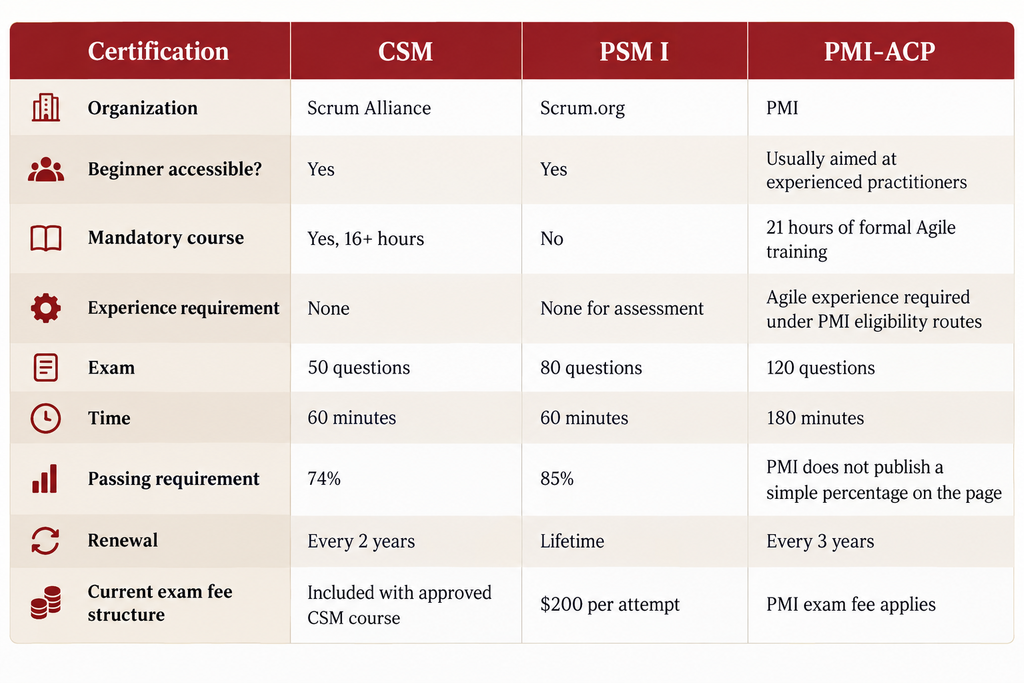
PSM I lets you sit the assessment without buying mandatory training. Scrum.org currently charges $200 per attempt, uses an 80-question, 60-minute assessment with an 85% passing score, and the certification has no renewal fee. Scrum You can review the official PSM I certification requirements.
CSM is more structured because live CST-led training is compulsory. That can suit beginners who want instructor interaction and exercises before taking the test.
PMI-ACP is broader than Scrum. PMI’s current requirements include 21 hours of Agile training plus qualifying Agile experience through one of several eligibility paths. Its exam covers Agile beyond Scrum, including other approaches and delivery practices. Project Management Institute See PMI’s current PMI-ACP requirements.
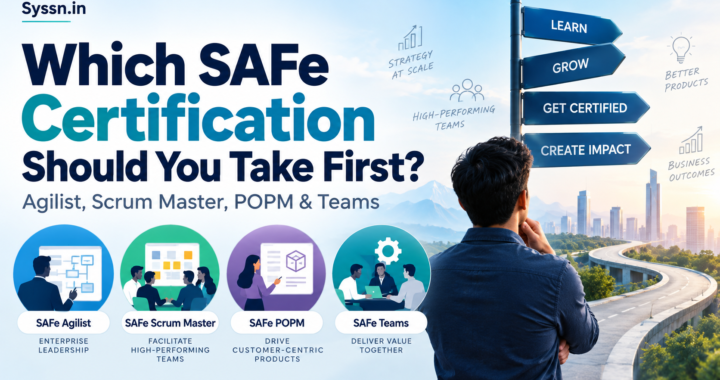
If your organization specifically uses SAFe, you may also consider SAFe Scrum Master rather than assuming a Scrum Alliance or Scrum.org credential covers the same job context. Syssn’s 2026 SAFe certification pathway guide explains that route separately.
Step 3: Choose an Authorized CSM Training Provider in India
Every legitimate CSM course must ultimately meet Scrum Alliance requirements. Your provider choice therefore affects the trainer, teaching style, schedule, exercises, preparation resources, support and price, rather than changing the certification issuer.
The five provider descriptions below use comparable criteria and similar editorial depth so one provider does not receive disproportionately detailed treatment. That follows the supplied comparison framework’s requirement for consistent vendor structure and legitimate strengths and limitations. Listicle_Content_Framework (2)
1. upGrad KnowledgeHut
upGrad KnowledgeHut offers a 16-hour CSM program delivered through live training and identifies its CSM offering as provided through Scrum Alliance-authorized arrangements. Its current course material emphasizes interactive instruction, Scrum simulations, role-play, case studies, mock tests and continuing learning resources.
This format suits learners who prefer a larger training platform with structured preparation surrounding the required class. The company advertises 16 SEUs and 16 PDUs with the training, plus mock examinations and access to additional Agile content. Pricing can vary by cohort and location, so compare the final checkout or written quotation rather than relying on an old article or promotion. Check exactly which CST is assigned to your selected batch and whether GST, rescheduling and extras are included before paying.
2. StarAgile
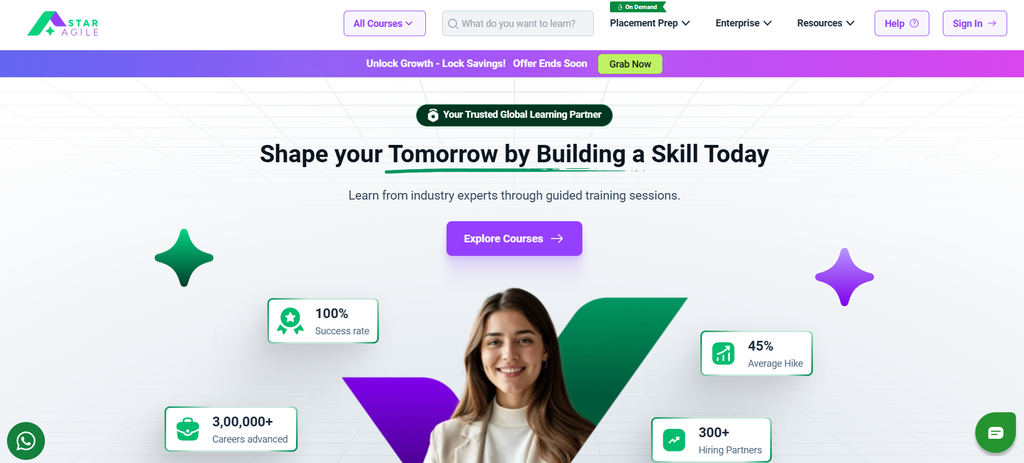
StarAgile identifies itself as a Scrum Alliance Licensed Training Partner and offers 16-hour live CST-led CSM training. Current India material lists ₹17,135 for some location-based CSM offerings, while recent sales discussions supplied for this guide quoted the higher StarMax plan at about ₹25,000. The previously discussed ₹15,000 figure was not restated on the August sales calls, so it should not be used as the current list price.
Recent batches include weekend delivery, and current StarAgile pages list founder and CST Narasimha Reddy Bommaka as a trainer on selected schedules. The teaching format includes live interaction, exercises and role-play rather than being slide-only. StarAgile also supplies internal mock-test resources, but the actual CSM test and resulting certificate come from Scrum Alliance. StarAgile advertises 16 PDUs/SEUs. Confirm how any education credits are recorded before assuming they meet later renewal requirements. Do not rely on pass-rate or full-refund statements without receiving the applicable terms in writing.
3. Simplilearn
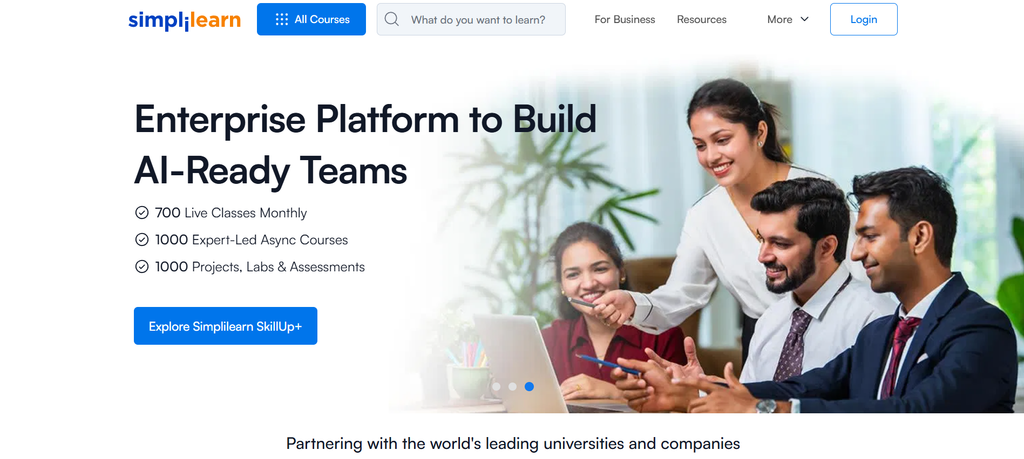
Simplilearn’s current CSM program provides 16 hours of live training with Certified Scrum Trainers and includes Scrum Alliance exam access and a two-year Scrum Alliance membership. The provider describes its sessions as including games, role-plays, simulations and case studies, together with practice tests and supplementary courses. Its page showed a promotional online bootcamp price of $399, reduced from $499, when checked in September 2026.
Simplilearn can make sense for professionals who prefer a large online education platform and want supplementary learning content alongside the mandatory CSM course. As with any provider, confirm the assigned CST, local taxes, batch timing and exact refund or retake conditions before enrolling. Certification still depends on meeting Scrum Alliance requirements and passing the Scrum Alliance examination; Simplilearn is the course provider rather than the issuer of the CSM credential.
4. Invensis Learning
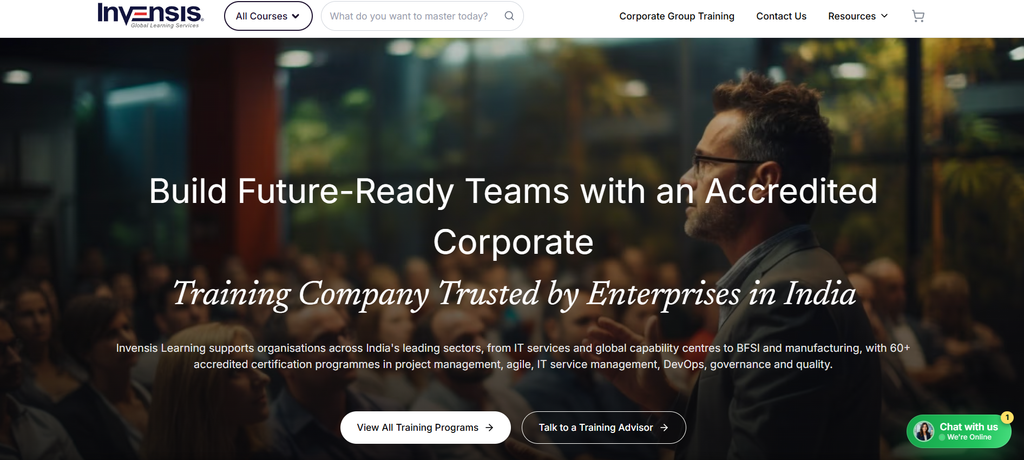
Invensis Learning currently publishes a ₹20,000 India price for its 16-hour instructor-led CSM training. Its offering includes CST-led instruction, official course material, exam access, two-year Scrum Alliance membership and practice support. The company offers live virtual and other instructor-led delivery formats, depending on location and cohort.
The clear published India price makes it relatively straightforward to establish an initial budget, although you should still check the amount for your actual dates and tax treatment. The course is positioned for aspiring Scrum Masters as well as project managers, delivery professionals, business analysts and other people moving into Agile work. Compare trainer experience, batch size and rescheduling conditions with other providers rather than selecting purely by the advertised course price.
5. PremierAgile
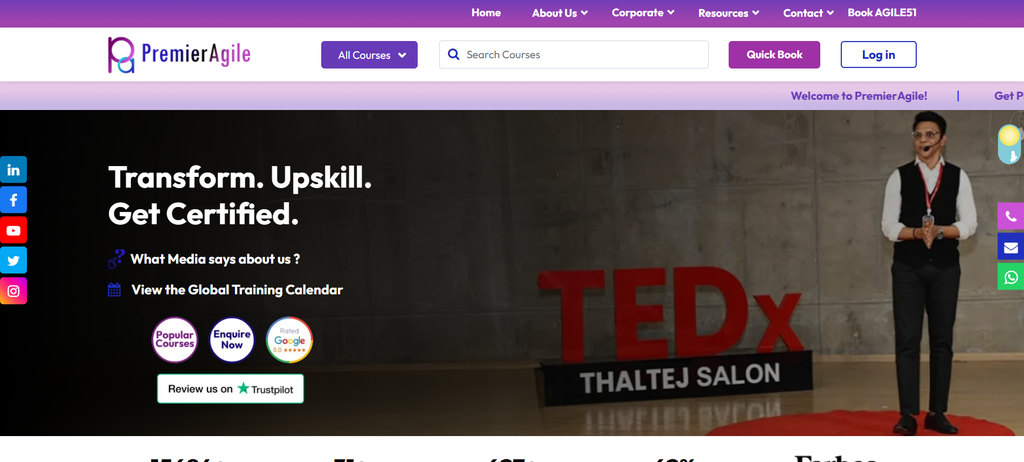
PremierAgile offers live CSM workshops and describes its delivery as interactive, hands-on training built around Scrum concepts, exercises and discussion. Its September and October 2026 schedules showed two-day classes with CST Suresh Konduru at ₹21,525 plus GST. The provider states that the CSM examination fee is included with the course.
This may suit learners who want a focused, workshop-style CSM class rather than a large bundle of unrelated training products. Current published schedules make it easier to compare trainer, dates and price before registration. Some older provider pages can contain outdated exam information, so use Scrum Alliance itself as the final authority for test rules. Compare the same things you would for every provider: assigned CST, total price including GST, attendance requirements, rescheduling, practice material and support after the live course.
For a longer provider comparison, see 7 Best Certified Scrum Master Training Providers.
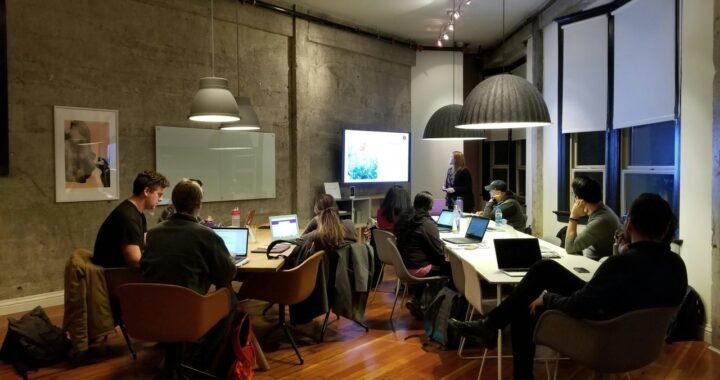
Step 4: Complete the Mandatory 16-Hour CSM Course
This is the part of CSM that you cannot skip.
Scrum Alliance requires a minimum 16-hour live online or in-person course with a Certified Scrum Trainer. Previous Agile experience or another certification cannot substitute for it.
A typical two-day weekend format runs around eight instructional hours per day, although schedules vary.
For example, recent StarAgile schedules included Saturday-Sunday classes around 9:00 am to 6:00 pm IST with breaks, while other batches use different time windows. StarAgile
Treat the class as practical preparation rather than an attendance exercise. Participate in simulations, facilitation exercises, team discussions and role-play. Ask the trainer how they would handle situations such as an absent Product Owner, a manager assigning tasks directly to Developers, a Sprint Goal that is no longer useful, or a retrospective in which nobody speaks openly.
Those scenarios are closer to the actual job than memorizing definitions.
Step 5: Prepare for the CSM Exam
After the class, go back through the Scrum Guide and your course notes before opening the assessment.
Scrum Alliance states that the test is open-book, so you can reference the Scrum Guide and course materials while taking it. It does not provide an official practice test, although third-party training companies can provide their own mock assessments.
A simple preparation sequence is to read the current Scrum Guide once before class, review your trainer’s material after class, complete two or three timed mocks, then revisit topics where you consistently make mistakes.
Pay particular attention to Scrum accountabilities, event purposes, artifact commitments, self-management, the Definition of Done, Product and Sprint Goals, and the difference between coaching a team and managing its individual tasks.
Step 6: Take the Scrum Alliance CSM Exam
The current Certified ScrumMaster test contains 50 multiple-choice questions. You have 60 minutes, and you need at least 37 correct answers, or 74%, to pass.
The test is online, open-book and not proctored.
Scrum Alliance gives you two attempts within the initial 90-day period at no additional test charge. The 90 days run from the initial welcome email. Additional attempts after two tries or after that window currently cost $25 each.
You can check the current rules directly in Scrum Alliance’s official CSM test guidance.
Do not confuse provider mock links with the real assessment. StarAgile, KnowledgeHut, Simplilearn and other providers may offer practice questions, but your official CSM examination is delivered through Scrum Alliance.
Step 7: Receive Your Official Certified ScrumMaster Credential
Once you meet the course requirement and pass the test, your CSM credential becomes available through your Scrum Alliance account.
This is the certificate you should put on LinkedIn and your CV.
The credential is issued by Scrum Alliance, not by StarAgile, KnowledgeHut, Simplilearn or another training company. Scrum Alliance also includes a two-year membership with CSM course registration.
How Much Does Scrum Master Certification Cost in India in 2026?
There is no fixed India-wide CSM price because Scrum Alliance’s authorized trainers and training partners set their own course fees. Scrum Alliance confirms that pricing varies by provider, location, format and other course factors.
A practical current comparison looks roughly like this:
| Provider | Current pricing reference |
|---|---|
| StarAgile | ₹17,135 on some India CSM pages; recent StarMax call quote around ₹25,000 |
| Invensis Learning | ₹20,000 |
| PremierAgile | ₹21,525 plus GST for listed Sept./Oct. 2026 cohorts |
| Simplilearn | $399 promotional price on the current CSM page |
| upGrad KnowledgeHut | Confirm current India cohort price before payment |
When requesting a quote, compare the final payable amount, not the biggest discount percentage. Check whether GST, the Scrum Alliance assessment, two-year membership, mock tests, rescheduling and premium career-support extras are included.
How Long Does It Take to Become a Certified Scrum Master?
If a suitable class is available, the formal process can be completed quickly.
The mandatory training is typically two days and 16 hours. The exam itself takes no more than one hour. If you prepare and attempt it shortly after training, you could complete the certification pathway within a weekend plus a few hours of preparation.
Scrum Alliance still gives you up to 90 days for the initial included test window, so there is no requirement to sit the exam immediately.
Becoming job-ready generally takes longer.
A career switcher with no Agile experience may need several weeks or months to build credible examples of facilitation, delivery work and team problem solving. Someone already working as a project coordinator, developer, business analyst or Agile team member may be able to convert existing experience into Scrum Master examples much faster.
Certification Is the Start: How to Become Job-Ready
After certification, stop treating exam questions as your primary preparation target.
Practise running Sprint Planning and retrospectives. Learn to identify impediments without immediately solving every issue for the team. Get comfortable with Jira or another common work-management platform. Understand lead time, cycle time, throughput, Sprint Goals and the Definition of Done.
You also need examples you can discuss in interviews.
If you already work in a team, volunteer to facilitate a retrospective, support backlog refinement or help document an impediment-removal process. If you are changing careers, build a realistic practice project with several people rather than claiming invented commercial experience.
Your interview story should move beyond “I passed CSM.” You should be able to explain how you would respond when a stakeholder interrupts a Sprint, when a Daily Scrum turns into a manager status meeting, when team members avoid a difficult retrospective topic, or when the Product Owner keeps changing priorities.
Those situations test judgment and communication much more than certification vocabulary.
Scrum Master Skills Employers Expect
Strong Scrum Master skills usually sit in three areas.
You need Scrum knowledge, including events, accountabilities, artifacts, commitments, empiricism and self-management. You need people skills, including facilitation, coaching, conflict handling, communication, listening and stakeholder collaboration. You also need enough delivery knowledge to understand how work moves through a real product or technology team.
For many roles, it helps to know Jira or Azure DevOps, basic Agile metrics, dependency handling, retrospective techniques, release planning concepts and how software or product teams work.
You do not need to become a programmer to be a Scrum Master. You do need enough context to understand the problems the team is discussing.
What Is the Scrum Master Career Path After Certification?
A CSM holder might move into positions such as Scrum Master, Agile project coordinator, delivery coordinator or a project/business-analysis role on an Agile team. With experience, common progression can include Senior Scrum Master, Agile Coach, Delivery Manager or broader Agile leadership positions.
Scrum Alliance’s advanced Scrum Master path also continues from CSM to A-CSM and then CSP-SM. A-CSM is intended for people progressing beyond foundational Scrum Master knowledge, while higher-level qualifications add experience requirements and more advanced coaching and facilitation work.
Certification does not guarantee a particular salary. Current salary sites also differ substantially. Indeed reported an India Scrum Master average of about ₹11.6 lakh per year in May 2026, based on a relatively small sample of reported salaries, while Glassdoor’s current estimates place typical base pay higher. Treat these as market reference points rather than a salary promise. Indeed
How Do You Renew CSM Certification?
CSM is not a lifetime certification.
Scrum Alliance currently places CSM in its foundational certification tier. Renewal requires 20 Scrum Education Units and a $100 renewal fee for a two-year term.
SEUs can come from qualifying continuing education activities such as learning, events and certain forms of professional contribution.
Scrum Alliance also states that completing another Scrum Alliance certification course can automatically renew existing certifications under its current policy.
Check the latest requirements through Scrum Alliance’s official certification renewal page before your renewal date.
Frequently Asked Questions About Becoming a Certified Scrum Master
Can a beginner become a Certified Scrum Master?
Yes. CSM has no formal experience, degree or technical prerequisite. You must complete the required CST-led live course and pass the assessment. A beginner can therefore become certified, although certification does not replace the practical experience many employers want.
Can I become a Scrum Master without project management experience?
Yes. Previous project management employment is not required for CSM certification. Your challenge will be demonstrating facilitation, collaboration and delivery skills when applying for work. Experience as a developer, analyst, tester, coordinator, Product Owner, operations professional or team lead can provide useful examples even if your previous title was not “Project Manager.”
Is the CSM exam difficult?
The current test gives you 60 minutes for 50 multiple-choice questions and requires 37 correct answers. It is open-book and unproctored. Candidates who participate actively in the 16-hour course and understand the Scrum Guide should be familiar with the core subject matter. The open-book format still does not make preparation unnecessary because repeatedly searching for answers consumes the one-hour time limit.
Which Scrum Master certification is best for a beginner?
CSM and PSM I are both accessible without previous Scrum Master employment, but they use different pathways. CSM requires instructor-led training before the assessment. PSM I lets you purchase the assessment directly and has a higher published pass threshold of 85%. Choose based on whether you value compulsory structured training or prefer self-study and an exam-first route.
What happens after completing Scrum Master certification?
Update your CV and LinkedIn profile, then focus on practical application. Practise facilitation, study realistic team problems, learn a common work-management platform and build examples that demonstrate how you would support a Scrum Team. Certification proves you completed a defined learning and assessment pathway. Employers will still evaluate how you apply the material.
Is Certified ScrumMaster certification worth pursuing in 2026?
It can be useful if you want structured Scrum training, are moving into Agile delivery, or are applying to organizations that request a Scrum qualification. Scrum Alliance itself notes that certification is not legally or universally required to work as a Scrum Master, although some employers include it in role qualifications.
The value is much lower if your plan stops after putting the badge on your CV. Combine the certification with facilitation practice, team exposure and concrete examples of how you handle Agile delivery problems.
Final Pathway: From Beginner to Working Scrum Master
The formal answer to how to become a Certified Scrum Master is simple: learn the basics, choose an authorized course, complete 16 hours of CST-led training, pass Scrum Alliance’s 50-question assessment and maintain the credential every two years.
For an aspiring Scrum Master in India, the more useful plan is slightly longer.
Choose the certification that fits your target jobs. Compare providers on the assigned trainer, final price, live interaction and support rather than marketing claims. Complete the course actively. Pass the official assessment. Then spend your next stage building the skills a real team needs: facilitation, coaching, conflict handling, Scrum application, delivery awareness and stakeholder communication.
That is the difference between earning a Scrum Master certification and becoming someone a team can trust to do Scrum Master work.
For more related reading, use Syssn’s Certified Scrum Master training provider comparison, CSM certification requirements guide, and SAFe certification pathway guide.
Thinking effortHigh
To pick up a draggable item, press the space bar. While dragging, use the arrow keys to move the item. Press space again to drop the item in its new position, or press escape to cancel.

[…] also has a separate Certified Scrum Master pathway guide for readers comparing broader Scrum certification […]
[…] Alliance currently describes the CSM certification process as […]